

2 hrs ago
When Headache Pain Signals an Eye Problem: Key Warning Signs

Headaches can sometimes come from problems involving the eyes or the nerves connected to them.
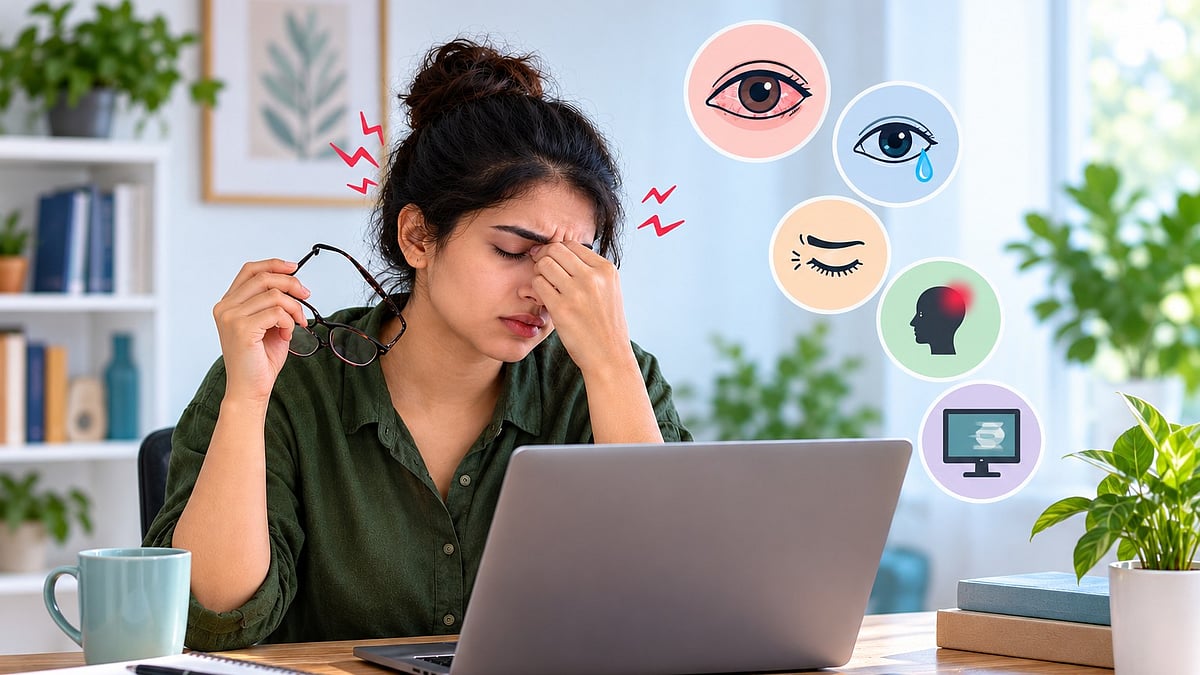
Tired eyes, an outdated glasses prescription, dry eyes, or lots of screen use may cause a dull headache.
Trouble making both eyes work together can cause headaches and double vision while reading.
Some flashing lights or zigzag shapes are a brain-related visual aura, not damage to the eye.
A red, painful eye with blurry vision, haloes, and nausea can be an emergency.
Pain when moving one eye followed by weaker vision also needs prompt medical care.
Headaches that are worse in the morning or when coughing may be linked to pressure inside the skull.
People over 50 with a new headache, tender scalp, or jaw pain when chewing should seek same-day care.
A headache that is different from usual should be checked by a doctor rather than treated only with painkillers.

Uncorrected refractive errors, screen strain, dry eye, and convergence problems can cause recurring headaches, especially during near work.
Visual auras with shimmering lights or zigzag lines usually affect both eyes, last 20 to 30 minutes, and are neurological rather than eye disease.
Sudden severe pain with a red eye, blurred vision, haloes, and nausea may indicate acute angle-closure glaucoma and requires emergency care.
Pain with eye movement followed by dimming vision can signal optic neuritis, while raised skull pressure may cause morning or strain-related headaches and visual greying.
New headaches after age 50 with scalp tenderness or jaw pain require urgent assessment because giant cell arteritis can cause irreversible blindness.
- Who
- People experiencing headaches, especially those with visual symptoms, eye pain, new headache patterns, or relevant risk signs.
- What
- An ophthalmologist explains how eye strain, visual-system disorders, neurological conditions, and other diseases can cause or accompany headaches.
- Where
- The symptoms may involve the eyes, forehead, temples, visual system, or pressure affecting the optic nerve.
- When
- Symptoms may arise after prolonged near work, during acute attacks, over several days, or with headaches that are new or different from usual.
- Why
- The eyes and head share nerves, muscles, and blood supply, and an eye examination can sometimes reveal effects of conditions affecting the brain or vision.
Key facts
- Screen-strain pattern
- Headaches may worsen by evening or after prolonged near work, as reduced blinking can dry the eyes and sustained focusing can fatigue the visual system.
- Convergence insufficiency
- Headaches that build while reading or using screens, with words swimming, intermittent double vision, or closing one eye, may indicate a vergence problem.
- Visual aura
- Shimmering lights, zigzag lines, or a temporary blind spot typically affect both eyes and clear within 20 to 30 minutes.
- Glaucoma emergency
- Sudden severe one-sided eye pain with a red eye, blurred vision, haloes, and nausea can indicate acute angle-closure glaucoma and threaten vision.
- Optic neuritis
- Pain on eye movement followed by dimming or vision loss, usually in one eye, can occur over several days and may require an MRI.
- Raised skull pressure
- Headache worse when lying down, on waking, or with coughing or straining may occur with papilledema and can include brief visual greying or ear ringing.
- Giant cell arteritis
- In people over 50, a new headache with scalp tenderness or jaw pain during chewing requires urgent same-day assessment because blindness can result.
Sources
Related news

Temporary One-Eye Blurred Vision Can Require Urgent Evaluation
Computer Vision Syndrome: Symptoms, Causes and Simple Remedies

Simple Ways to Keep Eyes Healthy During Screen Use

H1N1 Can Cause Eye Problems Beyond Respiratory Symptoms

Tiny Suboccipital Muscles Linked to Headaches, Neck Pain and Dizziness

Doctors Say GLP-1 Vision Loss Risk Remains Very Rare

Zenex Animal Health Considers Sale or IPO, Potentially Valued at $1 Billion

Brokerages Offer Stock Recommendations for Various Companies
