1 hr ago
Home Urine Test Shows Promise for Detecting Bladder Cancer
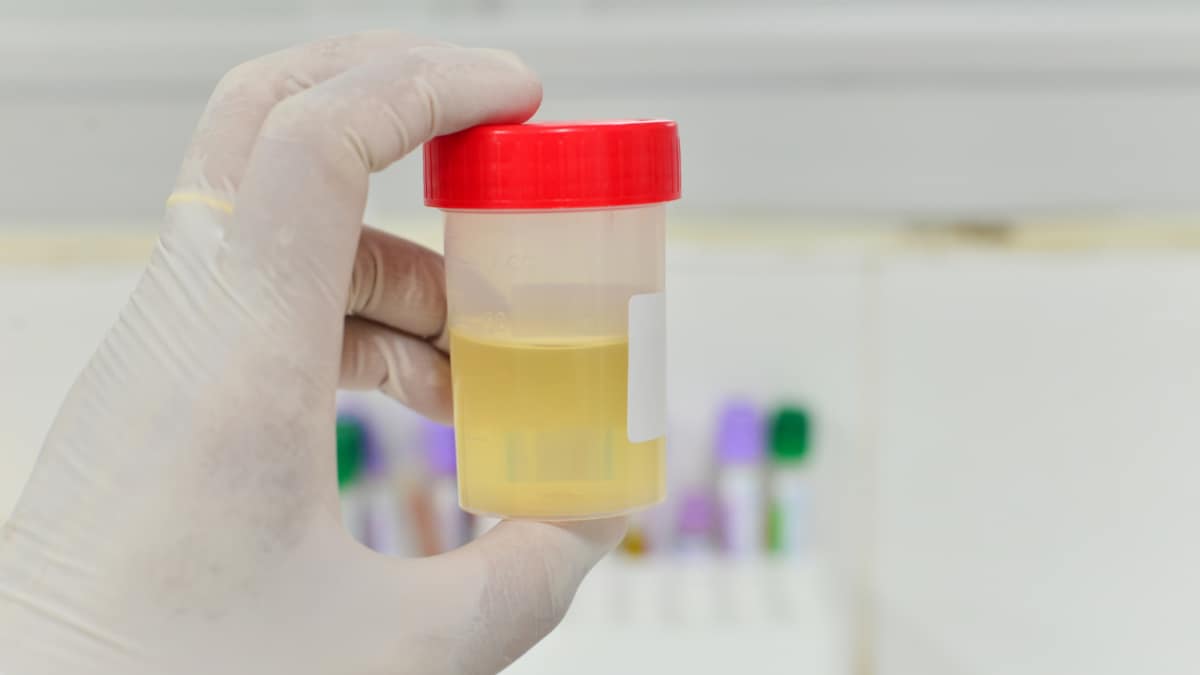
Researchers are testing a urine test that may help find bladder cancer.
The test is called Galeas.
It looks for genetic material released by cancer cells in urine.
In a study, it found 92 out of 100 bladder cancer cases.
When the test was negative, there was a greater than 99% chance the person did not have the disease.
This could help doctors decide who needs a more urgent examination.
The usual examination, called a cystoscopy, uses a small camera and can be uncomfortable.
More research is needed before the urine test can be used routinely, so people with symptoms should still see a doctor.

The Galeas urine test identified 92% of bladder cancer cases in an NHS trial.
A negative result indicated a greater than 99% probability that the patient did not have bladder cancer.
The test examines more than 450 DNA mutations across 23 genes linked to bladder cancer.
Nearly 1,000 patients at seven hospitals in England and Scotland participated in the study.
The test is not yet a replacement for cystoscopy and requires evaluation in a larger trial.
- Who
- Researchers from the University of Birmingham and diagnostics company Nonacus led the study, involving nearly 1,000 patients.
- What
- An NHS trial evaluated the Galeas urine test for detecting bladder cancer and helping assess the need for cystoscopy.
- Where
- The trial took place at seven hospitals in England and Scotland.
- When
- The findings were reported on September 6, 2026; the study was published in European Urology Oncology.
- Why
- The test could help rule out bladder cancer in lower-risk patients and prioritize cystoscopy for those at higher risk.
Key facts
- Test
- Galeas urine test
- Detection rate
- Identified 92% of bladder cancer cases in the NHS trial
- Negative-result reliability
- A negative result corresponded to a greater than 99% probability that the patient did not have bladder cancer
- Genetic analysis
- More than 450 DNA mutations across 23 genes
- Participants
- Nearly 1,000 patients
- Trial locations
- Seven hospitals in England and Scotland
- Current status
- The test is not currently intended to replace cystoscopy and needs larger-scale evaluation
Sources
Related news
New At-Home Urine Test Detects 92% of Bladder Cancers
UCLA's MethylScan Blood Test Shows Promise Detecting Cancer, Liver Disease

Prostate Cancer Warning Signs Men Should Never Ignore

Safdarjung Hospital Adds Advanced Bladder and Nuclear Diagnostics

Cancer Screening Tests: Which You Need, and Which You Don't

Parliamentary panel recommends mandatory kidney tests every six months

Bank of England Warns AI Boom Could Trigger Market Shock

India's Rising Caesarean Rates Raise Calls for Dignified Childbirth

Why Mountain Treks Can Leave Fit People Breathless