3 weeks ago
UCLA's MethylScan Blood Test Shows Promise Detecting Cancer, Liver Disease
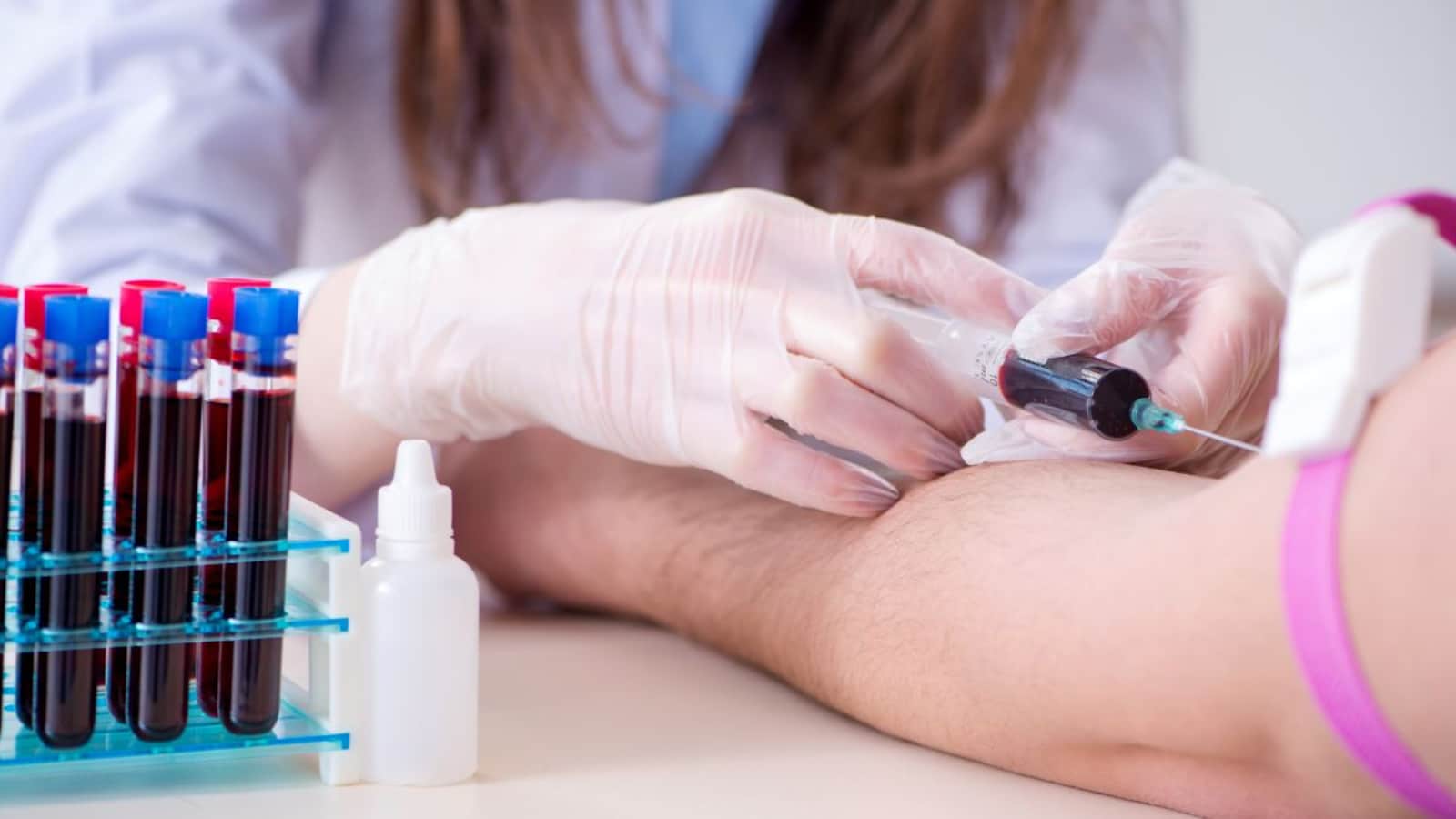
Every day, billions of cells in our bodies die and release tiny pieces of DNA into our blood.
Scientists at UCLA made a blood test called MethylScan that looks at these DNA pieces.
The test checks special chemical patterns on the DNA, called methylation, that show what is happening in different organs.
In an early study, it found liver, lung, ovarian and stomach cancers, and some liver diseases.
This is exciting because a simple blood test is much easier than painful or expensive tests.
The test can also give clues about which part of the body is sick, so doctors know where to look next.
But the test is not perfect — it missed some cancers and sometimes gave wrong results.
Doctors would still need other tests, like imaging or biopsies, to confirm if someone really has cancer.
Researchers say bigger studies are needed before this test can be used for everyone.

UCLA researchers developed MethylScan, a blood test that analyzes DNA methylation patterns in cell-free DNA to detect cancers and liver diseases.
In a study of 1,061 people, the test detected about 63% of cancers across all stages at 98% specificity.
For early-stage cancers, MethylScan detected roughly 55% of cases.
Among people at high risk of liver cancer, such as those with cirrhosis or hepatitis B, it detected nearly 80% of liver cancer cases with specificity slightly above 90%.
Researchers say larger prospective clinical trials are needed to understand how the test works in real-world screening populations.
- Who
- Researchers at the University of California, Los Angeles (UCLA), including study senior author Dr Jasmine Zhou and co-corresponding author Dr Wenyuan Li.
- What
- They developed MethylScan, a blood test based on DNA methylation patterns in cell-free DNA that can detect several cancers, liver diseases and signs of organ damage.
- Where
- University of California, Los Angeles (UCLA).
- When
- The findings were published in the Proceedings of the National Academy of Sciences; the article did not specify a date.
- Why
- To make disease detection more affordable and less invasive and to bring medicine closer to a single test for universal disease detection.
Key facts
- Test name
- MethylScan
- Developed by
- University of California, Los Angeles (UCLA)
- Study size
- Blood samples from 1,061 people
- Cancers detected
- Liver, lung, ovarian and stomach cancers
- Overall cancer detection
- About 63% at 98% specificity
- Early-stage cancer detection
- Roughly 55%
- Liver cancer detection in high-risk patients
- Nearly 80%, with specificity slightly above 90%
- Liver disease classification
- Correctly classified viral hepatitis and metabolic-associated liver disease in about 85% of patients
Quotes
Dr Jasmine Zhou
Senior author, professor of pathology and laboratory medicine at UCLA Health Jonsson Comprehensive Cancer Center
“This study demonstrates that blood-based methylation profiling can deliver clinically meaningful information across multiple diseases. It's an exciting advancement that brings us closer to realizing the dream of a single assay for universal disease detection.”
 NDTV
NDTV
“Being able to trace signals back to their source is important because a positive blood test needs to be followed by imaging or other diagnostic procedures directed at the right organ.”
NDTV
Sources
Related news

IIT Indore Researchers Develop Non-Invasive Method for Oral Cancer Detection

Cancer Screening Tests: Which You Need, and Which You Don't

Indian-Origin Doctor Leads New Liver Cancer Treatment Framework
England on track to eliminate Hepatitis C virus, NHS says

Watching cancer cells live could transform drug discovery

Manipal Hospital Urges Early Screening to Protect Liver Health
IIT Hyderabad Study Reveals How Cells Control Glycerol Movement

Indian Geologists Link Jharkhand Rocks to 3.5-Billion-Year-Old Life

X Algorithm May Amplify Outrage, New Study Finds

Study Uncovers Brain Mechanism Behind Skill Learning Plateaus