1 hr ago
India Urges Adoption of Terrorism Convention After Pahalgam Attack
India has asked countries at the United Nations to adopt a treaty about terrorism sooner.
The treaty is called the Comprehensive Convention on International Terrorism.
India says the treaty could help countries take legal action against people who carry out or support terrorist attacks.
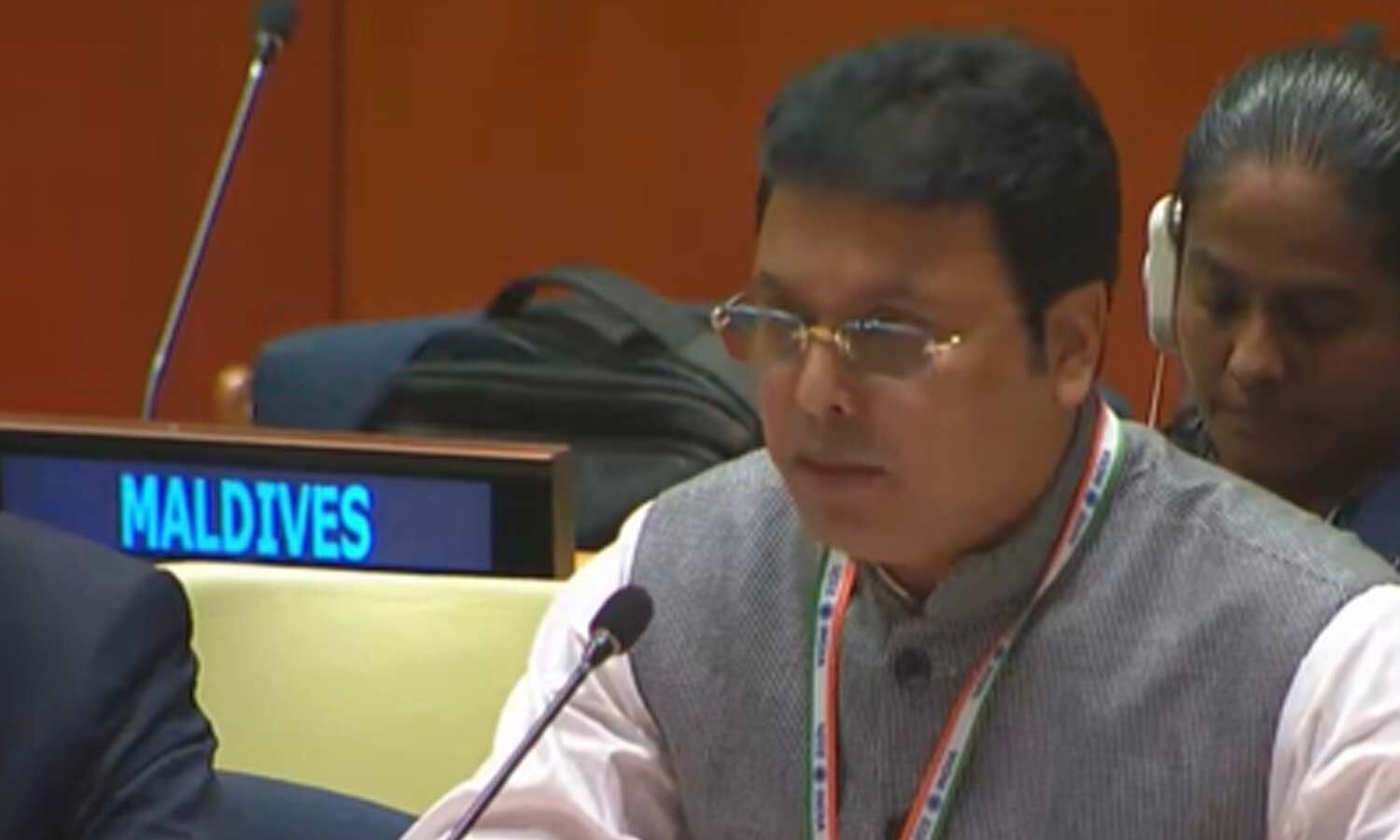
Biplab Kumar Deb spoke about the Pahalgam attack, which killed 26 civilians.
The Resistance Front claimed responsibility, and the articles describe it as linked to Lashkar-e-Taiba.
Deb said there should be no acceptable kind of terrorism and no excuse for attacking civilians.
Some countries have disagreed about whether the treaty should cover people they call freedom fighters.
Deb also warned that terrorists may use new technologies for activities such as recruitment and financing.

At the UN General Assembly’s Sixth Committee, BJP MP Biplab Kumar Deb urged early adoption of the Comprehensive Convention on International Terrorism.
Deb said those who perpetrate, organise, finance or sponsor cross-border terrorism should be held accountable.
The Pahalgam attack last year killed 26 civilians; The Resistance Front, described as a Lashkar-e-Taiba proxy, claimed responsibility.
India said it has the right to defend its people and described Pakistan as a state sponsor of cross-border terrorism.
Proposed by India in 1996, the convention has been stalled for 30 years; Deb also highlighted terrorists’ use of emerging technologies.
- Who
- India, represented at the UN General Assembly’s Sixth Committee by BJP MP Biplab Kumar Deb.
- What
- India called for early adoption of the Comprehensive Convention on International Terrorism and accountability for those behind cross-border attacks.
- Where
- The United Nations General Assembly’s Sixth Committee.
- When
- Deb made the remarks on Tuesday; the articles refer to the Pahalgam attack as having occurred last year.
- Why
- India says the convention would strengthen the international legal framework against terrorism and help hold its perpetrators and supporters accountable.
India’s position
Objections described in the articles
Scope of the convention
India’s position
India is urging early adoption of the CCIT and says there should be no distinction between “good” and “bad” terrorism.
Objections described in the articles
Some countries have blocked the convention, arguing it should not cover people they describe as “freedom fighters.”
Key facts
- Convention
- Comprehensive Convention on International Terrorism (CCIT)
- Proposed
- By India in 1996
- Status
- Has been stalled for 30 years, according to the articles
- Pahalgam attack toll
- 26 civilians killed
- Responsibility claim
- The Resistance Front claimed responsibility
- Speaker
- Biplab Kumar Deb, a BJP MP in India’s delegation to the General Assembly
- Other concern raised
- Terrorists’ use of emerging technologies for recruitment, radicalisation, propaganda, planning and financing
Sources

Related news
Jaishankar Rebukes Pakistani Reporter Over Terrorism Question At UNGA

BRICS Condemns Pahalgam Attack, Calls for Zero Terror Tolerance

India, Brazil and South Africa Seek Unified Action Against Terrorism
BJP Calls BRICS Pahalgam Attack Condemnation Diplomatic Win

India’s PRAHAAR Strategy Expands National Counter-Terrorism Framework Against Emerging Threats
Pakistan Calls Terrorism Common Challenge as India Joins Regional Meeting

LoRa Radios Pose New Communications Challenge for Kashmir Security Forces
Modi’s 25-Year Tenure Marks Shift in India’s Counter-Terror Doctrine

Jammu and Kashmir Reports Major Gains Against Terror Networks
Security Forces Say LoRa Radios Pose New Kashmir Challenge