2 hrs ago
PIL Challenges UPI MDR Charges Above ₹2,000 in Supreme Court

A person has asked the Supreme Court to examine new fees on some UPI payments.
Payments between two people and UPI payments up to ₹2,000 would stay free.
Larger payments to businesses could have a fee.
Most such payments would have a 0.4% fee, while some essential sectors could have a flat ₹5 fee.
Small merchants under a stated monthly limit would also be protected.
The petitioner says the government did not clearly explain how the fees and categories were chosen.
The petition also says the fee rules were not properly published or discussed with the public.
It questions why RuPay debit-card payments can remain free without a transaction limit.
The petitioner argues that merchants might pass costs to customers or reduce their use of UPI.

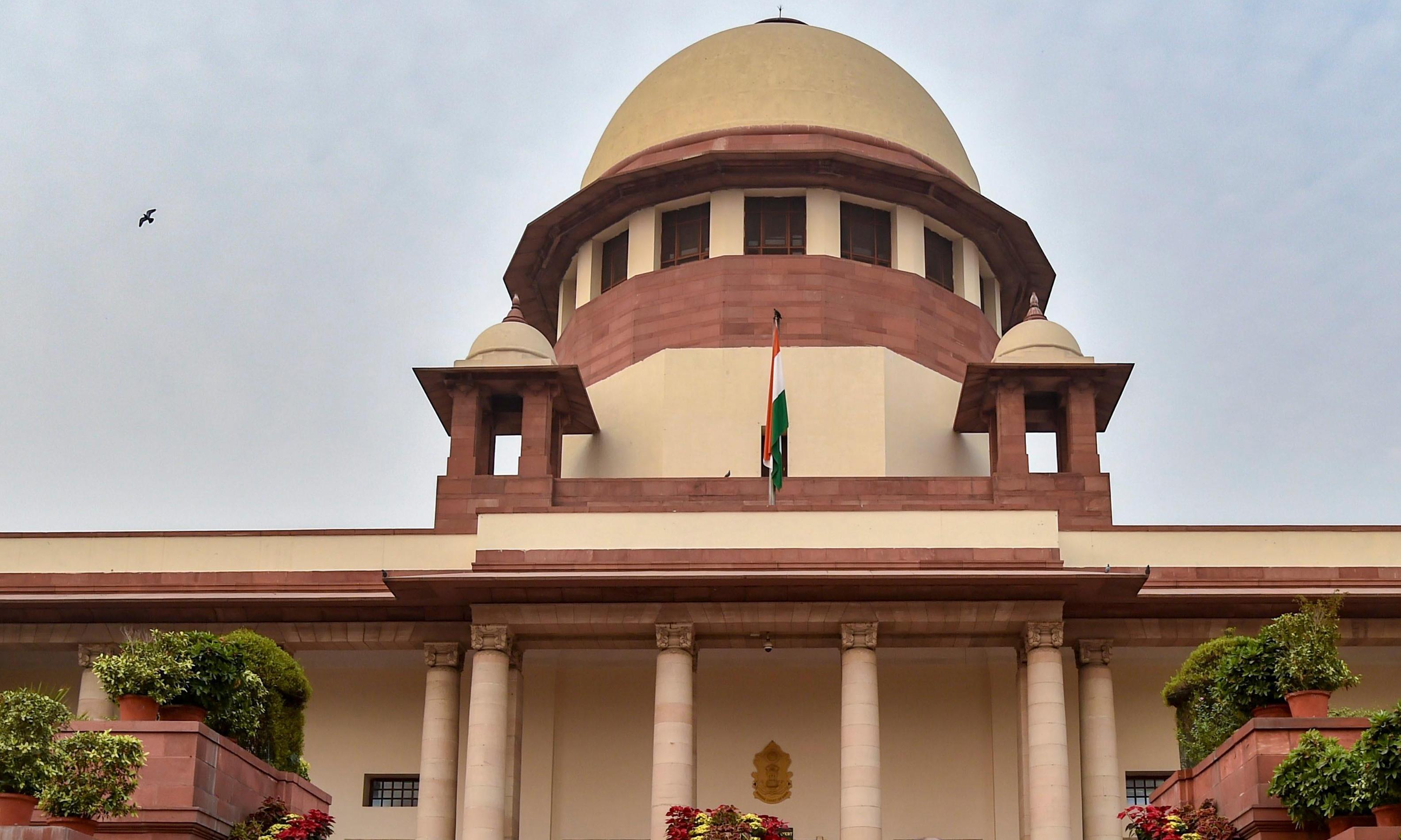
A Supreme Court PIL challenges the constitutional validity of amended Section 10A of the Payment and Settlement Systems Act, 2007.
The proposed framework imposes 0.4% MDR on general P2M UPI transactions above ₹2,000, capped at ₹300 for transactions of ₹75,000 and above.
A flat ₹5 MDR would apply to qualifying transactions above ₹2,000 in sectors including railways, telecommunications, insurance, fuel and agricultural inputs.
UPI payments up to ₹2,000, person-to-person transfers and eligible small merchants receiving up to ₹1 lakh monthly through QR codes would remain free.
The petitioner questions the framework’s legal authority, transparency, thresholds, sector classifications and continued unlimited no-charge protection for RuPay debit cards.
- Who
- Advocate Anjan Datta filed the PIL against the Union government, the Reserve Bank of India, the National Payments Corporation of India and the UPI and Services Steering Committee.
- What
- The PIL challenges amended Section 10A and the proposed MDR framework for certain person-to-merchant UPI transactions.
- Where
- The challenge was filed in the Supreme Court of India and concerns UPI transactions in India.
- When
- The challenged measures include a September 14 Gazette notification and a September 15 MDR framework; the articles do not specify the year for those dates.
- Why
- The petitioner alleges that the framework is arbitrary, discriminatory and insufficiently transparent, and that its legal authority, rates, thresholds and classifications were not adequately justified.
Petitioner’s objections
Framework’s stated provisions
Legal authority
Petitioner’s objections
The petitioner argues that amended Section 10A gives the executive unguided power to choose protected payment modes, transaction limits and merchant classifications, and that the amendment was improperly enacted as a Money Bill.
Framework’s stated provisions
The framework relies on amended Section 10A of the Payment and Settlement Systems Act, 2007, to establish protections and charges for different electronic payment transactions.
Rates and exemptions
Petitioner’s objections
The petitioner questions the ₹2,000 transaction threshold, the ₹1 lakh monthly merchant threshold, the sector classifications and the absence of disclosed empirical data or impact studies.
Framework’s stated provisions
The framework keeps payments up to ₹2,000 and person-to-person transfers free, exempts eligible small merchants and applies differentiated rates to larger or specified-sector transactions.
Impact on merchants and consumers
Petitioner’s objections
The petition says MDR could burden low-margin merchants, indirectly increase consumer costs, reduce discounts, lead to refusals of UPI or minimum ticket sizes, and affect digital-payment adoption.
Framework’s stated provisions
The described framework prohibits or does not provide for direct charges on protected transactions and limits MDR through specified rates, caps and exemptions.
UPI and RuPay treatment
Petitioner’s objections
The petitioner says UPI and RuPay debit cards serve overlapping users but receive unequal treatment because RuPay retains no-charge protection without a monetary ceiling.
Framework’s stated provisions
The framework continues no-charge protection for RuPay debit-card transactions while applying the stated thresholds and charges to certain UPI transactions.
Key facts
- General P2M MDR
- 0.4% on UPI transactions above ₹2,000, capped at ₹300 for transactions of ₹75,000 and above.
- Specified-sector MDR
- A flat ₹5 on qualifying transactions above ₹2,000 in sectors including railways, telecommunications, insurance, fuel and agricultural inputs.
- Capital-market MDR
- 0.02%, capped at ₹300.
- Transactions remaining free
- UPI payments up to ₹2,000 and person-to-person UPI transfers.
- Small-merchant exemption
- Merchants receiving up to ₹1 lakh per month through UPI QR codes are exempted, according to the report.
- Legal provision challenged
- Amended Section 10A of the Payment and Settlement Systems Act, 2007.
- RuPay treatment
- The petition says RuPay debit-card transactions retain no-charge protection without a monetary ceiling.
Quotes
Advocate Anjan Datta
Advocate and petitioner who filed the PIL challenging the UPI MDR framework
“The power thereby conferred is entirely unguided and unstructured.”
 republicworld.com
Sources
Related news

UPI Charges Debate Grows as MDR Framework Opens Higher Payments

UPI Sets 0.4% MDR on High-Value Merchant Payments
Panel to Decide UPI MDR Charges Above ₹2,000 Soon

India Adds UPI Merchant Fees Above ₹2,000
Centre Keeps UPI Payments Up To ₹2,000 Free

New UPI MDR Rules Keep Consumers Free, Charge Eligible Merchants
India Weighs Nationwide Analogue Paneer Ban, Food Chief Says

NGT Slams Official Inaction Over Bhoj Wetland Encroachments
Supreme Court Bars Forceful Vehicle Seizures in Loan Defaults

Police Intensify Action Against Loud Ganesh Pandal DJ Systems