4 hrs ago
India Stands Out as Wildlife Declines Sharply Worldwide
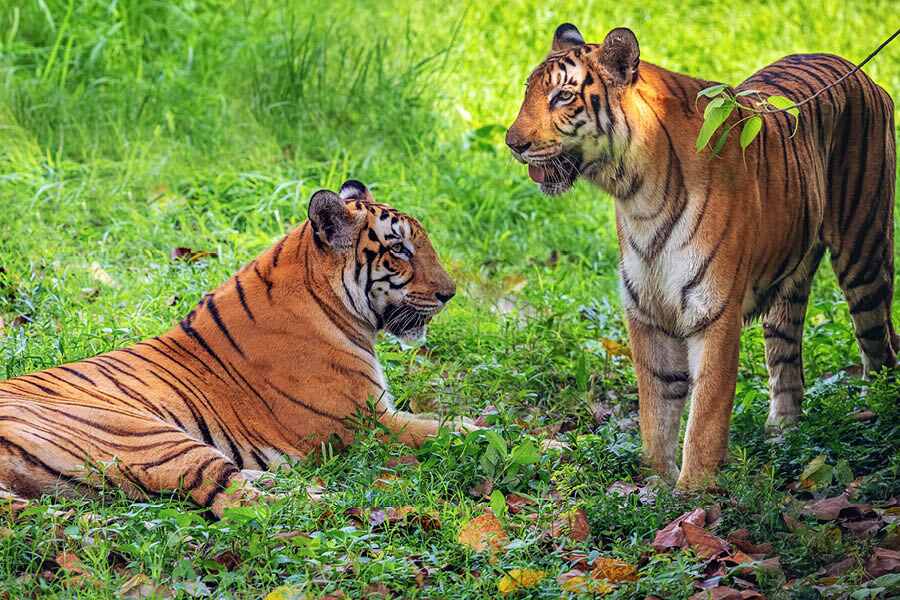
A new report says wildlife populations around the world have become much smaller since 1970.
The biggest average drop was among freshwater animals.
Losing or damaging animal habitats is the threat mentioned most often.
Other threats include hunting, climate change, pollution and disease.
The report also says that some animals are recovering when people protect them.
India is one example, with reported increases in several species.
A survey also counted more than 6,000 Ganges dolphins.
The report says nature is still in trouble globally, but conservation can help.

The Living Planet Report 2026 found monitored wildlife populations declined by an average of 73% from 1970 to 2022.
Freshwater populations showed the steepest decline at 85%, compared with 69% for terrestrial and 59% for marine populations.
Habitat loss and degradation were the most frequently reported threats, followed by overexploitation, climate change, pollution, invasive species and disease.
The report highlighted rising numbers of several Indian species, including tigers, greater one-horned rhinos, leopards, Asiatic lions and snow leopards.
A survey conducted from 2021 to 2023 estimated 6,324 Ganges dolphins across 28 rivers.
- Who
- The World Wide Fund for Nature and the Zoological Society of London produced the Living Planet Report 2026; it also discusses wildlife populations in India.
- What
- The report documented a 73% average decline in monitored wildlife populations and highlighted conservation successes in India.
- Where
- The findings cover global wildlife populations and examples from India.
- When
- The population trend covers 1970–2022; the report was released on Thursday, and the dolphin survey ran from 2021–23.
- Why
- The report attributes wildlife threats mainly to habitat loss and degradation, alongside overexploitation, climate change, pollution, invasive species and disease.
Key facts
- Species covered
- 5,790 vertebrate species
- Global population decline
- 73% average decline from 1970 to 2022
- Freshwater decline
- 85%
- Terrestrial and marine decline
- 69% terrestrial; 59% marine
- India tiger count
- 3,682 in the 2022 All India Tiger Estimation
- Ganges dolphin estimate
- 6,324, based on a 2021–23 survey of 8,507 km across 28 rivers
- Other Indian species figures
- Greater one-horned rhinos: 3,300+; common leopards: 13,874; Asiatic lions: 891 in 2025; snow leopards: 718
Quotes
Ravi Singh
Secretary-general and CEO of WWF-India
“India is doing well with regard to all five big cats and, no doubt, a global example in conserving wildlife. India has the world’s 70 per cent of tigers, and the species is increasing at a rate of 6.1 per cent. Asiatic lions are increasing in India while African lions are rapidly declining. We also have the world’s largest leopard population.”
 telegraphindia.com
“The report is both a stark reminder of the scale of the biodiversity crisis and a message of hope.”
telegraphindia.com
Sources
Related news

Wildlife Populations Fall 73%, but Recovery Remains Possible

India Expands Conservation Network Amid Concerns Over Habitat Protection
The Economist Faces Pushback Over India's Wildlife Conservation Praise
National Wildlife Week 2026 Highlights Coexistence and Biodiversity

Assam Reports 3,260 Rhinos and Zero Poaching in 2025
Two Great Indian Bustards Released as Scientists Warn of Wider Threats

Orient Cables Slides After 65% IPO Listing Premium

Accenture’s Strong Results Lift Indian IT Stocks, But Risks Remain

Nifty’s Eight-Week Slide Becomes Longest in 25 Years

Indian Stocks Fall as Foreign Selling and Oil Pressure Mount