2 weeks ago
Income Tax Queries: Jewellery Sale Profits Attract Capital Gains Tax
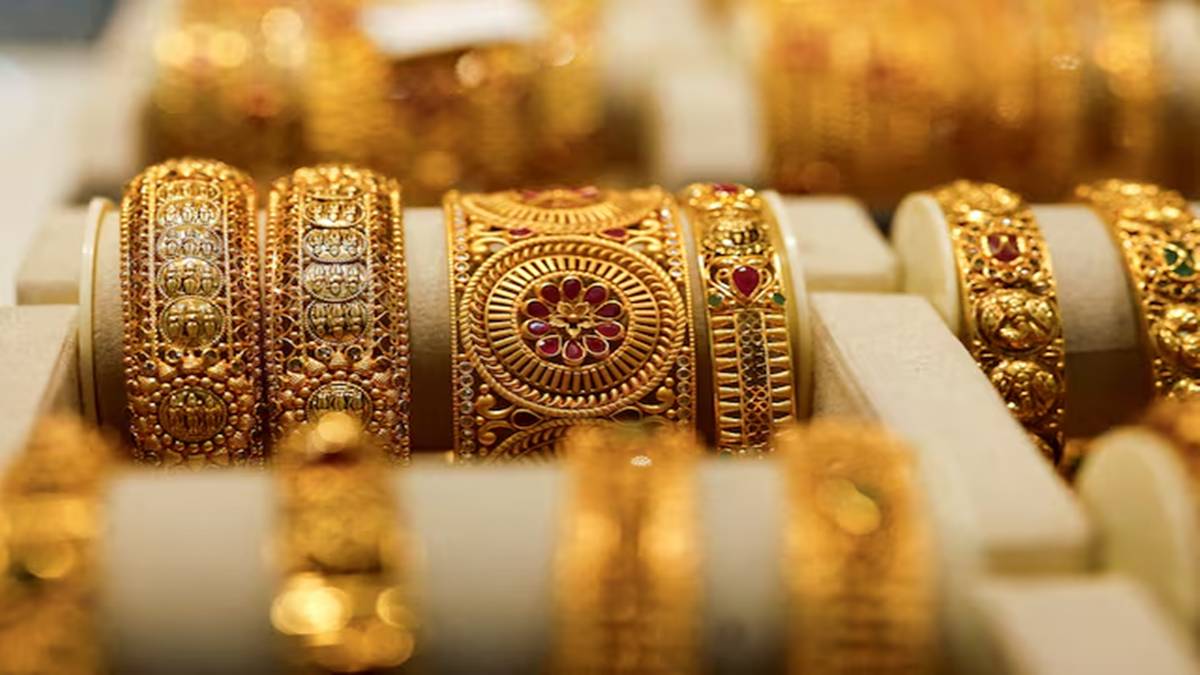
When people sell things they own for more money than they paid, the extra money is called a profit, and the government taxes it like income.
In India, jewellery is one of those things, so selling it for a profit means paying capital gains tax.
If a person kept the jewellery for more than two years before selling it, the tax is a flat 12.5 percent.
If they kept it for less than two years, the tax is calculated based on the person's income.
To figure out the profit, you subtract what the jewellery originally cost from the selling price.
If the jewellery was inherited, you use the price the original owner paid.
Sometimes, when you give money to a registered charity, the government lets you pay less tax.
A donation to a charity that helps senior citizens can reduce tax by 50 percent of the amount given, but only up to a limit.
Cash gifts larger than Rs 2,000 do not count, so donations should be made by bank transfer or other non-cash methods.

Jewellery is explicitly defined as a capital asset under Indian tax law, so profits from its sale are subject to capital gains tax.
Jewellery held for more than 24 months is a long-term capital asset taxed at a flat 12.5% without indexation, while shorter holdings are taxed at slab rates.
Taxable gain equals the sale consideration minus the cost of acquisition, using the original owner's purchase cost for inherited jewellery.
Donations to registered charities caring for senior citizens qualify for a 50% deduction, capped at 10% of Adjusted Gross Total Income, under the old tax regime.
Cash donations exceeding Rs 2,000 do not qualify for deduction, so contributions must be made by banking or other permitted non-cash modes.
- Who
- Indian taxpayers, including readers Akhil Bansal and Animay Sharma who submitted queries, with responses written by the managing partner of tax consulting firm AKM Global.
- What
- An expert tax column explaining capital gains tax rules on selling family jewellery and the deduction rules for donations to charities that care for senior citizens.
- Where
- India.
- When
- The advice addresses a jewellery sale made in December of the previous year and is a current reader-query column.
- Why
- To help taxpayers understand their tax obligations on jewellery sale profits and the deductions available for eligible charitable donations.
Key facts
- Long-term holding period
- More than 24 months
- Long-term capital gains rate
- Flat 12.5% without indexation
- Short-term gains treatment
- Taxed at applicable income tax slab rates
- Donation deduction
- 50% of the eligible donated amount
- Deduction ceiling
- 10% of Adjusted Gross Total Income (AGTI)
- Cash donation limit
- Cash donations exceeding Rs 2,000 are not eligible
- Available tax regime
- Old tax regime only
- Governing law
- Income-tax Act, 2025 (Sections 354 and 133)
Quotes
Tax article author
Author of the tax FAQ article
“Jewellery is explicitly defined as a capital asset under Indian tax laws, making any profit derived from its sale fully subject to capital gains tax.”
 financialexpress.com
Sources
Related news

Buying New Gold Does Not Automatically Erase Old Gold Tax

When Selling Personal Items Triggers Capital Gains Tax
Nagpur ITAT Clears Jewellery Addition After Tax Search

Inherited Property Sales: How India Taxes Capital Gains

Stocks, ETFs and mutual funds: new capital gains tax rates

Crypto gifting in India: tax rules, exemptions, ITR filing explained

Audit and Non-Audit Taxpayers Face Different ITR Deadlines

India’s ITR Filings Reach Record 7.8 Crore for AY27

Mumbai ITAT Upholds ₹85 Lakh Share Gains Claim

Visakhapatnam Zoo Raises ₹1.46 Lakh Through Animal Adoption Drive

September Money Changes: ITR, LPG KYC and Charges