1 day ago
Why Sugar-Free Labels Do Not Always Mean Healthier Choices
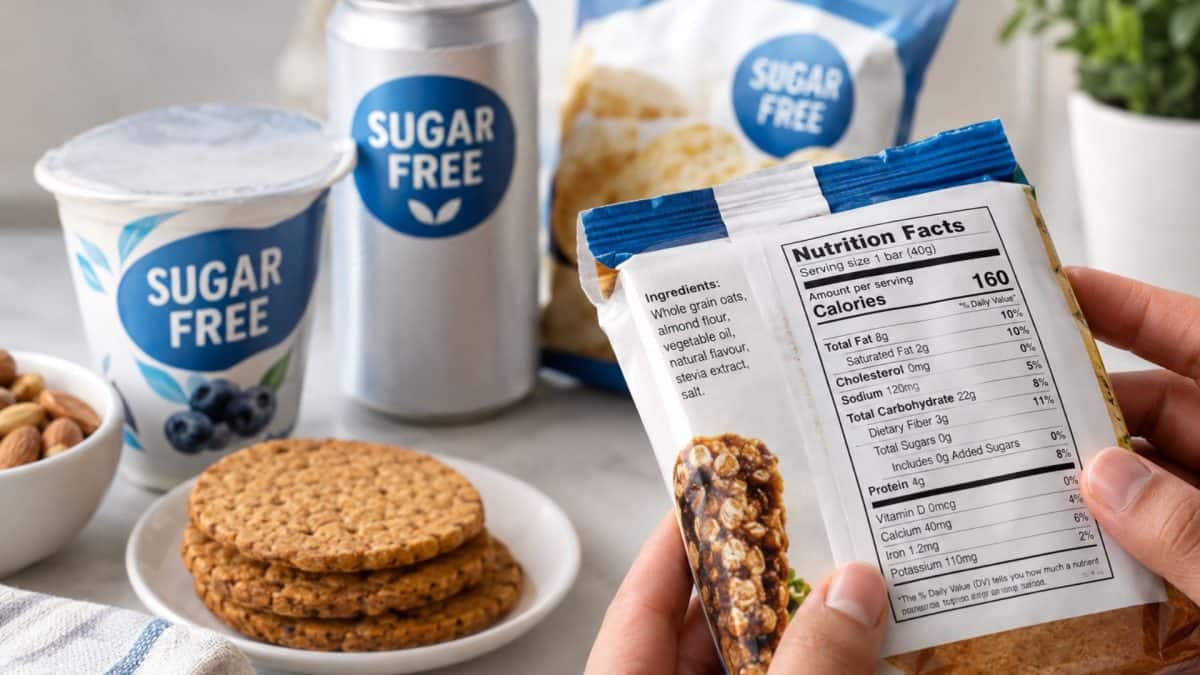
A sugar-free label only tells you that a product has very little or no sugar.
It does not mean the food has no carbohydrates or calories.
A sugar-free biscuit may still contain refined flour, fat and salt.
Some products use sweeteners to keep a sweet taste.
These sweeteners can include stevia, sucralose and aspartame.
A sugar-free drink may have little nutrition even if it has little sugar.
People should check the nutrition panel and serving size before choosing a product.
Sugar-free foods can sometimes help people reduce added sugar, but they are not automatically healthy foods.

“Sugar-free” describes a product’s sugar content, not its overall nutritional value.
Sugar-free foods can still contain carbohydrates, fat, sodium and significant calories.
Nutrition panels should be checked for energy, fat, saturated fat, carbohydrates, sugars, protein and sodium.
Sweeteners such as stevia, sucralose and aspartame may provide sweetness without the same amount of sugar.
Sugar-free products may help some people reduce added sugar, but portion size and the overall diet still matter.
- Who
- Consumers, including people managing diabetes or reducing added sugar, are the focus.
- What
- The article explains what “sugar-free” means and why the label does not guarantee a healthy product.
- Where
- The article discusses food labelling generally and identifies India’s Food Safety and Standards Authority of India as the regulator for claims in India.
- When
- Not specified.
- Why
- To help shoppers look beyond front-of-package claims and assess a product’s full nutritional information.
Key facts
- Label meaning
- “Sugar-free” refers specifically to the amount of sugars in a food or drink.
- What it does not guarantee
- The claim does not mean a product is low in calories, free of carbohydrates or suitable for everyone.
- Possible remaining nutrients
- Sugar-free products may still contain fat, sodium, carbohydrates and calories.
- Sweeteners mentioned
- Examples include stevia, sucralose, aspartame and acesulfame potassium.
- What to check
- Review energy, total fat, saturated fat, carbohydrates, total sugars, protein and sodium.
- Serving sizes
- A stated serving may be smaller than the amount people typically eat.
- Ingredient order
- Ingredients are generally listed in descending order by weight.
Sources
Related news
India Tightens Scrutiny of Food Labels and Health Claims
Why Indian Food Labels Can Hide Unhealthy Ingredients

FSSAI Proposes Red Warning Labels for Junk Food
India’s Front-of-Pack Food Warning Debate Faces Industry Pushback

India's Food Warning Label Proposal Faces Regulatory Criticism
Why Fanta Has More Sugar in India Than Britain
FSSAI Considers Nationwide Ban on Analogue Paneer After State Consultation
Bombay High Court Denies Relief In Thane Paneer Case

India Weighs Nationwide Analogue Paneer Ban, Food Chief Says
Science Quiz Covers Moon Basins, Space Weapons and Quantum Concepts