

26 mins ago
Why Long Journeys Leave the Body Needing Recovery Time

Your body has an internal clock that helps control when you sleep, eat, and feel awake.
Long journeys can move you across several time zones very quickly.
This makes your body clock disagree with the local time.
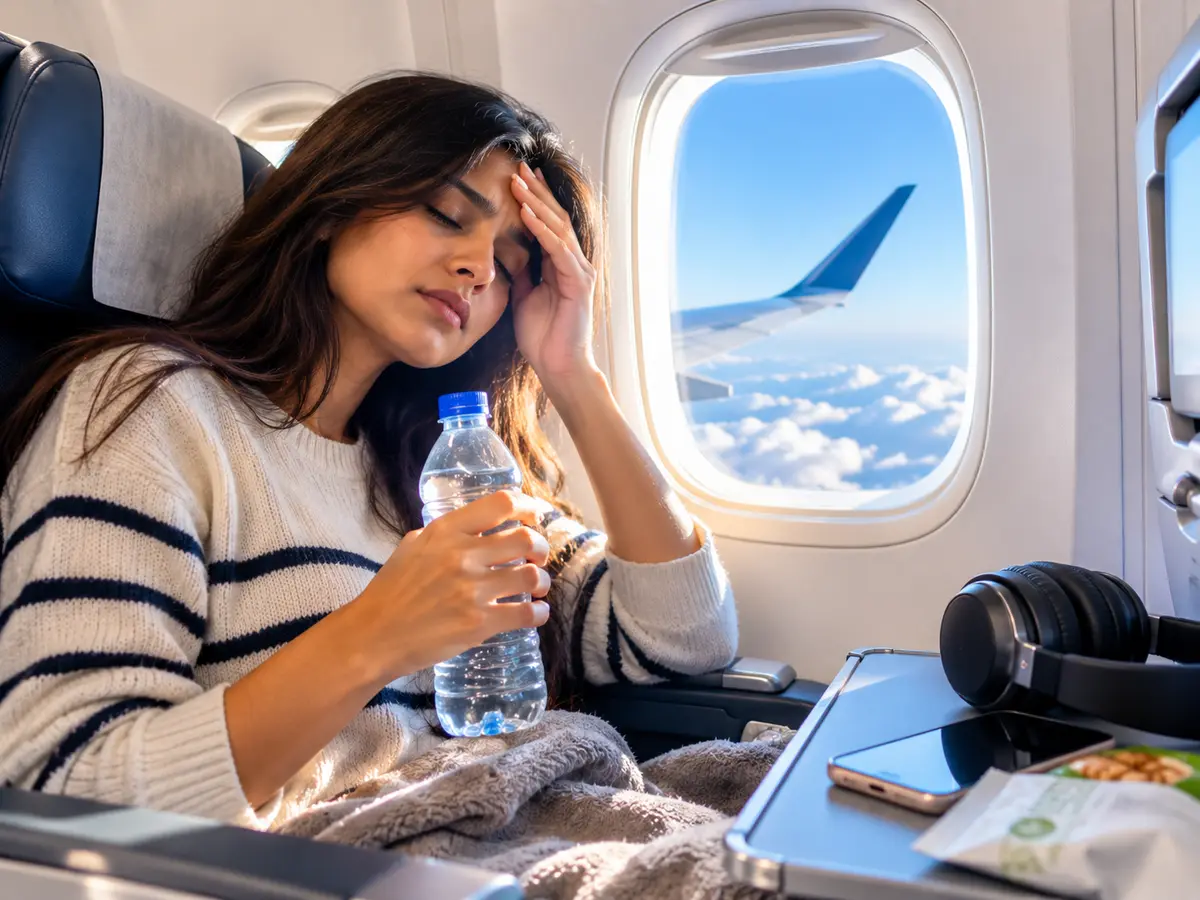
Airplane cabins are also very dry, so your body can lose water during the flight.
The cabin has slightly less oxygen than you are used to, which may add to tiredness and mental fog.
Sitting still for many hours can make your legs swell and your muscles feel stiff.
Staying still for too long can also increase the risk of blood clots in the legs.
Eating at unusual times can upset your digestive system.
Together, these changes explain why your body needs time to recover after a long flight.

Crossing time zones disrupts the circadian rhythm that controls sleep, hormones, and body temperature.
The body generally needs about one day to adjust for each time zone crossed, with eastward travel often harder than westward travel.
Aircraft cabins have humidity levels of about 10–20%, which can cause dehydration, headaches, and dry skin.
Lower cabin oxygen levels and prolonged sitting can contribute to exhaustion, brain fog, swelling, and circulation problems.
Irregular meal times during travel can disrupt gut rhythms, causing bloating, indigestion, and altered bowel movements.
- Who
- Travellers taking long-haul flights.
- What
- Their bodies experience travel fatigue caused by disrupted circadian rhythms, dehydration, mild hypoxia, prolonged immobility, and altered digestion.
- Where
- In aircraft cabins and at destinations across different time zones.
- When
- During and after journeys that cross multiple time zones, particularly long-haul flights.
- Why
- Rapid time-zone changes and the airplane environment disrupt sleep, hydration, oxygen exposure, circulation, and gut rhythms.
Key facts
- Circadian rhythm
- A 24-hour internal cycle regulating sleep, hormone secretion, and body temperature.
- Recovery guideline
- The body generally requires one full day of recovery for every time zone crossed.
- Direction of travel
- Eastward flights are described as harder to adapt to than westward flights.
- Cabin humidity
- Aircraft cabin humidity typically ranges from 10% to 20%.
- Cabin oxygen
- Aircraft pressurisation produces slightly lower blood oxygen levels, known as mild hypoxia.
- Circulation risk
- Prolonged immobility can cause swelling and, in severe cases, increase the risk of deep vein thrombosis.
- Digestive effects
- Irregular meal times can lead to bloating, indigestion, and altered bowel movements.
Sources
Related news

Why Long Journeys Leave Travellers More Tired Than Expected
Dehydration May Be a Hidden Driver of Long-Haul Flight Fatigue

How Your Body Responds to Different Climates and Altitudes

Body Signals That Show When You Need More Rest

Post-Trek Fever: Why Symptoms Appear After You Return

Donating Blood: Expert Explains the 3-Step Body Recovery

Largest US Cyclosporiasis Outbreak Declared Over After Lettuce Recall

Walmart Berry Recall, Broccoli Sprout Salmonella Probe Expand

Twenty-Five Years Later, 9/11 Still Shapes American Lives

US Measles Cases Reach 3,134 Amid Feud Over Deaths
