25 mins ago
Dehydration May Be a Hidden Driver of Long-Haul Flight Fatigue
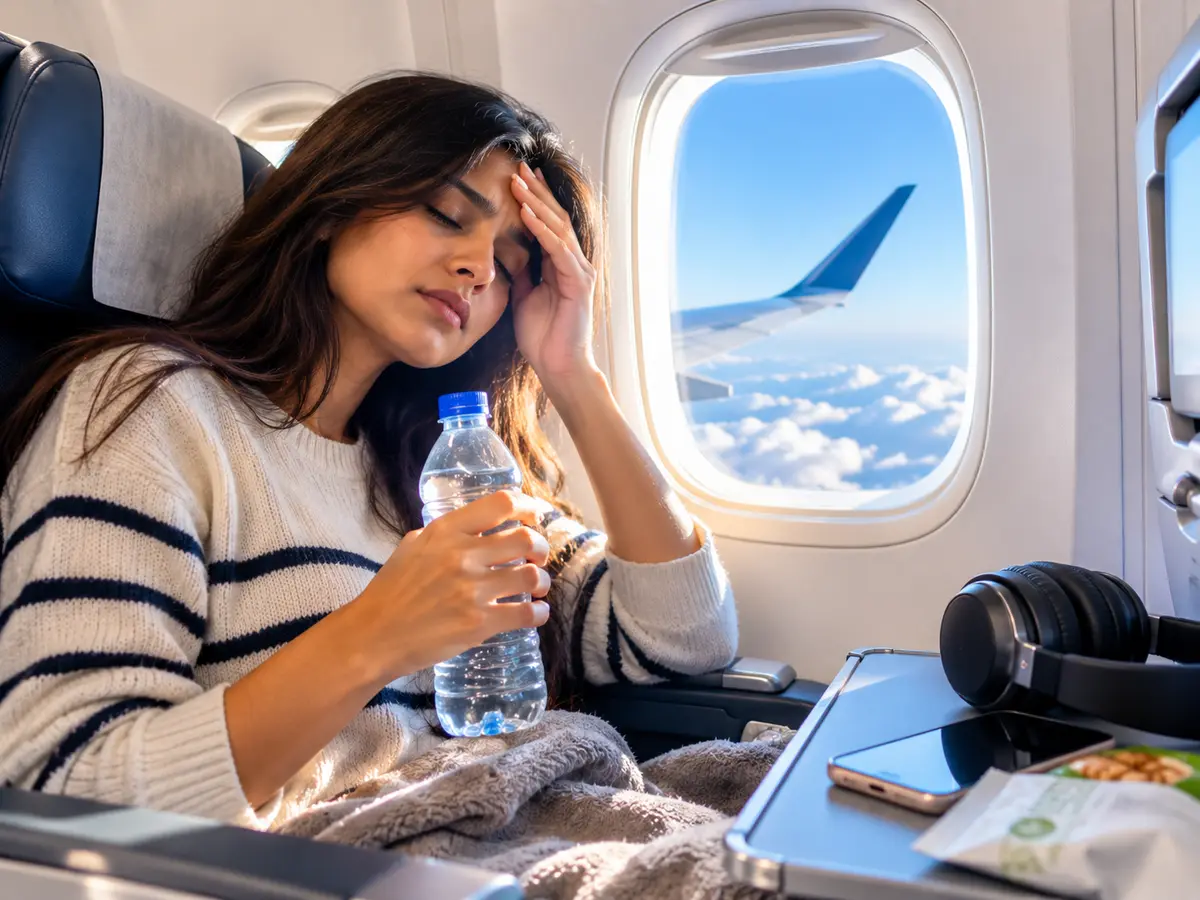
Airplane cabins are very dry because they use cold outside air that contains little moisture.
The air is usually much drier than homes and buildings on the ground.
Your body can lose water through breathing and through your skin during a flight.
Losing too much water can make your blood volume decrease.
This makes the heart work harder to move oxygen around the body.
As a result, you may feel tired, get a headache, or have trouble thinking clearly.
These symptoms can feel like jet lag.
Drinking water before and during the flight may help.
Avoiding alcohol and heavily caffeinated drinks may also reduce additional fluid loss.

Cabin humidity during flights typically falls to 10–20%, far below comfortable indoor levels of 40–60%.
Dry cabin air can increase fluid loss through the skin and respiratory system.
Dehydration may reduce blood volume, making the heart work harder to deliver oxygen.
Passengers may experience lethargy, headaches, and brain fog as a result.
Experts advise drinking water regularly and limiting alcohol and heavily caffeinated drinks in flight.
- Who
- Passengers on long-haul flights and the health experts offering hydration advice.
- What
- Dehydration caused by dry cabin air may contribute to fatigue, headaches, and cognitive fog during or after flights.
- Where
- Inside commercial aircraft cabins at cruising altitudes of around 30,000 feet.
- When
- During long-haul flights, particularly over extended time in the air.
- Why
- Outside air brought into the aircraft is cold and contains little moisture, producing cabin humidity of about 10–20%.
Key facts
- Typical cabin humidity
- About 10–20%.
- Comfortable indoor humidity
- Roughly 40–60%.
- Typical cruising altitude cited
- Around 30,000 feet.
- Estimated water loss
- Roughly one-quarter of a litre per hour, depending on the aircraft and flight duration.
- Possible symptoms
- Lethargy, dull headaches, and cognitive brain fog.
- Recommended hydration
- Drink a large bottle of water before boarding and a glass every hour in the air.
- Drinks to limit
- Alcohol and heavily caffeinated beverages.
Sources
Related news

Why Long Journeys Leave Travellers More Tired Than Expected
Why Long Journeys Leave the Body Needing Recovery Time

How Your Body Responds to Different Climates and Altitudes

Body Signals That Show When You Need More Rest

Dehydration May Link Headaches, Sugar Cravings And Bad Breath