18 hrs ago
Majoie Hajary’s Forgotten Musical Bridge Between Suriname and India
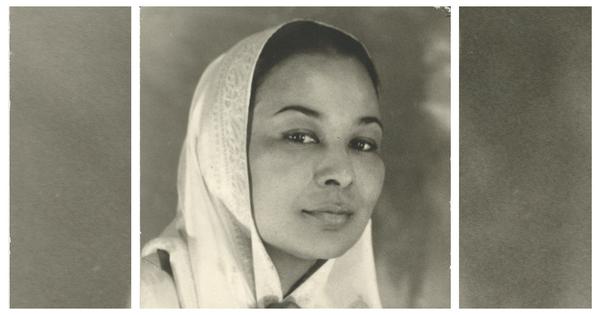
Majoie Hajary was a composer born in Suriname in 1921.
Her family had Indian and Afro-Chinese roots.
She studied Western classical music in Amsterdam and Paris but became deeply interested in Indian music.
During World War II, she performed for Azad Hind Radio, which was connected to Subhas Chandra Bose’s independence movement.
Hajary said she did this because of her cultural connection to India, not because she was taking a political side.
Later, she traveled to New Delhi and worked on music that combined Indian instruments and ragas with the piano and Western ensembles.
In 1968, she released a musical work honoring Mahatma Gandhi.
Her music also brought together Surinamese, European and Indian influences.
Today, researchers and musicians are helping more people discover her work.

Surinamese composer Majoie Hajary combined Western classical music with Indian musical traditions throughout her career.
She was connected to Azad Hind Radio in wartime Berlin but later said her involvement was cultural rather than political.
Her 1967 album New Sound from India and 1968 Requiem pour Mahatma Gandhi explored links between Indian ragas and Western instruments.
Surviving sources confirm her admiration for Gandhi but do not connect specific musical passages to his ideas or political campaigns.
Hajary died in 2017, and her work is gaining renewed attention through reissues, performances, a biography and a street named after her.
- Who
- Majoie Hajary, a Surinamese composer of Indian and Afro-Chinese heritage, along with researchers and musicians who are reviving interest in her work.
- What
- A reassessment of Hajary’s cross-cultural music, including her connection to Azad Hind Radio and her 1968 Requiem pour Mahatma Gandhi.
- Where
- Hajary was born in Paramaribo, Suriname, and worked or studied in Amsterdam, Paris, Berlin, New Delhi and other international locations.
- When
- Hajary lived from 1921 to 2017; key events described include her Azad Hind Radio involvement in 1943, New Sound from India in 1967 and the Gandhi requiem in 1968.
- Why
- She sought to create a musical meeting point between Indian ragas and Western musical structures while expressing her Indian heritage.
Cultural interpretation
More cautious interpretation
Azad Hind Radio involvement
Cultural interpretation
Hajary’s participation can be understood as an expression of her Indian heritage and interest in music, consistent with her later explanation that her motives were cultural rather than political.
More cautious interpretation
Her performances took place for a station associated with Subhas Chandra Bose’s independence movement, and Dutch authorities questioned her afterward; the available evidence does not fully resolve her motives.
Meaning of the Gandhi requiem
Cultural interpretation
The work represented Hajary’s admiration for Gandhi and her effort to unite Indian ragas with Western acoustic structures.
More cautious interpretation
Surviving sources do not show that specific passages represented Gandhi’s ideas, satyagraha, ahimsa or events such as the Salt March.
Key facts
- Born
- 1921, Paramaribo, Suriname
- Died
- 2017, Neuilly-sur-Seine, France
- Azad Hind Radio
- Hajary was interviewed and engaged for a concert broadcast to India in 1943.
- First major Indian-inspired album
- New Sound from India, released by CBS in 1967.
- Gandhi composition
- Requiem pour Mahatma Gandhi, released in 1968.
- Performance
- The Gandhi-related program was presented in Boulogne on November 19, 1969.
- Later recognition
- Her legacy has been supported by reissues, performances, Ellen de Vries’s 2025 biography and a street named after her in Amsterdam.
Quotes
Sebastien Garros
Majoie Hajary’s son
“She denied any political involvement and said she only wanted to play her music. Later on she hardly spoke about this episode.”
 scroll.in
“The composition was intended to bridge Eastern ragas and Western acoustic structures. I can confirm that she admired Gandhi.”
scroll.in
Sources
Related news
Kabir Bedi Remembers Mother’s Freedom Struggle on Gandhi Jayanti
M F Husain’s Journey From Independence to Exile and Art
Indu Mitha Carried Bharatanatyam Across Partition and Pakistan
Poet Revives Azad Hind Fauj Songs For Pune Festival

Asit Kumar Haldar’s Paintings Bring India’s History Alive Again
How John Coltrane Bridged Jazz and Carnatic Music

Study Finds Dutch Royal House Deeply Involved in Colonial Exploitation
MPs Question Inaction Seven Months After Friendship Groups Formed
BJP Chief Nitin Nabin Briefs Eight Countries’ Diplomats
Rashied Doekhi Calls for Deeper India–Suriname Economic Cooperation