1 hr ago
India’s Reservation History Predates Independence and the Constitution
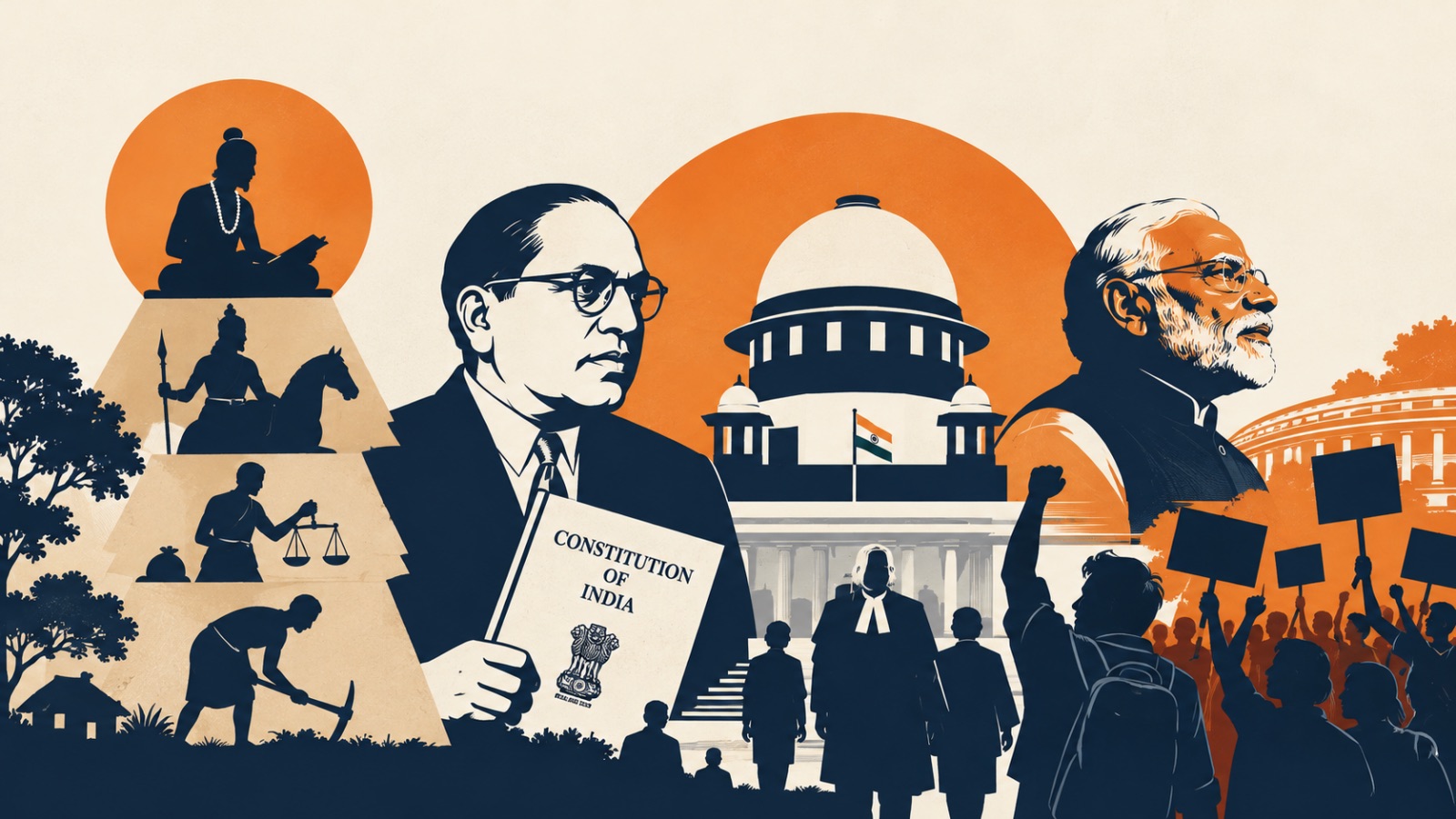
This article explains that reservation in India began before the country became independent.
Some nineteenth-century reformers wanted more education and government jobs for communities that had been left out.
In 1902, a ruler in Kolhapur created a reservation in government employment.
Similar policies later appeared in Mysore and the Madras Presidency.
The article also describes harmful colonial policies, including a law that labelled some communities as criminal.
In 1943, the colonial government introduced a quota for Scheduled Castes in central jobs.
After independence, a court decision about educational seats led to a constitutional amendment in 1951.
People still disagree about how caste practices and colonial rule shaped these policies, and what reservations should do today.

The article traces caste-based reservation to nineteenth-century reform movements and princely-state policies, rather than to independent India alone.
Jyotirao Phule challenged Brahmin dominance in education and government employment before the Hunter Education Commission in 1882.
In 1902, Chhatrapati Shahu Maharaj introduced a 50% reservation for backward communities in Kolhapur government employment.
The article describes later measures in Mysore and the Madras Presidency, and an 8.33% Scheduled Caste quota in central employment introduced by the colonial administration in 1943.
After the Supreme Court’s 1951 Champakam Dorairajan decision, the First Constitutional Amendment added Article 15(4), enabling specified special provisions.
- Who
- Reformers and policymakers discussed include Jyotirao Phule, Chhatrapati Shahu Maharaj, B.R. Ambedkar, Krishnaraja Wadiyar IV, Gandhi, and colonial and independent Indian authorities.
- What
- The article recounts the development of caste-based reservations and the competing interpretations of their origins and purpose.
- Where
- India, including Kolhapur, Mysore, the Bombay and Madras Presidencies, and central government employment.
- When
- The account spans the nineteenth century through the 1951 constitutional amendment.
- Why
- The article links reservation policies to demands for education, employment, and representation, while noting disagreement over the roles of caste practices and colonial policies.
Caste and exclusion
Colonial policy and historical interpretation
What shaped unequal access?
Caste and exclusion
The article describes caste discrimination and exclusion as serious realities and recounts reformers’ efforts to challenge unequal access to education and employment.
Colonial policy and historical interpretation
The article argues that colonial rule also reshaped institutions and opportunities, and cites research on non-Brahmin participation in early indigenous schools as a challenge to claims of a universal Brahmin monopoly.
How should reservation’s origins be understood?
Caste and exclusion
Reservation can be understood as a response to inherited discrimination and as a means of securing representation for excluded communities.
Colonial policy and historical interpretation
The article presents reservation as also emerging from regional political competition, colonial-era institutional changes, and princely-state reforms, and says the relative responsibility of caste practices and British policies remains contested.
Key facts
- Kolhapur policy
- In 1902, Chhatrapati Shahu Maharaj introduced 50% reservation for backward communities in government employment.
- Bombay Presidency employment
- The article says Brahmins held 211 of 328 judicial and executive positions available to Indians in 1886.
- College students
- The article states Brahmins made up approximately 66% of college students in 1875.
- Mysore measures
- The article dates measures for non-Brahmin representation under Krishnaraja Wadiyar IV to 1921.
- Central employment quota
- The colonial administration introduced an 8.33% quota for Scheduled Castes in central employment in 1943, according to the article.
- 1951 court case
- The Supreme Court's Champakam Dorairajan decision invalidated communal allocation of educational seats in Madras.
- Constitutional change
- The First Constitutional Amendment added Article 15(4), enabling special provisions for socially and educationally backward classes and for Scheduled Castes and Scheduled Tribes.
Sources
Related news

Why Critics Embrace Creamy Layer Exclusion in Caste Quotas
India Should Reform Reservation to Widen First Opportunities

Modi Highlights Sanskrit Paper in British-Era Civil Services Exam
Experts Challenge British-Interpolation Claims About Manusmriti Bias
Nadda Delays Upper-Caste Protest as Reservation Tensions Persist
Madhya Pradesh High Court Restores OBC Quota to 14%

Punjab Chief Secretary Apologizes as High Court Refers DA Case
Andhra Pradesh Cabinet to Discuss BC Reservations
Justice Sheel Nagu Recuses From Punjab’s CBI Probe Challenge