2 hrs ago
Supreme Court Questions 1987 Ruling on Delayed Appeals
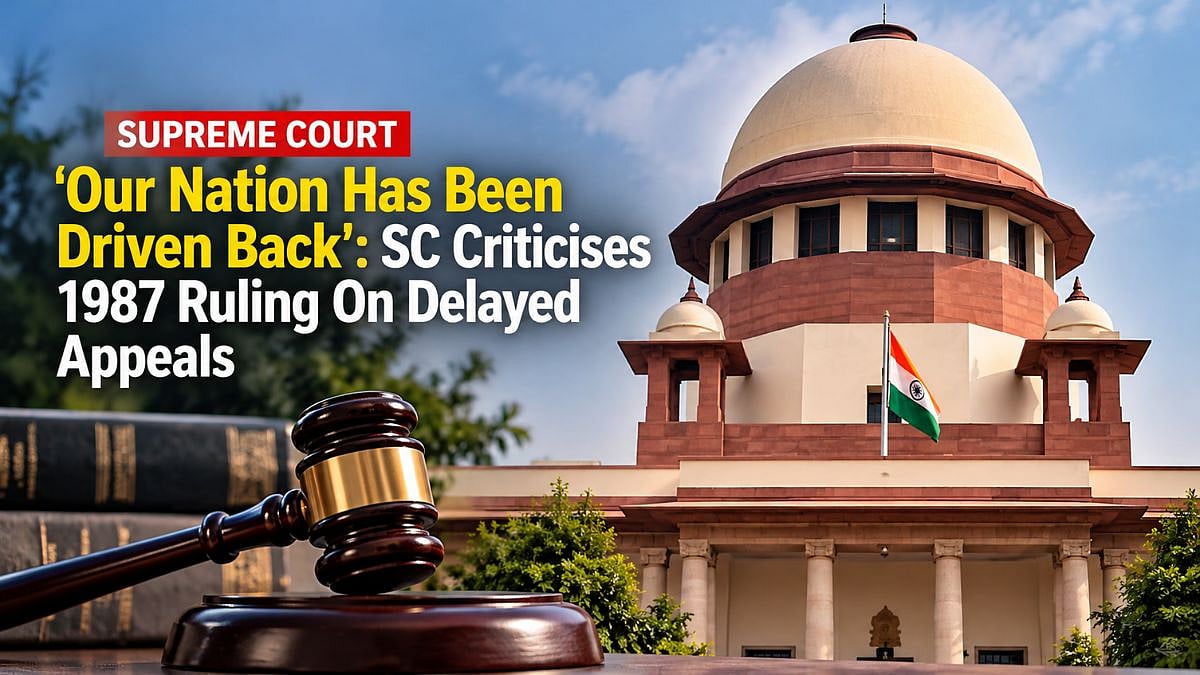
Courts set deadlines for people and organizations to file appeals.
In 1987, the Supreme Court said courts could sometimes accept a late appeal to ensure fairness.
The Supreme Court now says that decision should not be treated as a reason to excuse every delay.
The case involved Karvy Stock Broking and its former leader, C Parthasarathy.
They asked for appeals against SEBI penalties to be accepted even though they were filed late.
The Securities Appellate Tribunal refused, and the Supreme Court upheld that result.
The court said government bodies and private parties must both meet deadlines.
It did not decide whether SEBI’s findings about Karvy were correct.

The Supreme Court criticised how its 1987 Collector, Land Acquisition v. Katiji ruling has been repeatedly used to support applications seeking forgiveness for late appeals.
A Bench of Justices Dipankar Datta and Sheel Nagu dismissed appeals by Karvy Stock Broking Limited and former chairman C Parthasarathy.
The appeals challenged the Securities Appellate Tribunal’s refusal to excuse delays in appealing penalties imposed by SEBI.
SEBI had imposed penalties of Rs 13 crore on Karvy and Rs 8 crore on Parthasarathy, and barred both from the securities market for seven years.
The court said public authorities and private litigants should face the same standards on deadlines; it did not examine the merits of SEBI’s findings.
- Who
- The Supreme Court; Karvy Stock Broking Limited and C Parthasarathy; the Securities and Exchange Board of India.
- What
- The Supreme Court dismissed appeals against the tribunal’s refusal to excuse late appeals and criticised routine reliance on its 1987 ruling on delay.
- Where
- Supreme Court of India, New Delhi.
- When
- The Supreme Court made the remarks on October 9, 2026; the tribunal had ruled on September 9, 2026.
- Why
- The court said the 1987 ruling, originally involving a four-day delay, had been used too broadly to justify late filings.
Flexibility for late appeals
Strict compliance with deadlines
How broadly to apply the 1987 ruling
Flexibility for late appeals
The 1987 judgment favoured a liberal approach, prioritising substantial justice over technical considerations when deciding whether to excuse a delay.
Strict compliance with deadlines
The Supreme Court warned that the ruling should not be treated as a general solution for all delayed appeals and stressed compliance with filing deadlines.
Equal treatment of litigants
Flexibility for late appeals
The appeals by Karvy and Parthasarathy sought relief from delays in challenging SEBI penalties.
Strict compliance with deadlines
The court said private litigants, public bodies and government authorities should not receive different treatment on time-barred appeals.
Key facts
- Supreme Court bench
- Justices Dipankar Datta and Sheel Nagu
- 1987 precedent
- Collector, Land Acquisition v. Katiji
- SEBI order
- Dated April 28, 2023
- Alleged diversion
- SEBI said approximately Rs 1,442.95 crore was diverted to related group companies
- Penalties
- Rs 13 crore for Karvy Stock Broking Limited and Rs 8 crore for C Parthasarathy
- Market restriction
- Both were barred from accessing the securities market for seven years
- Tribunal decision
- The Securities Appellate Tribunal refused to condone the delays on September 9, 2026
Quotes
Supreme Court Bench of Justices Dipankar Datta and Sheel Nagu
The two-judge Supreme Court Bench hearing appeals by Karvy and C Parthasarathy.
“Our nation has been driven back because of the decision in 1987, when for condoning a delay of only four days, this Court wrote about 15–16 pages. And that is the decision in Collector, Land Acquisition v. Katiji, which has now been used so long as if this is the panacea for all ills in condonation of delay applications.”
 freepressjournal.in
“We will be equally harsh with the SEBI when it comes up before us with time-barred appeals. We will not recognize any distinction between a private litigant or a public litigant or a government...From now onwards, you will come in time.”
freepressjournal.in
Sources
Related news

Supreme Court Draws Line Between Tax Delay and Default

Bombay High Court Orders Kalpataru Lease Registration Without Penalty
Supreme Court Limitation Ruling Sparks Debate Over Public Assets

Supreme Court Rejects Extension Plea as Anantha Babu Withdraws Bail

Meghalaya High Court Challenges Lawyers’ Statewide Court Boycott

Sebi Calls Jane Street’s Document Demand a Delaying Tactic

MCX Appoints Ramesh Varakhedkar as Chief Business Officer
Supreme Court Reserves Verdict on Single-Member PMLA Attachments Authority

How to Gift Mutual Funds to Siblings on Raksha Bandhan

SEBI Cancels 25 Research Analyst Registrations Over Unpaid Fees