

4 hrs ago
India Tells UN Commercial Ships Must Not Become Targets
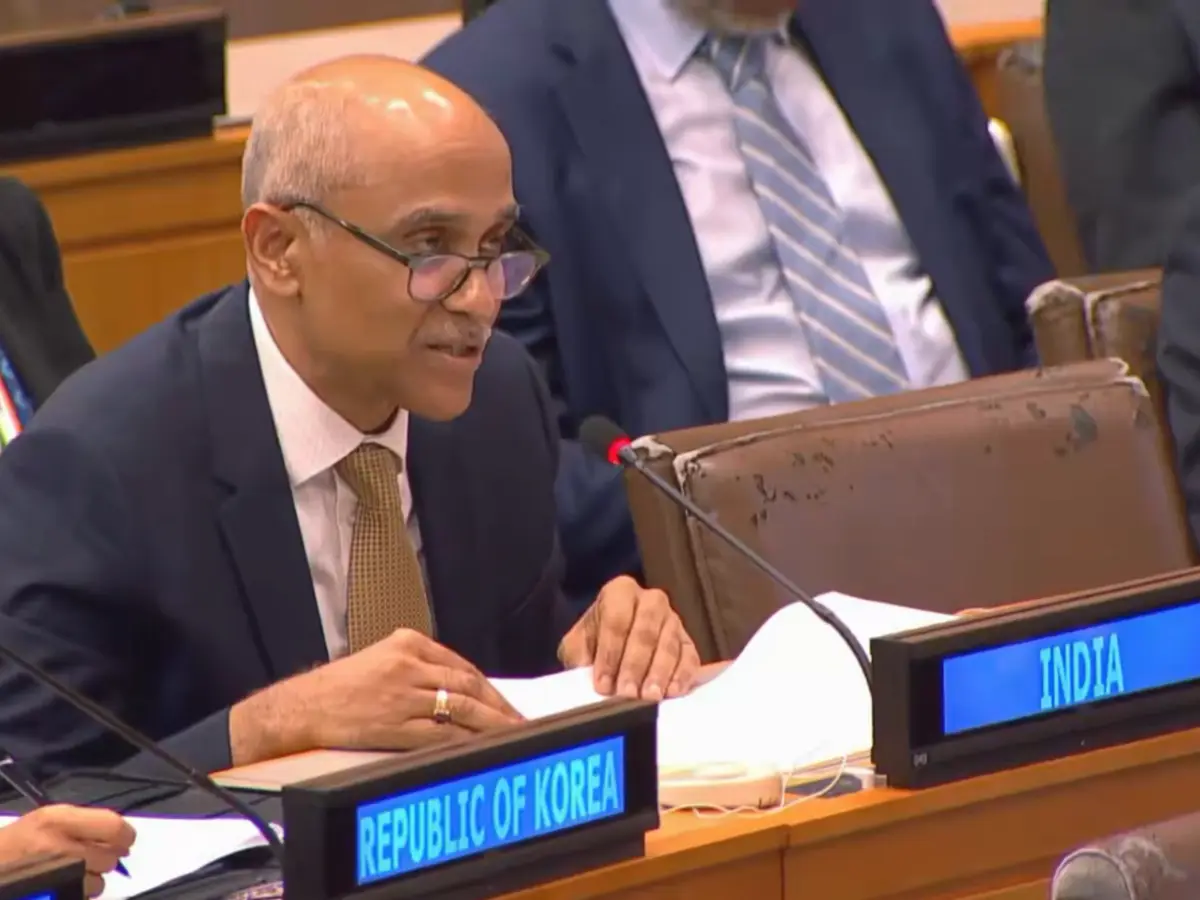
India told the United Nations that commercial ships should not be attacked or stopped because of political conflicts.
This warning came as important sea routes in West Asia faced attacks and disruptions.
These routes carry food, fuel and other goods around the world.
When ships cannot travel safely, journeys become longer and more expensive.
India said poorer countries can be hurt the most by these problems.
India has used its navy to escort hundreds of merchant ships carrying valuable cargo.
It also wants countries to cooperate better while respecting coastal states’ sovereignty.
India said seafarers need help with medical care, evacuation, crew changes and returning home.

India warned the UN that commercial vessels must not be targeted amid geopolitical tensions and maritime disruptions.
Ambassador Harish Parvathaneni called for free, open, secure and rules-based seas under international law.
Attacks and disruptions in the Red Sea, Gulf of Aden and Strait of Hormuz have threatened energy and food supplies.
India said more than 449 merchant vessels carrying nearly 20.3 million metric tonnes of cargo and oil had been escorted.
India urged stronger crisis planning for cargo movement, seafarer welfare, cyber risks and unmanned-system threats.
- Who
- India, represented by UN ambassador Harish Parvathaneni, addressed a UN Security Council meeting hosted by Bahrain.
- What
- India urged countries to protect commercial shipping and preserve freedom of navigation during security crises.
- Where
- The discussion concerned maritime routes including the Red Sea, Gulf of Aden and Strait of Hormuz, and was held at a Bahrain-hosted UN Security Council meeting.
- When
- The meeting took place on 17 September; India reported escort figures as of 14 September and said naval deployments began after security deteriorated in West Asia.
- Why
- Disruptions and attacks can threaten energy and food supplies, raise freight and insurance costs, lengthen shipping routes and endanger seafarers.
Key facts
- Meeting
- UN Security Council Arria-formula meeting titled “Safe Seas, Shared Security”
- Speaker
- India’s UN ambassador Harish Parvathaneni
- Reported escorts
- More than 449 merchant vessels
- Cargo escorted
- Nearly 20.3 million metric tonnes of cargo and oil
- Cargo value
- More than $8.4 billion
- Naval deployment
- Eleven Indian Navy units were deployed in the western Arabian Sea by mid-March
- Key risks
- Attacks, cyberattacks, unmanned systems and interference with navigation and communications
Quotes
Harish Parvathaneni
India’s ambassador to the United Nations
“Navigational rights must not be subject to coercion, threats, unlawful restrictions or arbitrary interference.”
 wionews.com
“Commercial vessels must not become targets of geopolitical tensions.”
wionews.com
Sources
Related news
India Urges UN Action to Protect Critical Sea Lanes

India Condemns Oman Coast Vessel Attack, 13 Indians Rescued
Attack on Oman-Bound Tanker Leaves One Indian Missing

International Law Tested by Attacks on Indian Seafarers

Modi Urges Iran’s Pezeshkian to Protect Sea Routes
Video Shows Iranian Attack on Ship Carrying 21 Indian Sailors
Europe Faces Renewed Winter Gas Price Shock Risk
Saudi Arabia's Yemen Crisis Threatens Energy Security and Vision 2030
South Korea Rules Out Troops Amid Trump’s Iran War Pressure
Oil Prices Fall as Supply Disruption Fears Ease
