

2 hrs ago
NPCI Rejects GST Concerns Over UPI Merchant Charges

NPCI responded to concerns about a new fee connected to some UPI payments.
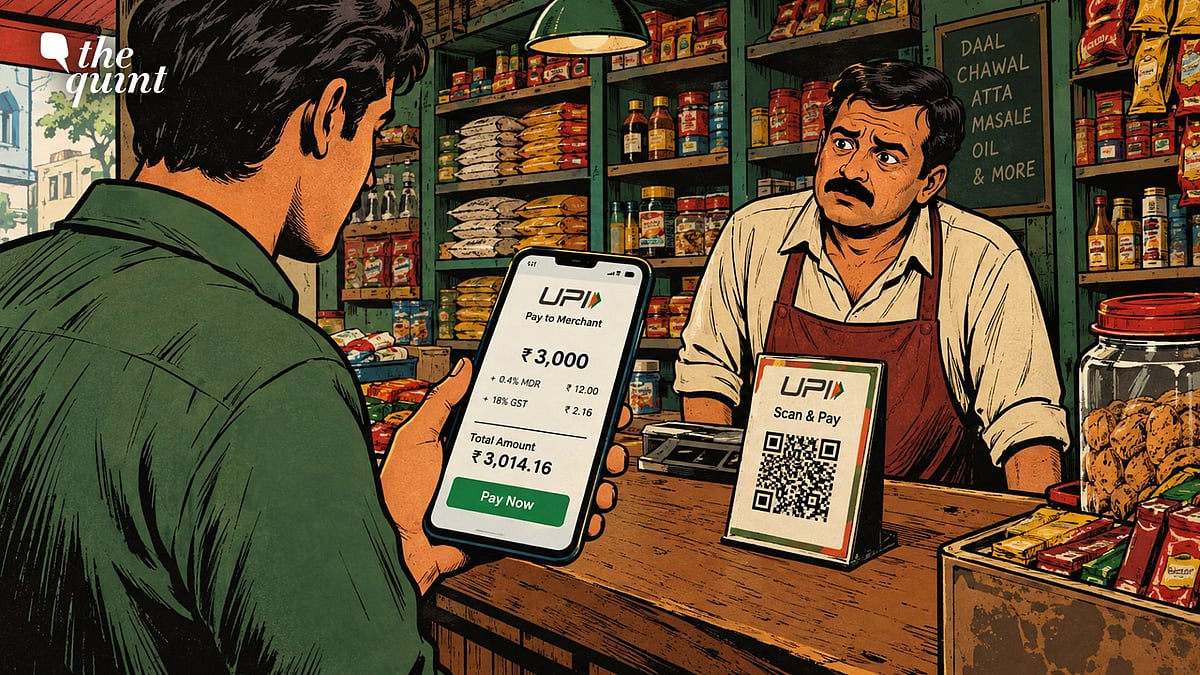
The fee is called the merchant discount rate, or MDR.
It applies only to certain payments made to businesses that are above ₹2,000.
Payments below ₹2,000 will continue to have no MDR.
NPCI said more than 96% of UPI merchant transactions are within that lower amount.
Very small merchants receiving up to ₹1 lakh monthly through UPI will also not pay MDR.
For some other merchants, GST paid on MDR can be adjusted against GST owed on sales.
NPCI therefore said most merchants and UPI payments will not face an additional burden.

NPCI called claims that GST on UPI merchant discount rates would burden small merchants and make digital payments costly “incorrect.”
MDR applies to certain person-to-merchant UPI transactions above ₹2,000, while smaller payments remain free of MDR and related GST.
NPCI said transactions up to ₹2,000 represent more than 96% of UPI merchant transaction volume.
Merchants with monthly UPI receipts up to ₹1 lakh are exempt from MDR under the small-merchant classification.
A new framework sets MDR at 0.4% for certain transactions above ₹2,000 from 15 October, capped at ₹300 for payments of ₹75,000 or more.
- Who
- The National Payments Council of India (NPCI), the government, and merchants using UPI.
- What
- NPCI rejected concerns that GST on UPI merchant discount rates would significantly burden small merchants or make digital payments costly.
- Where
- The clarification was posted on X, formerly known as Twitter, and concerns UPI merchant transactions.
- When
- NPCI issued its clarification on Monday; the new 0.4% MDR framework takes effect on 15 October.
- Why
- NPCI said most transactions remain outside the MDR framework, small merchants are protected, and eligible GST on MDR can be set off against output tax liability.
Concerns About Added Costs
NPCI’s Rebuttal
Impact on small merchants
Concerns About Added Costs
Critics and speculation suggested that GST on UPI MDR could burden small merchants and make digital payments more expensive.
NPCI’s Rebuttal
NPCI said the concern is incorrect because payments below ₹2,000 have zero MDR, and merchants receiving up to ₹1 lakh monthly through UPI are exempt.
GST burden
Concerns About Added Costs
The concerns treated GST on MDR as an additional cost that merchants would have to bear.
NPCI’s Rebuttal
NPCI said merchants can adjust GST paid on MDR against GST payable on sales, so they do not bear the GST cost on the MDR amount.
Scope of the new framework
Concerns About Added Costs
The introduction of a 0.4% MDR raised concerns that a broad range of UPI transactions could become costly.
NPCI’s Rebuttal
NPCI and the government said the majority of UPI merchant transactions remain unaffected, while transactions accounting for 70% of transaction value remain outside the framework.
Key facts
- MDR rate
- 0.4% on certain UPI person-to-merchant transactions above ₹2,000.
- Effective date
- 15 October.
- Transaction cap
- MDR is capped at ₹300 for payments of ₹75,000 or more.
- Small-payment status
- UPI payments below ₹2,000 continue to have zero MDR and no GST impact from MDR.
- Transaction share
- NPCI said transactions up to ₹2,000 make up more than 96% of UPI merchant transaction volume.
- Small-merchant exemption
- Merchants with monthly UPI receipts up to ₹1 lakh are not liable to pay MDR.
- Consumer cost
- Consumers continue to transact free of cost using UPI.
Quotes
National Payments Corporation of India
India’s national retail payments network and UPI operator
“As a result, the overwhelming majority of UPI payments will not attract MDR and hence no GST on MDR. Further, GST paid on MDR by a merchant will be adjusted against the GST payable on the sale of goods, in the same manner that input taxes are set off against output tax liability. Consequently, merchants do not bear the cost of GST on the MDR amount paid by them.”
 livemint.com
“Hence, apprehensions that GST on MDR will impose an additional burden on merchants are misplaced. The overwhelming majority of UPI transactions and small merchants remain unaffected.”
livemint.com
Sources
Related news

NPCI Says GST Won’t Burden Small Merchants Using UPI
New UPI MDR Will Charge Merchants GST From October 15
UPI MDR GST Impact Expected to Remain Minimal

New UPI MDR Rules Keep Consumers Free, Charge Eligible Merchants
India to Levy 18% GST on UPI MDR Above ₹2,000

UPI MDR Begins October 15, Merchants Face Charges, Customers Don’t
Centre Advances September Salaries Amid Proposed Bank Strike

UPI MDR Keeps Payments Cheap, While Cards Reward Big Purchases

Centre Cuts Import Duties on Sunflower, Soybean and Palm Oils
UPI MDR Introduces Fees, Reviving Debate Over Transaction Tax
