

1 hr ago
Regularly Sleeping Under Six Hours May Strain Heart Health

Your heart and blood vessels get a chance to relax while you sleep.
If you regularly sleep less than six hours, your body may not get enough time to recover.
This can raise blood pressure and keep your body in a stress or alert mode.
Poor sleep can also make you crave unhealthy foods and make exercise feel harder.
Over time, this may contribute to weight gain and poor blood sugar control.
These problems can increase the risk of heart disease.
One bad night is usually less concerning than sleeping too little for a long time.
Sleep quality matters too, even if you spend seven or eight hours in bed.
A regular bedtime, fewer evening stimulants, and medical advice for ongoing problems may help.

Regularly sleeping fewer than six hours may raise blood pressure and increase cardiovascular strain.
Insufficient sleep can affect stress hormones, appetite, blood sugar, metabolism, and body weight.
Chronic sleep deprivation poses greater long-term risks than a single night of poor sleep.
Sleep quality matters, as breathing problems, stress, medications, and health conditions can disrupt rest.
Experts recommend a regular sleep schedule, healthy habits, and medical advice for persistent sleep problems.
- Who
- People who regularly sleep fewer than six hours, as discussed by Dr. Anand Kumar Pandey.
- What
- The article explains how chronic short or poor-quality sleep may affect cardiovascular and overall health.
- Where
- The article is associated with NDTV and identifies Dr. Anand Kumar Pandey as working at Max Super Speciality Hospital, Vaishali.
- When
- The risks discussed arise when insufficient sleep becomes a regular, long-term habit rather than an occasional occurrence.
- Why
- Insufficient sleep reduces recovery time for the heart and may affect blood pressure, stress hormones, appetite, blood sugar, metabolism, and weight.
Key facts
- Sleep duration discussed
- Regularly sleeping fewer than six hours per night
- Main health concern
- Potential cardiovascular strain and increased heart-disease risk
- Blood pressure effect
- Insufficient sleep may increase blood pressure
- Other affected areas
- Appetite, blood sugar, metabolism, body weight, and exercise motivation
- Sleep quality concerns
- Breathing problems, disturbances, stress, medication side effects, and underlying health conditions can impair sleep
- Suggested habits
- Keep a regular sleep-wake schedule, avoid late caffeine and heavy bedtime meals, limit alcohol, and remove bedroom distractions
- When to seek advice
- When difficulty falling asleep, repeated nighttime waking, or excessive daytime sleepiness persists
Sources
Related news
Bryan Johnson’s Sleep Routine Emphasizes Consistency Over Complexity

Weekend Catch-Up Sleep Linked to Lower High-Blood-Pressure Likelihood

Sleeping With Lights On May Affect Cardiovascular Health

Cardiologist Urges Breaking Eight Habits to Protect Heart Health

Insomnia Emerges as Public Health Crisis Linked to Chronic Disease
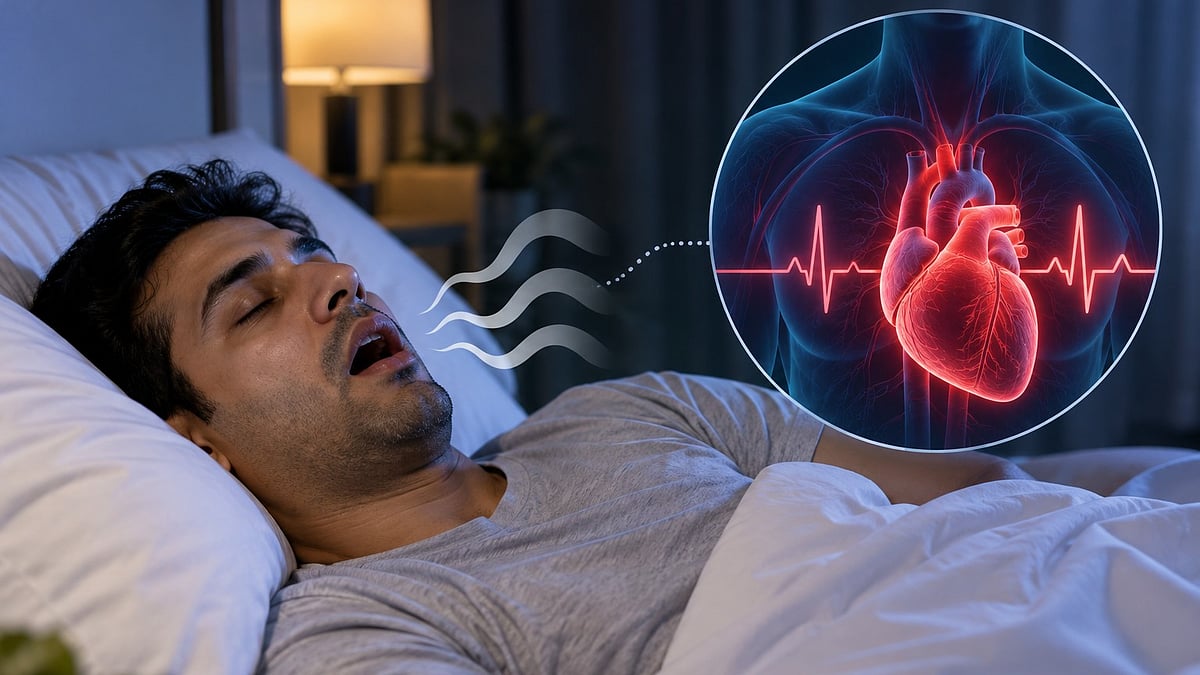
Sleep Apnoea May Strain the Heart: Warning Signs and Care

Heart Disease May Begin With Silent Symptoms, Cardiologist Warns

Delhi Doctors Perform First Active Robotic Ceramic Knee Replacement

Four-Way Kidney Swap Overcomes Major Legal Hurdle in India

H1N1 Cases Surge In India: Recovery Tips, School Outbreak