2 weeks ago
Four-Way Kidney Swap Overcomes Major Legal Hurdle in India
Four families each had a sick person who needed a kidney.
Each family also had a healthy person willing to donate, but the donor and patient did not match safely.
The families solved this by swapping kidneys with one another.
Each donor gave a kidney to someone from another family.
At first, officials said the law allowed only a two-family swap.
The Delhi High Court decided that the law could also allow a larger exchange.
On July 13, 2026, four kidneys were donated and transplanted during eight carefully coordinated operations.
The doctors worked across five operating rooms so the chain would not stop.
The patients and donors still faced medical risks, including rejection or complications.

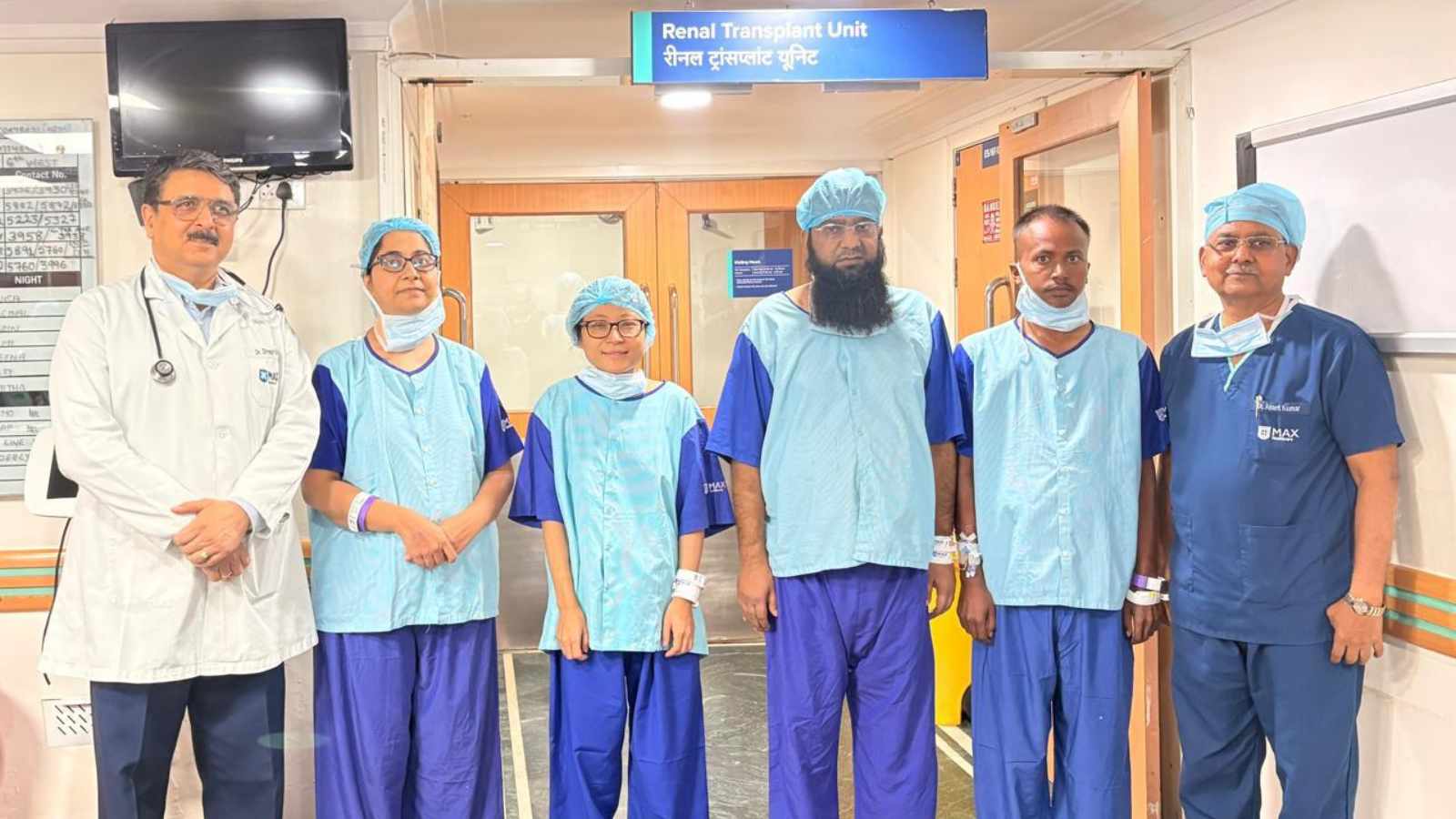
Four families from Nagaland, Kashmir, Punjab and Bihar arranged a kidney exchange after their intended donors were biologically incompatible.
The proposed swap linked four donors and four recipients, with each donor giving to another family’s recipient.
India’s Authorisation Committee and Appellate Authority initially rejected the exchange, interpreting the law as allowing only two pairs.
On May 26, 2026, the Delhi High Court ruled that the law did not limit swaps to two donor-recipient pairs.
On July 13, 2026, eight people underwent four donor operations and four transplants simultaneously at Max Super Speciality Hospital, Saket.
- Who
- Four donors and four recipients from families in Nagaland, Kashmir, Punjab and Bihar, led medically by Dr Anant Kumar’s team.
- What
- A four-way paired kidney exchange involving four donor nephrectomies and four kidney transplants.
- Where
- Max Super Speciality Hospital in Saket, Delhi.
- When
- The Delhi High Court ruled on May 26, 2026; the operations took place on July 13, 2026.
- Why
- The intended donors were biologically incompatible with their own recipients, while a four-way exchange offered compatible matches; the court also had to resolve whether India’s transplant law allowed more than two pairs.
Two-Pair Legal Interpretation
Broader Four-Way Interpretation
Meaning of Section 9(3A)
Two-Pair Legal Interpretation
The Authorisation Committee and Appellate Authority interpreted references to a “first donor” and “second donor” as limiting exchanges to two incompatible donor-recipient pairs.
Broader Four-Way Interpretation
The Delhi High Court said those references described the exchange mechanism and did not create a statutory ceiling on the number of pairs.
Need for legal change
Two-Pair Legal Interpretation
The authorities held that a larger chain would require an amendment to the law.
Broader Four-Way Interpretation
The court found that a four-way exchange could be considered under the existing law, subject to safeguards including the ban on commercial organ dealing.
Key facts
- Participants
- Eight people: four donors and four recipients.
- Exchange structure
- Each of four donors gave a kidney to another family’s recipient, forming a closed circle.
- Initial legal decision
- The Authorisation Committee rejected the proposal, and the Appellate Authority upheld that decision.
- Court ruling
- The Delhi High Court held that Section 9(3A) of the Transplantation of Human Organs and Tissues Act did not cap swaps at two pairs.
- Operation date
- July 13, 2026.
- Surgical scale
- Eight operations were performed simultaneously across five operating theatres, from about 7 a.m. to 6 p.m.
- Matching process
- The matches were developed using Alliance for Paired Kidney Donation software and checked through immunological testing.
Quotes
Dr Anant Kumar
Lead surgeon who oversaw the four‑way transplant
“Like in an army, responsibilities are divided man to man, post to post. Here too, our team of doctors had divided the responsibility.”
 indianexpress.com
“We have tried three‑way swaps manually, but matching donors with unrelated recipients is a very tedious and complex task.”
indianexpress.com
Sources
Related news
Hindu, Muslim women donate kidneys to each other's husbands
Interfaith Kidney Swap in Gujarat Saves Two Lives

Blood Group Mismatch No Longer Blocks Kidney Transplants

CARE Hospitals Performs Complex ABO-Incompatible Kidney Transplant on 60-Year-Old

India performs 20,000 transplants, but organ gap persists