3 weeks ago
Centre Opposes Income-Based Sub-Quotas, Says Parliament Must Decide Creamy Layer
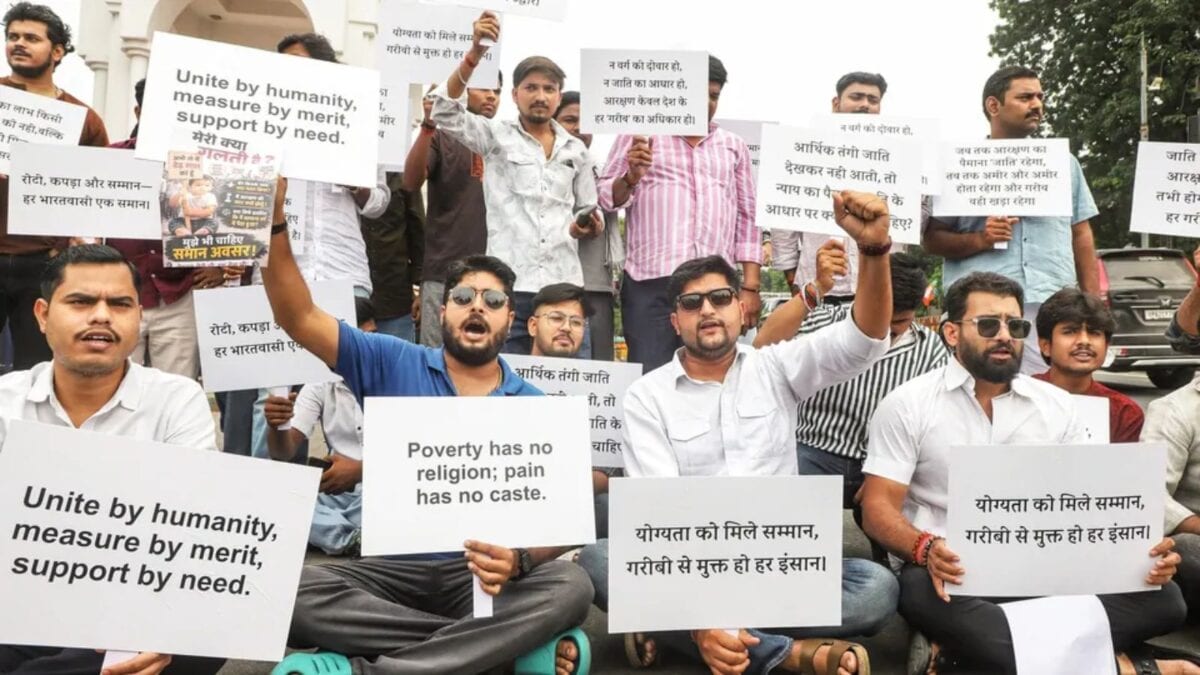
In India, some groups of people get special help called reservations, such as extra seats in schools and government jobs, because they were treated unfairly for many years.
Some people think that within these groups, only poorer families should get the help, while wealthier families should not.
This idea is called the 'creamy layer' rule.
A lawyer named Ashwini Upadhyay and others asked the Supreme Court to create rules for this.
But the government said no.
The government said the Supreme Court should not decide this, because only Parliament, the place where laws are made, can change reservation rules.
The government also said reservations are about history and society, not just money.
It wants to study the issue carefully before changing anything.
The government says the creamy layer idea has only ever been used for OBC groups, not for SCs and STs.
Now the Supreme Court will hear the case again on August 18.

The Centre, in a counter affidavit filed through the Ministry of Social Justice and Empowerment, opposed pleas for income-based sub-quotas within SC, ST and OBC reservations.
The government said the creamy layer principle has been confined to OBC reservations by rulings such as Indra Sawhney (1992) and Ashoka Kumar Thakur (2008), and is not applicable to SCs and STs.
It argued that Articles 341, 342 and 342A of the Constitution do not permit income-based changes to notified lists, and only Parliament can amend the Presidential lists under Articles 341(2) and 342(2).
The Centre said any modification should be preceded by a holistic review and thorough empirical study, including socio-economic data of reserved category beneficiaries.
Petitioners including advocate Ashwini Upadhyay, Ramashankar Prajapati and Samta Andolan Samiti want economically weaker candidates treated as a sub-class with higher merit and priority; the matter is next listed for August 18.
- Who
- Advocate Ashwini Upadhyay, Ramashankar Prajapati, Samta Andolan Samiti and others filed the petitions; the Union Ministry of Social Justice and Empowerment opposed them in a counter affidavit on behalf of the Centre.
- What
- A Supreme Court case over whether the creamy layer principle and income-based sub-quotas should apply within SC, ST and OBC reservations, with the Centre calling such a change a policy matter for Parliament alone.
- Where
- Supreme Court of India; the Centre's affidavit reflects the government's position from New Delhi.
- When
- The petition is dated June 15, 2026; the Centre's counter affidavit was reported on August 7, 2026, and the matter is next scheduled for hearing on August 18.
- Why
- Petitioners say economically weaker reserved-category candidates should be treated as a sub-class and given higher merit and priority, while the Centre says reservations rest on historical and social backwardness and require empirical study and legislative action.
PIL petitioners (pro income-based sub-quota)
Centre (opposing)
Who should decide the creamy layer policy
PIL petitioners (pro income-based sub-quota)
The Supreme Court should frame guidelines ensuring candidates from economically weaker backgrounds within each reserved category are treated as a sub-class and accorded higher merit and priority, in compliance with the Davinder Singh constitution bench ruling.
Centre (opposing)
The reliefs sought fall in the realm of policy; only Parliament can take a call, and courts cannot direct the executive to frame policy in a particular manner through a writ of mandamus, keeping in view the separation of powers and judicial precedents.
Does the creamy layer apply to SCs and STs?
PIL petitioners (pro income-based sub-quota)
SCs and STs should be sub-classified for reservation purposes so that benefits reach the economically weakest within these groups, as contemplated in the Davinder Singh ruling.
Centre (opposing)
The creamy layer principle was developed in the context of OBC reservations through Indra Sawhney and was clarified by Ashoka Kumar Thakur (2008) as not applicable to SCs and STs; any exclusion from the SC list can only be carried out by Parliament.
Basis of reservation policy
PIL petitioners (pro income-based sub-quota)
Income-based preferences within each reserved category would ensure a more equitable distribution of reservation benefits on a merit-cum-means approach.
Centre (opposing)
Reservation policy is based on historical and social criteria like caste, tribe and social backwardness, not solely on economic status; discrimination against SC, ST and OBC communities does not happen on the basis of economic conditions alone.
Key facts
- Petitioners
- Advocate Ashwini Upadhyay, Ramashankar Prajapati, Samta Andolan Samiti and others
- Counter affidavit by
- Union Ministry of Social Justice and Empowerment (Department of Social Justice and Empowerment)
- Court
- Supreme Court of India
- Relief sought
- Income-based sub-quotas within SC, ST, OBC and EWS categories, with economically weaker candidates as a sub-class given higher merit and priority
- Centre's stance
- Creamy layer applies only to OBCs; change requires holistic review and empirical study; decision rests with Parliament
- Precedents cited by Centre
- Indra Sawhney (1992), E V Chinnaiah (2005), M Nagaraj (2006), Ashoka Kumar Thakur (2008)
- PIL precedent
- State of Punjab v Davinder Singh constitution bench ruling (dated 2005 in two reports; delivered August 1, 2024 per another)
- Next hearing
- August 18, 2026
Quotes
Centre (Union Ministry of Social Justice and Empowerment)
Government ministry submitting affidavit to Supreme Court
“The identification of Scheduled Castes (SCs), Scheduled Tribes (STs), and Socially and Educationally Backward Classes (SEBCs)/Other Backward Classes (OBCs) is based on historical and social criteria like caste, tribe, and social backwardness, not solely on economic status.”
 thehansindia.com
“The present writ petition is not maintainable in law as it essentially prays for issuance of a mandamus to the executive to frame policy in a particular manner, which is beyond the judicial domain.”
thehansindia.com
Sources
Extending creamy layer to SC, ST is Parliament’s call: Government to Supreme Court
Opposing PIL, Centre urges Supreme Court to let Parliament decide ‘creamy layer’ for SC/STs

Centre opposes plea for creamy layer in SC/ST quota
Can't Exclude SC/ST Creamy Layer From Quotas, Centre Tells SC, Opposes Income-Based Sub-Quota Plea
Related news

'Creamy layer' not applicable to SC/ST quota, govt tells SC

Centre opposes Supreme Court plea for income-based reservation sub-quota

Centre Says Creamy Layer Not Applicable to SC, ST Quotas

Mayawati Opposes SC, ST Creamy Layer, Criticises RSS' Casteist Mindset

Centre's OBC Plea Challenged After Supreme Court Salary Ruling
Rajasthan Dalit, Tribal Groups Push for Quota Sub-Categorisation

Panel Flags Scholarship Delays, OBC Target Cut, SC Shortfalls
Congress Calls Free Coaching Plan a Gimmick, Condemns Ahmedabad Assault
Why Census 2027 Must Count Nomadic Tribes Separately
AIIMS Bhopal and Brahma Kumaris Launch Anti-Addiction Campaign

NCSK to Celebrate 32nd Foundation Day on August 23