1 week ago
Why Census 2027 Must Count Nomadic Tribes Separately
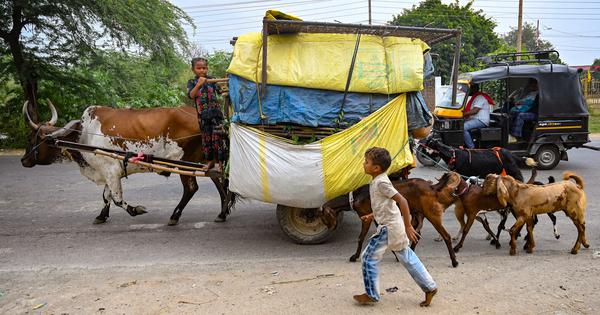
Nomadic and Denotified Tribes are communities whose families often move from place to place.
Many have difficulty getting housing, schooling, healthcare, water and government benefits.
The article says they were once labelled “born criminals” by the British, and that this harmful treatment still affects them.
Their numbers have not been separately counted nationally since 1931.
Because there is little reliable data, governments may not know how much help they need.
Activists want the 2027 Census to count them in a separate category.
They say this would help plan budgets and protect the communities from discrimination.
The Supreme Court did not accept a petition seeking this change and described it as an attempt to divide society.
The article argues that separate counting is necessary for equality and social justice.

Activists demand a separate national Census category for Nomadic, Denotified and Semi-Nomadic Tribes.
These communities were last separately counted in the 1931 caste-based Census under British administration.
The article links their lack of national data to exclusion from welfare, housing, education, healthcare and other services.
The 2008 Renke Commission report estimated these communities at 10% of India’s population and documented severe deprivation.
The Supreme Court declined to hear a petition seeking separate enumeration, calling it a “deep-rooted move to divide society.”
- Who
- Nomadic, Denotified and Semi-Nomadic Tribes, community activists and leaders, the Ministry of Social Justice and Empowerment, and the Supreme Court of India.
- What
- Activists are demanding that these communities be recognised and counted separately in the 2027 Census.
- Where
- India.
- When
- Ahead of Census 2027; the communities were last separately counted in 1931, and the Renke Commission reported in 2008.
- Why
- Supporters say separate data is needed to address historical discrimination, plan welfare policies and distribute resources more equitably.
Supporters of Separate Enumeration
Court’s Stated Objection
Purpose of counting
Supporters of Separate Enumeration
Activists say a distinct category would make the communities visible in national data and support better budgets, welfare policies and resource allocation.
Court’s Stated Objection
The Supreme Court declined to hear the petition and described the demand as a “deep-rooted move to divide society.”
National recognition
Supporters of Separate Enumeration
Community leaders argue that recognition varies across states and that the groups lack a uniform national identity, leaving their exclusion and victimisation difficult to measure.
Court’s Stated Objection
The court’s reported response did not accept the petition seeking a separate national enumeration category.
Census design
Supporters of Separate Enumeration
Supporters say questionnaires designed around permanent homes, fixed occupations and stable addresses fail to reflect nomadic mobility and should be redesigned.
Court’s Stated Objection
No alternative Census design or counting method is specified in the article.
Key facts
- Last separate enumeration
- 1931, in a caste-based Census conducted by the British administration.
- Renke Commission estimate
- The 2008 report estimated Denotified, Nomadic and Semi-Nomadic Tribes at 10% of India’s population.
- School enrollment
- The report cited enrollment of 42% for children from Denotified Tribes and 28% for children from Nomadic Tribes.
- Higher education enrollment
- A 2008 study cited enrollment of 0.24% among Denotified and Nomadic Tribes.
- Historical classification
- The Criminal Tribes Act of 1871 labelled several communities “born criminals”; the Act was repealed in August 1952.
- Court response
- The Supreme Court declined to entertain a petition seeking separate enumeration in Census 2027.
Quotes

Supreme Court of India
The two-judge bench that refused to entertain a petition seeking separate enumeration of Denotified Tribes in the 2027 Census.
“deep-rooted move to divide society”
 scroll.in
Sources
Related news
Uttar Pradesh Forms Nomadic Development Board for Denotified Communities
Committee Seeks Changes to Caste Enumeration for Census 2027

Congress Challenges Census 2027 Caste Question Over Data Accuracy

Census 2027 Drops Beggars Category, Adds Natural Calamities

Census 2027 Disability Question Risks Undercounting Disabled Citizens Across India

OBC Federation Warns of Protest Over Caste Census Gazette Omission

Panel Flags Scholarship Delays, OBC Target Cut, SC Shortfalls
Congress Calls Free Coaching Plan a Gimmick, Condemns Ahmedabad Assault

AIIMS Bhopal and Brahma Kumaris Launch Anti-Addiction Campaign

NCSK to Celebrate 32nd Foundation Day on August 23