3 hrs ago
Oil Extends Gains as Possible US Carrier Deployment Raises Risks

Oil prices rose for a third day because the United States may send more military forces to the Middle East.
Traders worry this could make the conflict with Iran worse.
A tanker was also reportedly hit near the Strait of Hormuz, although the damage is not known.
Oil supplies from the region had recently begun to improve.
However, fuel supplies have not recovered as much.
Iran appeared not to load any crude oil onto tankers in September.
The United States is asking the European Union to release diesel reserves to help with shortages.
Because oil inventories are low, another military incident could push prices higher.

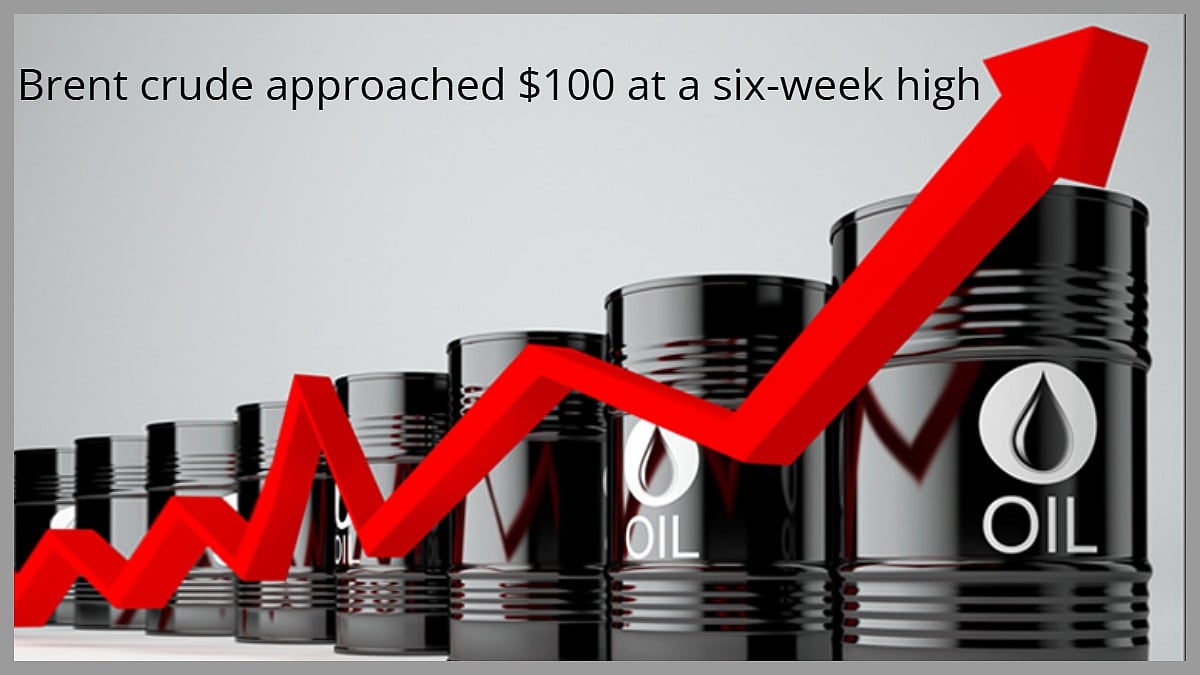
West Texas Intermediate rose toward $93 a barrel after gaining almost 3% in the previous session.
Brent settled above $102 as traders assessed the risk of further escalation between the United States and Iran.
The Pentagon may send another carrier group and 10,000 sailors and Marines to the Persian Gulf.
A tanker was reportedly hit by an unknown projectile while passing through the Strait of Hormuz.
Iran appeared to load no crude oil onto tankers in September, while the United States pressed Europe to release diesel reserves.
- Who
- The United States, Iran, oil traders, the European Union, and regional shipping operators are involved.
- What
- Oil prices rose as the United States considered sending another aircraft carrier group to the Middle East amid reports of a tanker incident.
- Where
- The potential deployment concerns the Persian Gulf, while the tanker incident was reported in the Strait of Hormuz.
- When
- The developments occurred during the eighth month of the US-Iran war; Iran’s reported lack of crude loading refers to September.
- Why
- Traders feared that a larger US military presence and attacks on shipping or energy infrastructure could disrupt regional oil flows.
Supply Recovery View
Escalation Risk View
Regional energy flows
Supply Recovery View
Wall Street analysts said flows from the Middle East were nearing pre-war levels, suggesting that crude supply concerns had begun to ease.
Escalation Risk View
Fuel supplies had not recovered as much, and Iran’s apparent lack of crude loading suggested that access to energy markets remained restricted.
Effect of a larger US deployment
Supply Recovery View
The possible carrier deployment could give President Donald Trump more options in responding to the conflict.
Escalation Risk View
Analysts warned that Iran could respond by attacking US assets or regional energy infrastructure, causing another oil-price spike.
Key facts
- West Texas Intermediate
- Rose to around $93 a barrel.
- Brent crude
- Settled above $102 and remained almost 70% higher this year.
- Potential deployment
- An additional aircraft carrier group and 10,000 sailors and Marines could be sent to the Persian Gulf.
- Tanker incident
- UK Maritime Trade Operations received a report that a tanker was hit by an unknown projectile in the Strait of Hormuz.
- Iranian crude loading
- Iran appeared to have loaded no crude oil onto tankers in September.
- Fuel-supply response
- The United States urged the European Union to release diesel stockpiles and help avoid US export curbs.
Quotes
Brian Martin and Daniel Hynes
ANZ Group Holdings Ltd. analysts
“The oil market is highly susceptible to another spike in prices, with inventories at low levels following six months of drawdowns. Investors are increasingly concerned that Iran will respond to the military buildup with attacks on US assets and energy infrastructure in the region.”
 livemint.com
Sources
Related news
Oil Prices Rise as Iran-U.S. Tensions Threaten Gulf Supply
Oil Nears $100 as Fresh US-Iran Strikes Revive Hormuz Fears
Iran-US Ship Attacks Near Hormuz Send Oil Above $100
Oil Prices Near USD 100 as Iran-US Tensions Disrupt Supply

Oil Falls as Hormuz Flows and US-Iran Diplomacy Ease Fears

Oil Tops $100 as Hormuz Conflict Deepens Global Energy Fears

Saudi Coalition Says Houthis Attacked Madinah Power Station

US Announces $24.4 Billion Contract Amid Missile Stockpile Crisis

Pentagon Weighs Major Gulf Deployment as Trump Considers Iran

US May Send Third Carrier, 10,000 Troops Amid Iran War