

5 days ago
Conflict and Ebola Intensify Each Other in Eastern Congo
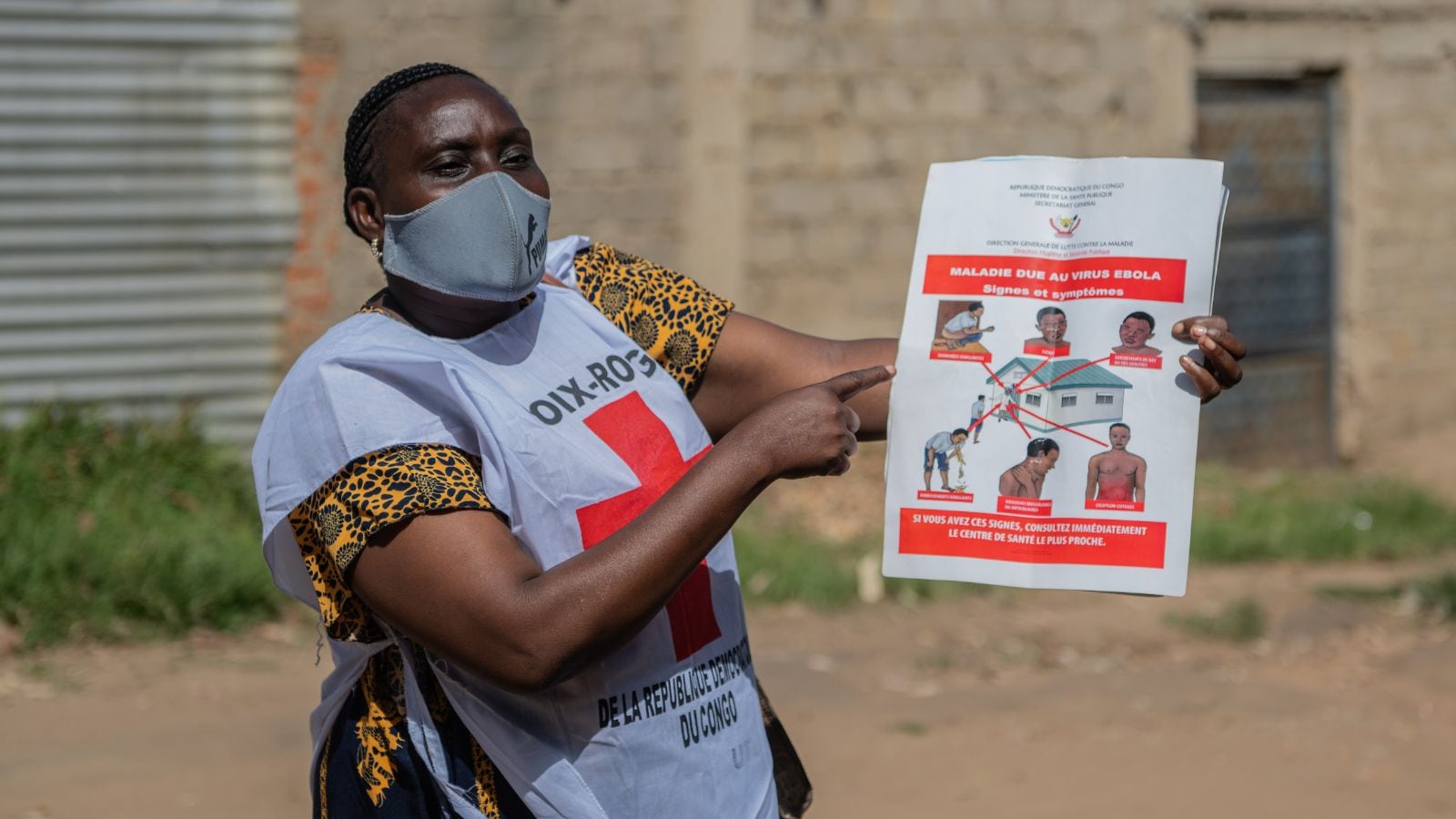
Ebola is spreading in parts of the Democratic Republic of the Congo.
These areas have also faced fighting between rebels and government forces for years.
Because of the conflict, many people cannot easily reach hospitals or health workers.
This means sick people may be discovered too late.
Some communities do not trust health workers, and some responders have been attacked.
Traditional funerals can also spread the virus when people have close contact with the dead.
International and African health groups are sending experts, supplies and medical support.
India has provided medical aid and funding.
The article says lasting peace and stronger local health systems are both needed to stop the outbreak.

An Ebola outbreak in eastern Democratic Republic of the Congo has caused more than 5,500 cases and over 2,600 deaths in 100 days.
The outbreak is centered in conflict-affected Ituri and North Kivu, where health services have been weakened by years of violence.
M23 rebels and government forces have fought since 2021, displacing more than 5 million people and killing thousands of civilians.
Mistrust of health workers, attacks on responders and traditional funeral practices are complicating Ebola detection and containment.
The World Health Organization, Africa CDC, India and other partners are supporting the response, while experts call for sustained African-led capacity-building.
- Who
- People in the Democratic Republic of the Congo, including patients, displaced civilians, health workers, government forces and M23 rebels, are involved; international and African health agencies are assisting.
- What
- A rapidly growing Ebola outbreak is unfolding alongside an armed conflict in eastern Democratic Republic of the Congo.
- Where
- The outbreak began in Ituri and North Kivu and has affected six provinces, with spread to Uganda; the conflict is concentrated in North Kivu and South Kivu.
- When
- The conflict has raged since 2021; the Ebola outbreak was reported in mid-May 2026, with aid supplied in late May 2026.
- Why
- Years of conflict have weakened public-health services, delayed detection and increased mistrust, while violence and displacement make Ebola control more difficult.
Health and International Response
Community and African-Led Priorities
Managing funerals and infection risks
Health and International Response
Health workers restrict traditional funeral practices because contact with bodies is suspected to spread Ebola.
Community and African-Led Priorities
Some relatives and communities view these restrictions as denying bereaved families the opportunity to participate in traditional rites, contributing to attacks and mistrust.
International assistance
Health and International Response
International agencies and foreign partners are needed to provide experts, laboratories, treatment centers, supplies and funding during the crisis.
Community and African-Led Priorities
Africa CDC leaders argue that Africa's long-term health security should be built primarily through African capacities, financed by African governments, partners and the private sector.
Peace and disease control
Health and International Response
Ebola control requires rapid medical intervention, surveillance and treatment facilities even while fighting continues.
Community and African-Led Priorities
The article argues that the peace process and the Ebola response must advance together because conflict drives displacement, weakens health services and delays detection.
Key facts
- Ebola strain
- Bundibugyo strain
- Reported outbreak scale
- More than 5,500 cases and over 2,600 deaths in 100 days
- Case fatality rate
- Approximately 48 percent
- Health-worker deaths
- More than 60 frontline health workers have died
- Conflict displacement
- More than 5 million people have been displaced
- International response
- The World Health Organization declared a Public Health Emergency of International Concern on May 17 and stationed more than 160 experts in the country
- Indian assistance
- India supplied 45 tons of medical aid and pledged USD 10 million for African Union Ebola preparedness, response and recovery efforts
Quotes

Jean Kaseya
Head of the Africa Centres for Disease Control and Prevention
“Africa’s health security be built first on African soil, with African capacities for the long term financed by African governments, their partners and the private sector”
 indianexpress.com
Sources
Related news
Why DR Congo’s Bundibugyo Ebola Outbreak Became Its Deadliest Yet
Ebola Outbreak in Congo Grows Exponentially as Deaths Top 2,500

Congo Ebola deaths surpass 2,000 in fastest-spreading outbreak
Congo's Ebola Outbreak on Track to Surpass Deadliest in History

DR Congo Ebola Cases Surpass 5,500 as WHO Warns

DR Congo Ebola Outbreak May Be Three Times Larger
WHO: Congo Ebola outbreak controllable within three months

Ebola outbreak spreads to sixth Congo province amid rising deaths

Report: India's Africa Engagement Focuses on Capacity-Building, Not Extraction