2 days ago
RBI’s $136 Billion Dollar Strategy Faces Liquidity Risks
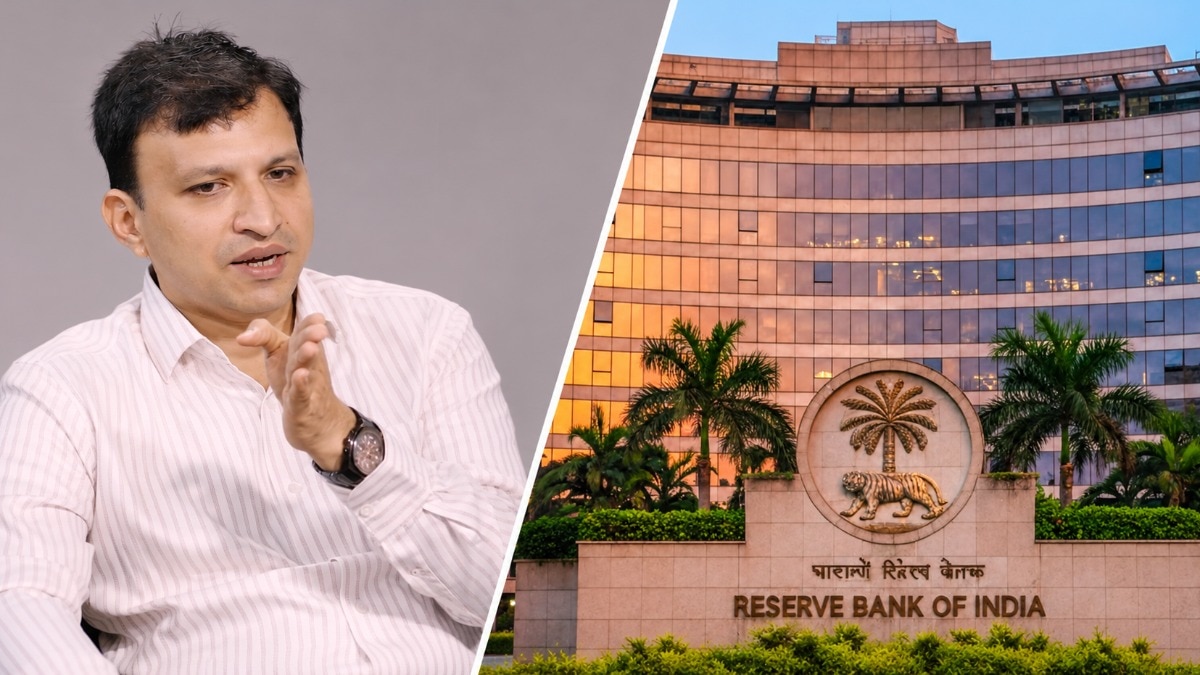
The RBI encouraged banks to bring in dollars from Indians living abroad.
When the dollars arrived, many rupees were released into India’s banking system.
This created a very large pool of extra money.
Prasanna Tantri, an ISB professor, says the RBI must safely remove some of that money.
Otherwise, it could make it harder to control interest rates and inflation.
He says one possible method would cost the government or central bank interest payments.
He also says foreign investors may benefit because they can take money out when the rupee is relatively strong.
In his view, the policy may solve today’s problem while creating financial risks for the future.

India’s liquidity surplus rose to about ₹11.6 lakh crore, or roughly 3% of GDP, after RBI measures to attract foreign-currency deposits.
By August 31, broader concessional swap facilities mobilised about $136.4 billion, including approximately $127.2 billion through FCNR(B) deposits.
ISB professor Prasanna Tantri said the RBI must durably absorb the resulting rupee surplus to protect interest-rate control and limit inflation risks.
Tantri favoured the Market Stabilisation Scheme but said sterilising the liquidity would carry an interest cost and that there was no costless solution.
He said NRIs and FPIs are the clear winners, while public finances may absorb exchange-rate, liquidity and future external-liability risks.
- Who
- The Reserve Bank of India, banks, non-resident Indians, foreign portfolio investors and ISB professor Prasanna Tantri.
- What
- The RBI’s foreign-currency deposit and swap measures have produced a large rupee liquidity surplus, prompting debate over how to absorb it.
- Where
- India’s banking and financial system.
- When
- The special swap facility was introduced in June; the reported liquidity and mobilisation figures were measured by August 31, with Tantri’s comments published on Tuesday.
- Why
- The measures were intended to attract foreign currency, but they released substantial rupee liquidity that the RBI must manage.
Policy Rationale
Tantri’s Criticism
Attracting foreign currency
Policy Rationale
The RBI’s measures were designed to attract foreign-currency deposits and make Indian assets more appealing to foreign investors.
Tantri’s Criticism
Tantri questioned why the government did not use a transparent capital-gains-tax reduction instead of what he described as a complicated indirect subsidy.
Managing surplus liquidity
Policy Rationale
The policy brought dollars into the banking system and created a potential way for excess liquidity to be reduced if foreign investors withdraw funds and banks surrender rupees for dollars.
Tantri’s Criticism
Tantri said the RBI must use a durable absorption mechanism, warning that relying on future withdrawals merely shifts risks and may drain foreign-exchange reserves.
Costs and bank lending
Policy Rationale
The banking system could potentially absorb excess funds through lending or other liquidity operations.
Tantri’s Criticism
Tantri said forcing banks to lend could produce weak loans because there may not be enough bankable demand, and said a short-duration operation was undersubscribed at 5.24%.
Key facts
- Liquidity surplus
- About ₹11.6 lakh crore, or roughly 3% of GDP.
- Broader forex mobilisation
- About $136.4 billion by August 31.
- FCNR(B) mobilisation
- Approximately $127.2 billion of the broader total.
- FPI withdrawals
- Roughly ₹15,000 crore since September 1, according to Tantri.
- Proposed absorption mechanism
- Tantri favoured the Market Stabilisation Scheme, under which securities are issued and proceeds remain impounded.
- Special facility
- A June facility allowed banks to raise three- to five-year FCNR(B) deposits and swap the dollars with the RBI.
- CRR and SLR treatment
- Eligible fresh FCNR(B) deposits were exempted from cash reserve and statutory liquidity requirements.
Quotes
Prasanna Tantri
ISB finance professor commenting on the RBI’s liquidity and foreign-currency strategy
“The public balance sheet absorbs the costs and future risks”
 businesstoday.in
“The dangerous way to make banks lend is the 2008 model”
businesstoday.in
Sources
Related news
RBI Meets Banks as Liquidity Surplus Nears ₹10 Lakh Crore

RBI Forex Swap Draws $136.37 Billion, Led by FCNR(B)

Private Banks Capture Nearly Half of India’s FCNR(B) Inflows

FCNR Deposit Surge Puts India’s Liquidity Management Under Focus
India Draws Record $127 Billion Through Special FCNR Window

Odisha Secures Rs 5,600 Crore Dubai Investment MoUs

Odisha CM Woos UAE Investors During Dubai Visit
Teaching in India’s Classrooms Can Prepare Tomorrow’s Leaders
Professor Warns FCNR(B) Move Could Raise Debt, Liquidity Risks