4 hrs ago
RBI Meets Banks as Liquidity Surplus Nears ₹10 Lakh Crore
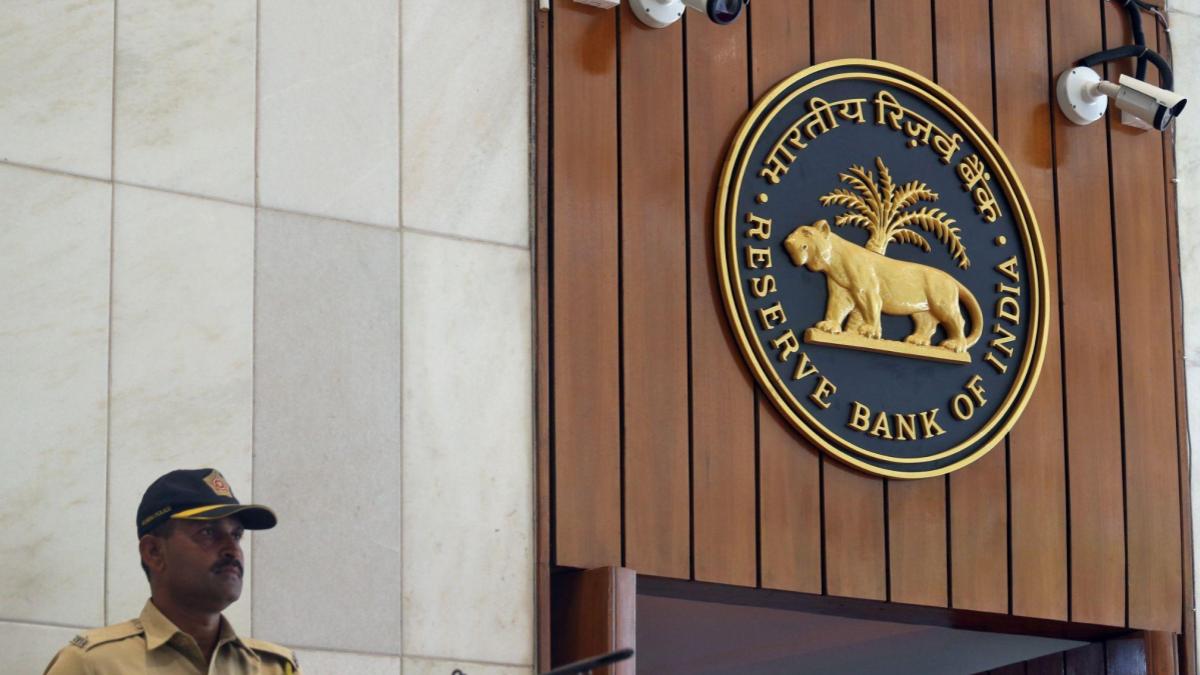
Banks in India suddenly have a very large amount of extra rupee money.
The surplus reached ₹9.70 lakh crore after banks brought in many dollars through special RBI swap windows.
This extra money pushed some short-term interest rates below the RBI’s policy rate.
The RBI met major banks to discuss how to remove some of the excess money safely.
Possible methods include special auctions, selling government securities, and asking banks to keep more money in reserve.
Some banks also suggested foreign-exchange sell-buy swaps.
The RBI already absorbed part of the surplus through two overnight VRRR auctions.
It planned another three-day auction for up to ₹7 lakh crore.
Analysts said the extra money could help banks lend more, but it might also reduce their profit margins.
They also warned that large future dollar-deposit maturities could create additional challenges.

Banking-system surplus liquidity reached a record ₹9.70 lakh crore after special RBI swap windows generated large inflows.
The RBI met treasury heads of major banks to discuss current liquidity conditions and possible absorption measures.
Banks and analysts suggested VRRR auctions, cash-management bills, CRR changes, OMOs, MSS securities and foreign-exchange sell-buy swaps.
The RBI accepted ₹5,18,742 crore and ₹34,652 crore in two overnight VRRR auctions at a 5.24% weighted average rate.
A three-day VRRR auction was planned to absorb up to ₹7 lakh crore, while analysts differed over temporary versus permanent tools.
- Who
- The Reserve Bank of India, major banks and their treasury heads, and analysts including Radhika Rao, Barclays, Nomura, Kotak Mahindra Bank, Jefferies and Motilal Oswal.
- What
- The RBI is managing a record ₹9.70 lakh crore banking-system liquidity surplus created after special foreign-exchange swap windows produced large inflows.
- Where
- India’s banking and financial markets.
- When
- The bank meeting and two overnight VRRR auctions took place on September 3, 2026; a three-day VRRR auction was planned for Friday, September 4, 2026.
- Why
- The surplus followed the RBI’s concessional swap window for fresh three- to five-year dollar-denominated FCNR(B) deposits, which generated larger-than-expected inflows and lowered short-term interest rates.
Temporary and Market-Based Measures
More Durable Absorption
Initial policy response
Temporary and Market-Based Measures
Barclays, Kotak Mahindra Bank and other analysts expect the RBI initially to rely on VRRR operations, cash-management bills, treasury bills and other shorter-term tools.
More Durable Absorption
Analysts also identified incremental CRR increases, OMOs, MSS bonds or bills and sell-buy swaps as options for more durable liquidity absorption.
CRR increase
Temporary and Market-Based Measures
A temporary CRR increase with a sunset clause could help match reserve requirements to the additional deposits without making the policy permanent.
More Durable Absorption
A CRR hike could effectively reverse the earlier exemption of special FCNR(B) deposits from CRR and SLR requirements and could disadvantage smaller and mid-sized banks because the deposits are unevenly distributed.
Market and economic effects
Temporary and Market-Based Measures
Abundant liquidity could support loan growth, benefit NBFCs and smaller private banks, and help keep interest rates lower ahead of the festive season. Motilal Oswal raised its FY27 credit-growth estimate to 15.5%-16%.
More Durable Absorption
Excess liquidity is already depressing overnight rates, while OMOs or MSS issuance could push bond yields higher. FCNR(B) funding may also pressure net interest margins, and large forward liabilities could limit the RBI’s foreign-exchange flexibility.
Key facts
- Liquidity surplus
- ₹9.70 lakh crore on Wednesday, described as a record and above the previous ₹9.21 lakh crore high recorded on September 5, 2021
- Foreign-currency mobilisation
- The special swap windows drew $136.4 billion, according to the report
- Swap-window period
- June 8 to August 31, 2026
- Eligible deposits
- Fresh dollar-denominated FCNR(B) deposits with three- to five-year maturities
- Overnight VRRR auctions
- The RBI accepted ₹5,18,742 crore and ₹34,652 crore at a 5.24% weighted average rate
- Planned operation
- A three-day VRRR auction was planned to absorb up to ₹7 lakh crore
- Market impact
- The weighted average call rate fell to 4.96%, while one-month certificate-of-deposit rates fell to 5.91%
- Analyst estimate
- Barclays estimated that about ₹7.5 lakh crore of liquidity overhang needed to be addressed
Quotes

Motilal Oswal
Indian financial services and research firm assessing the impact on bank margins
“We expect a mix of continued variable reverse repo rate ops (VRRRs), and an incremental cash reserve ratio hike (ICRR) to be deployed; concurrently, an increase in currency in circulation in the festive period (September-November) and forex interventions will also take out liquidity.”
 thehindubusinessline.com
“NIMs are expected to be under pressure in the near term on account of limited spread on the overseas leveraged portion of FCNR(B) deposits.”
 financialexpress.com
Radhika Rao
Senior Economist and Executive Director at DBS Bank
“While organic drivers like tax-related outflows, and seasonal currency leakage, in addition to Current Account Deficit (1.1 per cent of GDP), portfolio outflows, and maturity of the forwards book will act as counter-balancing factors, yet concerted steps will be required to drain the potential surge in liquidity.”
thehindubusinessline.com
“Given the swap arrangement, these inflows (due to FCNR(B) deposits, ECB and OFCBs) will add to an already abundant rupee liquidity backdrop, which was at a four year high this month, depressing overnight rates.”
thehindubusinessline.com
Sources

Related news

FCNR Deposit Surge Puts India’s Liquidity Management Under Focus

India's Banking Liquidity Surges, Prompting RBI Absorption Measures
India Banking System Surplus Liquidity Nears Rs 5 Lakh Crore

RBI Forex Swap Draws $136.37 Billion, Led by FCNR(B)

RBI Forex Swap Attracts $136.4 Billion, Led by FCNR(B)

India's Private Capex May Finally Follow Government Investment
MOFSL Sets Bank Share Targets Amid Credit Growth Optimism

Motilal Oswal Initiates Buy Coverage on Adani Power

Record FCNR Inflows Boost Outlook for Four Bank Stocks