2 hrs ago
Professor Warns FCNR(B) Move Could Raise Debt, Liquidity Risks
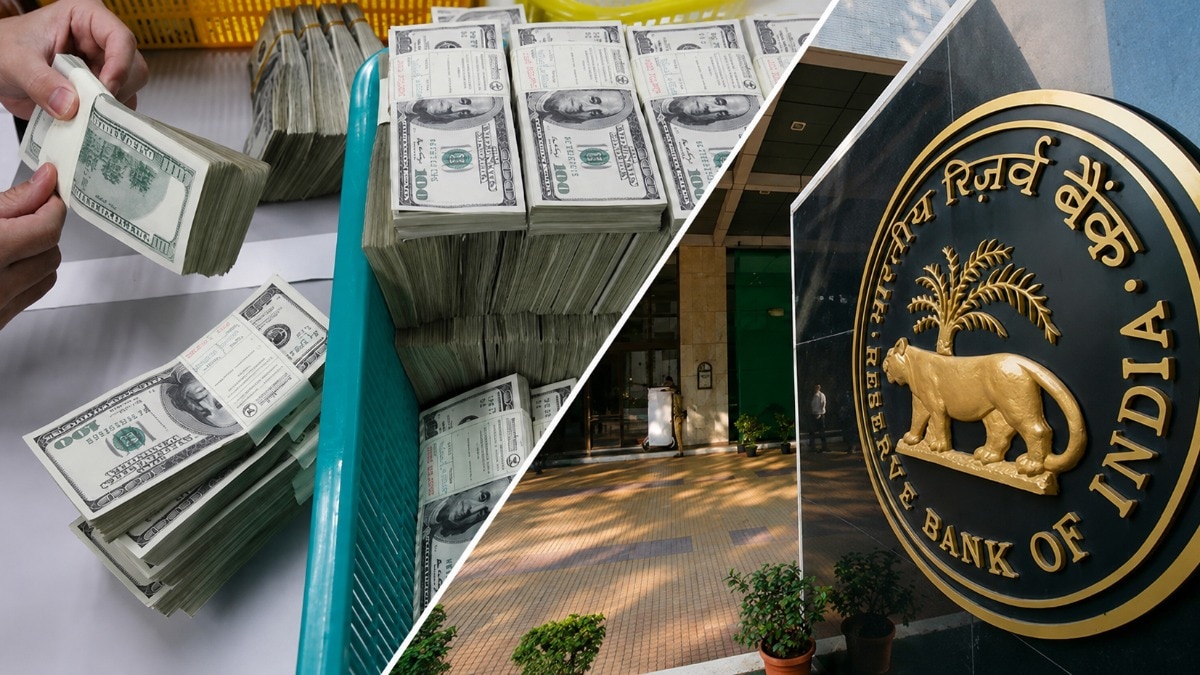
Professor Prasanna Tantri warned that a Reserve Bank of India foreign-currency deposit measure could create problems later.
The measure brought borrowed dollars into India and helped prevent the rupee from rising quickly.
He estimated that India’s external debt could increase from about $765 billion to nearly $900 billion.
He also said the banking system now has a very large amount of extra money.
Tantri warned that many dollars could leave India at around the same time when the deposits mature.
He said some regular money sent home by Indians living abroad might have been replaced by loans that must later be repaid.
He also worried that too much extra money could eventually cause inflation.
He recommended that the central bank remove excess liquidity more permanently and encourage longer-term foreign investment.

Prasanna Tantri estimated India’s external debt could rise from about $765 billion to nearly $900 billion.
He said foreign-currency borrowing, including FCNR(B) deposits and external commercial borrowings, mobilised roughly $136 billion.
The effort to prevent rapid rupee appreciation left the banking system with about ₹7.7 lakh crore in surplus liquidity.
Tantri identified five risks, including clustered dollar outflows, displaced remittances, exchange-rate speculation, easier foreign-investor exits and future inflation.
He urged the Reserve Bank of India to absorb liquidity more durably and consider interest-rate, tax and investment measures.
- Who
- Prasanna Tantri, an Indian School of Business finance professor, discussed risks associated with the Reserve Bank of India’s FCNR(B) measure.
- What
- The measure attracted foreign-currency funds but, according to Tantri, created risks involving external debt, liquidity, future outflows, exchange rates and inflation.
- Where
- India, including its banking system and foreign-exchange market.
- When
- The concerns were reported in connection with Tantri’s September 3, 2026 statement; he also discussed risks when the deposits mature.
- Why
- The measure was intended to prevent a rapid appreciation of the rupee and defend exchange-rate levels.
Key facts
- Estimated external debt
- Could rise from about $765 billion to nearly $900 billion, according to Tantri.
- Borrowed foreign currency
- Roughly $136 billion was mobilised through FCNR(B) deposits, external commercial borrowings and other foreign-currency borrowing.
- Surplus liquidity
- The banking system held about ₹7.7 lakh crore in surplus liquidity, or reserve money.
- Covid-era comparison
- The current reserve-money expansion was described as close to the Covid-era peak of ₹9.5 lakh crore.
- Risks identified
- Clustered dollar outflows, displaced remittances, exchange-rate attacks, subsidised exits by investors and inflationary pressure.
- Suggested liquidity tools
- Tantri proposed a higher cash reserve ratio, Market Stabilisation Scheme bonds or similar durable instruments.
- Other proposed measures
- He suggested possible interest-rate increases, tax and procedural relief for early withdrawals, and lower capital-gains tax to attract stable inflows.
Quotes
Prasanna Tantri
ISB finance professor commenting on the risks of the RBI’s policy
“Finally, we should pray to Krishna, or whichever god one believes in, that no major geopolitical or financial disturbance occurs when these deposits mature.”
 businesstoday.in
“Not every risky decision ends in disaster, but escaping disaster does not justify taking an unnecessary risk.”
businesstoday.in
Sources
Related news
RBI Advances FCNR(B) Scheme Closure to August 31
Rupee breathes via borrowed dollars as RBI swap window closes

FCNR Deposit Surge Puts India’s Liquidity Management Under Focus

India’s Forex Reserves Hit Record High on Foreign Inflows
RBI Meets Banks as Liquidity Surplus Nears ₹10 Lakh Crore

BRICS Evolves From Four-Economy Concept to 11-Member Platform

Can Animals Sense Disasters? Science Examines Indian Beliefs

How War Crimes Law Builds Humanity Through Education

Developing World Faces Rising Child Obesity Alongside Hunger