1 hr ago
Mumbai Monsoon Sees Sharp Rise in H1N1, Malaria Cases
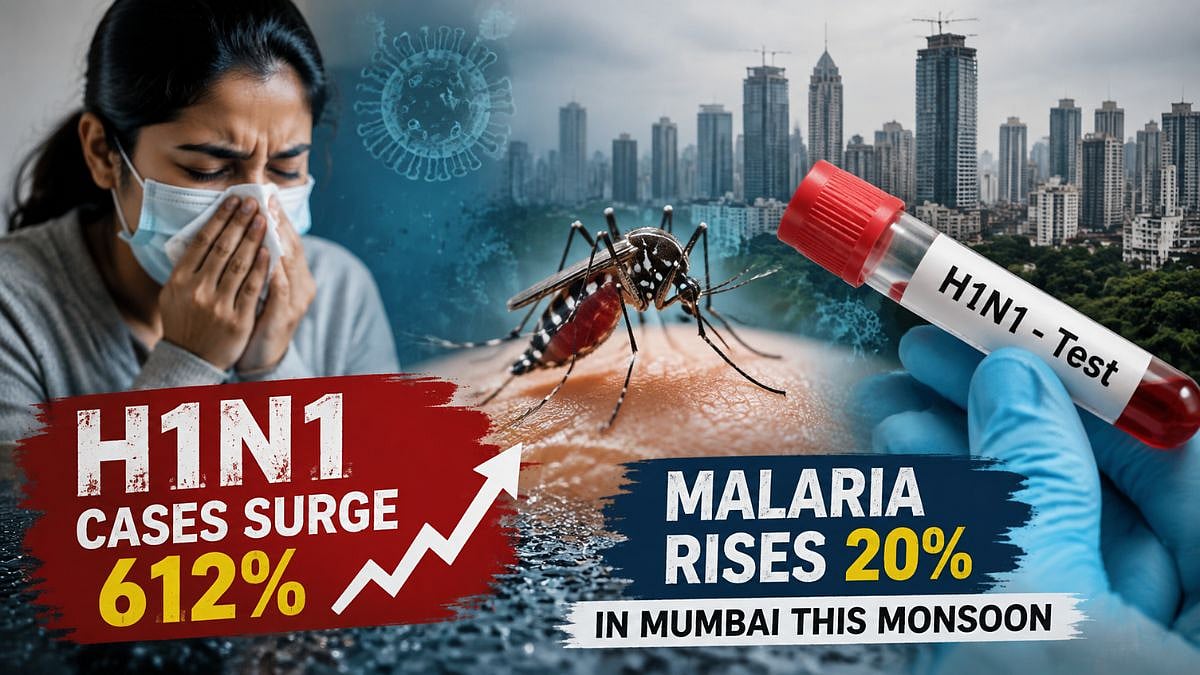
Mumbai has seen more malaria and H1N1 cases during this year's monsoon period.
Malaria cases rose by about one-fifth compared with the same period last year.
H1N1 cases increased much more sharply, from 62 to 441.
Some other illnesses, including dengue and COVID-19, became less common.
City health officials are checking people who may have H1N1.
They are also watching people who were in close contact with infected patients for 10 days.
Workers are looking for places where mosquitoes can breed and removing items that collect water.
The BMC says its hospitals have beds, medicines and equipment ready for patients who need care.

Mumbai recorded 4,485 malaria cases from June through August, up 20.1% from 3,733 during the same period last year.
H1N1 cases rose from 62 to 441, a reported increase of 612%.
Dengue, chikungunya, leptospirosis, gastroenteritis and COVID-19 cases declined compared with the corresponding period last year.
The BMC detected Aedes mosquito breeding at 27,352 of 1,255,469 inspected dengue-risk sites.
The BMC is screening suspected H1N1 patients, monitoring close contacts, conducting field surveys and reserving hospital resources.
- Who
- The Brihanmumbai Municipal Corporation (BMC) and Mumbai residents affected by monsoon-related illnesses.
- What
- Malaria and H1N1 cases increased, while several other seasonal illnesses declined; the BMC intensified disease surveillance and mosquito control.
- Where
- Mumbai, including several identified civic wards.
- When
- The figures cover June through August, with data reported through August 31; the article is dated September 2.
- Why
- The BMC intensified monitoring and control measures because malaria and H1N1 cases increased and some areas reported higher illness levels.
Key facts
- Malaria cases
- 4,485 from June through August, compared with 3,733 during the corresponding period last year; increase of 20.1%.
- H1N1 cases
- 441, compared with 62 during the corresponding period last year; reported increase of 612%.
- Dengue cases
- 1,563, down from 1,972; decline of about 20.7%.
- Mosquito-risk sites inspected
- 1,255,469 potential dengue mosquito-breeding sites.
- Aedes breeding locations
- 27,352 sites where Aedes mosquito breeding was detected.
- Malaria-risk sites inspected
- 52,197 potential breeding sites, with Anopheles breeding detected at 8,055 locations.
- H1N1 response
- Suspected patients are screened and treated with oseltamivir where required; close contacts are monitored for 10 days.
Sources
Related news
Mumbai Monsoon Health Alert: Malaria and H1N1 Cases Surge

Delhi H1N1 Cases Jump Nearly Six-Fold This Monsoon Season

Bhiwandi Civic Body Expands Monsoon Disease Prevention Measures
Mumbai Police Extern 10 Habitual Offenders for One Year

Ananya Sheth Completes Comeback In Mumbai U-13 Badminton
Mumbai Trains Election Officials Amid Statewide Electoral Roll Revision

Bombay Gymkhana Squash Finals Set After Junior Semifinals