4 days ago
India-China Education Leadership Gap Shapes Technology Divide

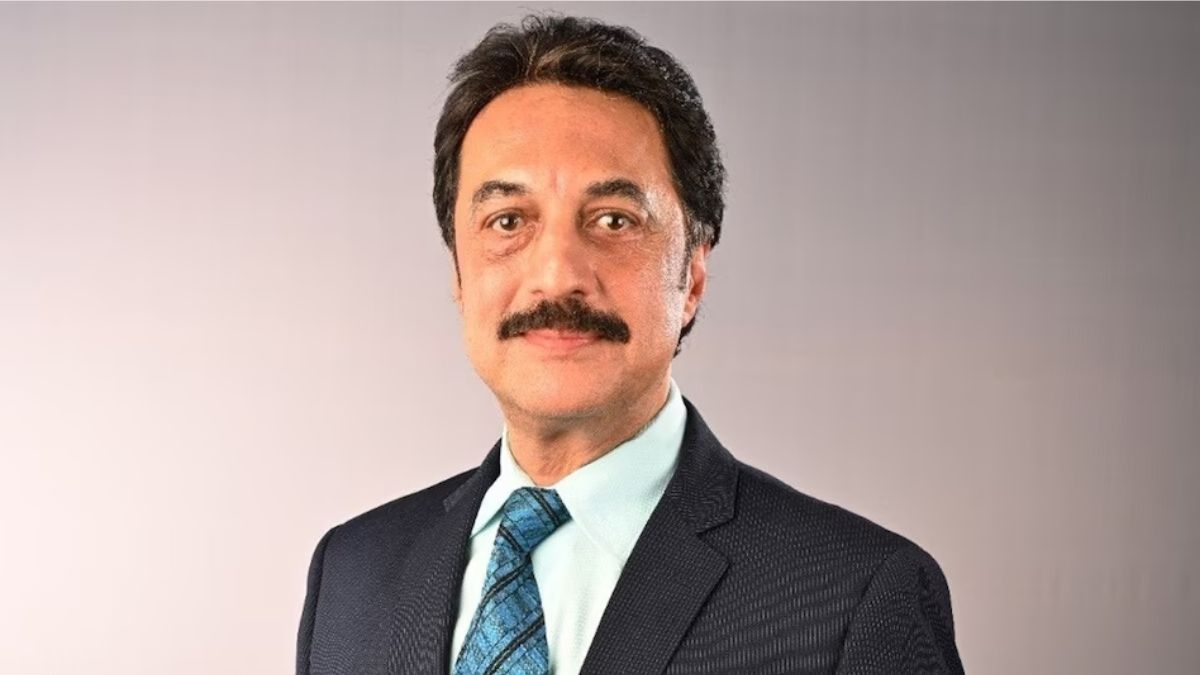
Shankar Sharma compared education leaders in India and China using a scoring model.
He says India’s scores were high in some earlier periods but much lower in several later ones.
China’s recent education leaders received generally stronger scores in his analysis.
Many of China’s ministers had science, engineering or academic experience.
Sharma believes education leadership affects universities, research and technical skills.
He also says India has sometimes spent as much as or more than China on education.
However, money and ministerial qualifications are not the only reasons countries succeed.
Teachers, schools, research institutions and government planning also matter.
Sharma warns that weak education and research can make it harder for India to compete in advanced technology.

Shankar Sharma’s analysis assigns India’s education leadership an average score of 18.75 for 2014–26, compared with 90 for China’s current minister.
India’s average scores varied sharply, reaching 86 in 1957–62 and 83 in 1998–2004 but falling to 16 in 1980–84 and 2004–09.
The analysis says many Chinese education ministers had backgrounds in science, engineering, academia or technical administration.
Sharma argues that India’s education spending has exceeded China’s in some periods, yet India’s technology gap has continued to widen.
The article notes that governance, teacher quality, research funding, universities and industrial policy also influence educational and technological outcomes.
- Who
- Investor and commentator Shankar Sharma, comparing education leadership in India and China.
- What
- A quantitative comparison argues that differences in education leadership and policy may help explain the technology divide between India and China.
- Where
- India and China.
- When
- The analysis was posted on August 27, 2026, and includes periods from 1947 through 2026.
- Why
- Sharma says education shapes research capacity, technical talent and competitiveness in areas such as artificial intelligence, semiconductors, defence technology and advanced manufacturing.
Sharma’s Education-Leadership Warning
Broader Policy Explanation
Importance of ministerial expertise
Sharma’s Education-Leadership Warning
Sharma argues that the professional background and quality of education ministers matter because they make long-term decisions about universities, research, technical education and human capital.
Broader Policy Explanation
The article cautions that ministerial qualifications alone do not determine educational performance; institutional capacity and policy implementation also matter.
Why spending has not closed the gap
Sharma’s Education-Leadership Warning
Sharma points to India’s education spending in some periods being higher than China’s and asks what those funds produce, given India’s continuing technology lag.
Broader Policy Explanation
The broader explanation is that outcomes also depend on teachers, curricula, university autonomy, research funding, industry links and China’s industrial policy and strategic state support.
Policy priority
Sharma’s Education-Leadership Warning
Sharma says India cannot treat education as secondary while seeking to compete with China in advanced technologies.
Broader Policy Explanation
The article presents education as one part of a wider system that includes infrastructure, industrial policy, governance and long-term institutional development.
Key facts
- India’s 2014–26 average score
- 18.75
- China’s current ministerial score
- 90
- India’s highest listed period
- 86 during 1957–62
- China’s highest listed ministerial score
- 93 for Zhou Ji, 2003–09
- Spending comparison
- India’s education spending exceeded China’s in several periods and was broadly comparable in the latest period, according to the article.
- Factors beyond spending
- Governance, teacher quality, curriculum, university autonomy, research funding, institutional capacity and links between academia and industry.
Sources
Related news
China and US Race to Link Science, Industry
India's engineering education needs quality reset in AI era
Rajnath Singh Urges Students to Pair Education With Character

India's Education Spend at 14.2%, Below UNESCO's 15% Benchmark
Productivity is the engine of India's manufacturing growth: CII
Dr Shankar Sharma distributes sarees to poor Muslim women
First Rs 50 Lakh Takes Longest Time in SIP Investing
Shankar Sharma questions India's equity investing boom

Debate on Optimal Equity Allocation for Investors