

1 hr ago
India Builds Green Hydrogen Capacity, but Demand Lags
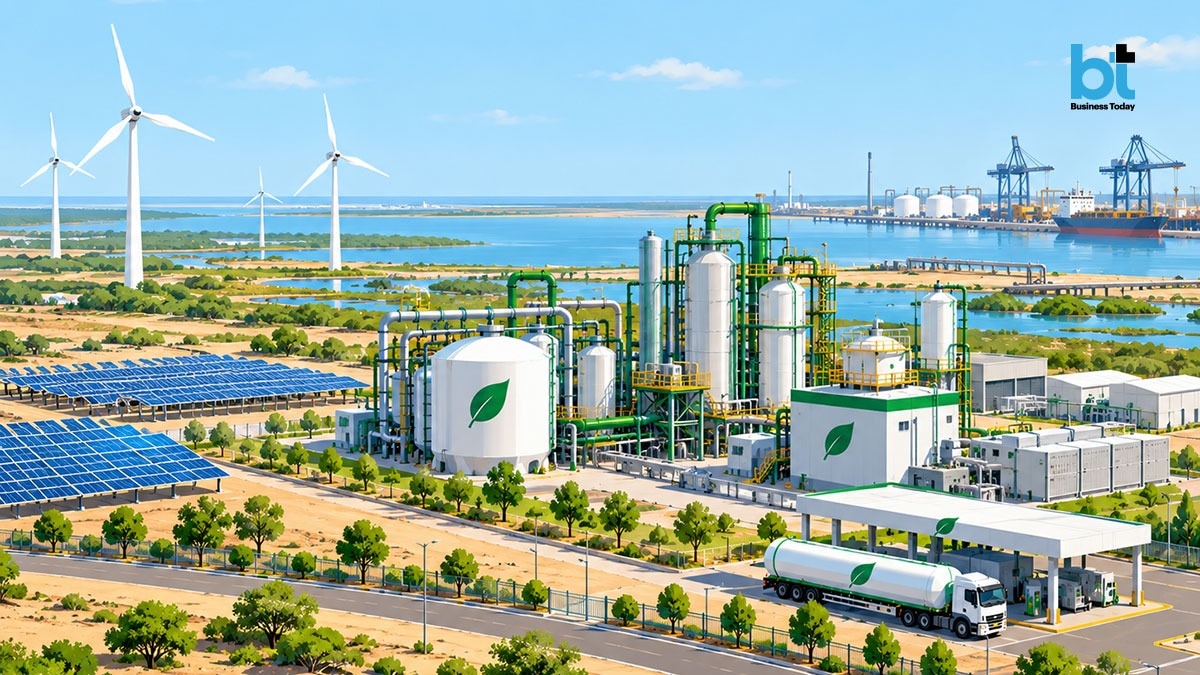
India wants to make much more green hydrogen, a fuel made using clean electricity.
But companies do not yet have enough buyers for it.
Green hydrogen also costs more than the grey hydrogen many factories use today.
India has announced plans to build many factories, but only a small amount of production capacity is operating.
Some companies have slowed their plans, and government measures meant to create demand have not yet started.
Industry representatives want clearer rules that encourage factories to buy green hydrogen.
Experts say support such as long-term contracts and help with the price difference may also be needed.
Selling hydrogen abroad could help, but other countries have strict rules for what counts as green.
Without more buyers, some of the planned factories could sit underused.

India’s National Green Hydrogen Mission targets 5 million tonnes of green hydrogen annually by 2030, but demand and production remain limited.
Green hydrogen costs $3.5–5 per kg without subsidies, compared with grey hydrogen at $1.9–2.5 per kg; subsidy-supported green hydrogen costs $2–3.75 per kg.
Electrolyser and hydrogen capacity announcements far exceed operating capacity, while major firms have slowed or not clarified expansion plans.
The mission’s demand-creation measures, including proposed industrial consumption mandates, have not yet been implemented; Rs 17,490 crore in SIGHT incentives remains unclaimed.
Export growth faces global competition and strict EU rules, while experts warn that weak demand could leave assets stranded and weaken investor confidence.
- Who
- India’s government, hydrogen producers and equipment makers, industrial users, and energy experts.
- What
- India is expanding green hydrogen supply capacity, but demand, actual production, and market certainty remain limited.
- Where
- India, with export prospects and requirements discussed in relation to the European Union.
- When
- The National Green Hydrogen Mission targets 2030; the article also cites developments and assessments from 2025 and 2026.
- Why
- Green hydrogen remains more expensive than grey hydrogen, while demand policies and committed buyers are insufficient to support the announced supply plans.
Create demand and certainty
Concerns and alternative approaches
Industrial-use mandates
Create demand and certainty
GH2 India’s Nishaanth Balashanmugam argues that incremental mandates for users could give producers clearer demand signals and market certainty.
Concerns and alternative approaches
He says the industry is not seeking penalties for defaults at this stage; the article says the mission’s proposed consumption targets and procurement guidelines have not been implemented.
How to bridge the cost gap
Create demand and certainty
Chintan Research Foundation experts recommend a mix of price support, long-term contracts, and carbon pricing; suggested measures include purchase obligations and assured take-off agreements.
Concerns and alternative approaches
Balashanmugam says the sector is not asking for subsidies to make green hydrogen viable and instead wants government action to create demand. Experts also suggest transitioning to hydrogen regardless of colour until green hydrogen becomes cheaper.
Export readiness
Create demand and certainty
The mission expects export markets to be an important source of demand, and India aims to capture a share of global demand.
Concerns and alternative approaches
TERI School of Advanced Studies expert Gopal Sarangi says EU rules may obstruct exports unless India aligns its certification approach or develops a common framework with other countries.
Key facts
- Mission target
- The National Green Hydrogen Mission aims to produce 5 million tonnes annually by 2030.
- Mission outlay
- Rs 19,744 crore overall; Rs 17,490 crore in SIGHT incentives was reported as unclaimed.
- Green hydrogen cost
- $3.5–5 per kg without subsidy and $2–3.75 per kg with subsidy in recent tenders.
- Grey hydrogen baseline
- $1.9–2.5 per kg, according to the Chintan Research Foundation data cited.
- Electrolyser capacity
- 65–70 MW operational, against 25 GW announced and 3 GW incentivised, according to GH2 India.
- Green hydrogen capacity
- 12,000 tonnes operational, against 11.2 million tonnes announced and 862,000 tonnes incentivised.
- Export ambition
- India aims to capture about 10% of expected global green hydrogen and derivatives demand, or 10 million tonnes by 2030.
- EU import requirements
- The article cites requirements for new renewable electricity, hourly matching, and geographic correlation.
Quotes
Nishaanth Balashanmugam
CEO and Director of Green Hydrogen India, an industry body.
“Unless India aligns with the EU regulatory requirements for green hydrogen or develops some strategic approach, such as a coalition of like-minded countries in developing a common green hydrogen taxonomy and regulatory framework, it would be hard to export to regions like the EU.”
 businesstoday.in
“We are asking for an incremental rise in mandates, say 10% annual transition by users as part of the mission goal, either voluntary or compulsory.”
businesstoday.in
Reliance spokesperson
Company spokesperson commenting on Reliance’s green hydrogen plans.
“As Mr Mukesh Ambani has said, green hydrogen will become viable only when its price falls below $1 per kg.”
businesstoday.in
Sources
Related news
Gujarat Has Potential to Lead India’s Renewable Hydrogen Production

Brookfield’s $600 Million Bet Targets India’s Green-Molecule Scale-Up
India Plans Flexible Power Rules for Data Centres, Hydrogen

Maruti Suzuki Commissions 300 kW Green Hydrogen Plant at Manesar

India’s Solar Manufacturing Race Targets 90% Localisation by 2030
India’s Aluminium Extrusion Industry Targets Growth Despite Financing Pressures

Copper Edges Higher as Chile Mine Strike Raises Supply Risks

Karl Bushby Completes Channel Swim Nearing End of 28-Year Journey

Codelco Probes Possible Double Counting in Copper Production

Rising Dry-Fruit Prices Push Indian Consumers Toward Cashews
