1 week ago
Doctor Explains 80% Hydration Rule for Safer Running

Runners need the right amount of fluid, not simply as much water as possible.
The 80% rule suggests replacing most, but not all, of the sweat lost during a run.
However, this rule does not work exactly the same way for everyone.
People sweat at different rates and lose different amounts of salt.
Weather, running speed, fitness, and exercise length can also change hydration needs.
Drinking too much water can make the sodium in the blood too low.
This condition is called exercise-associated hyponatraemia.
Runners can learn about their needs by checking their weight before and after running.
For longer or hotter runs, some runners may need drinks containing electrolytes such as sodium.

The 80% sweat replacement rule suggests replacing about 80% of fluid lost during a run, not every drop.
Hydration needs vary with sweat rate, sodium loss, fitness, pace, climate, and acclimatisation.
Losing more than about 2% of body weight during exercise is generally considered excessive dehydration.
Drinking too much water can dilute blood sodium and cause exercise-associated hyponatraemia.
Runners can estimate sweat rate by weighing themselves before and after runs and accounting for fluids consumed.
- Who
- Runners and Dr Sanjay Raina, Head of Department of Internal Medicine at Amrita Hospital, Faridabad.
- What
- Guidance on using the 80% sweat replacement rule and personalising hydration during running.
- Where
- During running and endurance events; the cited expert is based at Amrita Hospital in Faridabad.
- When
- During and after runs, especially longer endurance sessions.
- Why
- To reduce the risks of excessive dehydration and overhydration while supporting fluid, sodium, and body-temperature balance.
Key facts
- 80% rule
- Replace around 80% of fluid lost during a run rather than attempting to replace every drop.
- Dehydration threshold
- The American College of Sports Medicine typically defines excessive dehydration during exercise as more than about 2% body-weight loss.
- Overhydration risk
- Excessive water intake can dilute blood sodium and cause exercise-associated hyponatraemia.
- Reported prevalence
- Biochemical hyponatraemia has occurred in around 10% to 20% of marathon finishers in studies, while severe cases are less common.
- Sweat-rate method
- Weigh yourself before and after a run while recording fluid intake to estimate fluid loss.
- Electrolytes
- Longer runs and hot or humid conditions may increase the importance of sodium and other electrolytes.
- Recommended approach
- Drink according to thirst and anticipated sweat loss, and avoid finishing a run heavier than you started.
Quotes
Dr Sanjay Raina
Head of Department of Internal Medicine at Amrita Hospital, Faridabad
“The best strategy is personalised hydration. Drink according to thirst and anticipated sweat loss, and avoid finishing a run heavier than you started.”
 firstpost.com
“It is possible to drink too much water, especially during long endurance events.”
firstpost.com
Sources
Related news
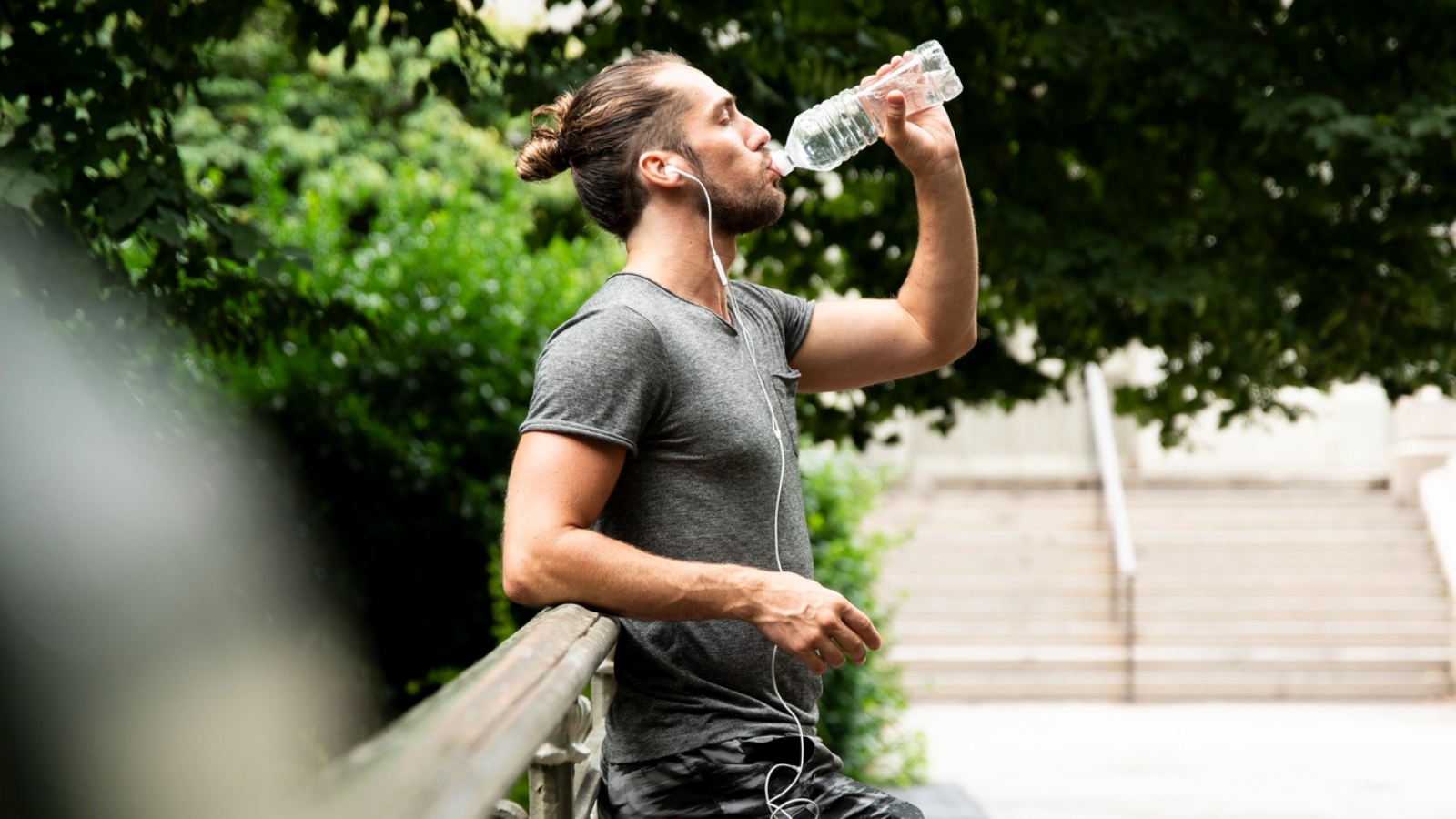
Running Hydration: Why the 85% Hyper Sweating Rule Isn’t Universal

Why You May Not Need a 40-Ounce Water Bottle
World Coconut Day 2026: Coconut Water Myths and Facts

Doctors Explain Triathlon Health Checks, Risks And Red Flags

Expert Warns Midday Exercise May Increase Summer Heat Stroke Risk

Doctor Explains Why Exercising With A Fever Is Not Recommended

Does training to failure build better muscle strength?