3 weeks ago
Does training to failure build better muscle strength?
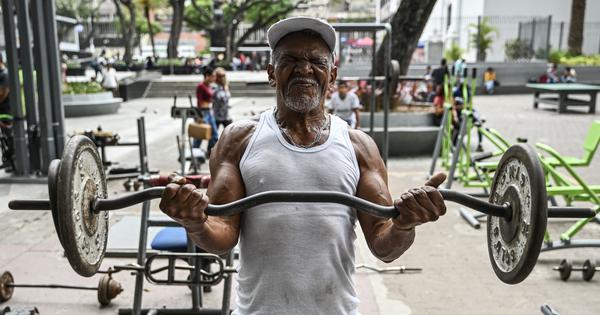
When you lift weights, you do repetitions, called reps, and groups of reps called sets.
Training to failure means doing reps until your muscles are too tired to do one more.
Some people think working this hard must be the best way to get stronger.
Scientists looked at many studies to see if that is true.
They found that stopping a little earlier, when you could still do one to three more reps, can build just as much muscle.
Training to failure makes you more tired and you may need longer to recover.
It can also be risky on tricky exercises like squats, where your form can get sloppy when tired.
For most people, a good plan is to finish sets when they feel very hard, but before total exhaustion.
You do not need to push every set to failure to get stronger.

Training to failure means continuing a set until you cannot complete another full repetition with acceptable technique.
A 2022 systematic review and meta-analysis found no significant overall difference between failure and non-failure training for strength or muscle growth.
Research indicates that stopping with about one to three repetitions in reserve can stimulate muscle growth while causing less fatigue.
Failure training produced larger reductions in strength, movement speed and power immediately after exercise and can lengthen recovery.
Technical exercises like squats and bench presses may become unsafe at failure unless a spotter or safety equipment is available.
- Who
- Paul Hough, Lecturer in Sport and Exercise Physiology at the University of Westminster, writing about research reviews from 2022, 2024 and 2026.
- What
- An analysis of whether taking every resistance-training set to failure builds more muscle strength than stopping with repetitions in reserve.
- Where
- Published by The Conversation; the author is based at the University of Westminster in the United Kingdom.
- When
- The article cites research from a 2022 systematic review, a later review of 15 studies, a 2024 analysis and the American College of Sports Medicine's 2026 review; its own publication date is not stated.
- Why
- To determine how close to failure people need to train to build strength and muscle while balancing fatigue, recovery and safety.
Key facts
- Training to failure
- Continuing a set until you cannot complete another full repetition with acceptable technique
- Repetitions in reserve (RIR)
- If you could complete 10 repetitions but stop after eight, you have 2 RIR
- 2022 meta-analysis finding
- No significant overall difference between failure and non-failure training for strength or muscle growth
- 2024 analysis finding
- Failure was not necessary for improving strength; muscle growth tended to improve as sets ended closer to failure
- ACSM 2026 review
- Regular training with sufficient effort is more important than taking every set to failure
- Practical recommendation
- Finish most sets with about one to three repetitions in reserve
- Safety note
- Failure training on squats or bench press is best avoided unless safety equipment or a spotter is available
Sources
Related news

Randeep Hooda’s Fitness Routine Combines Powerlifting With Walking

Cycling vs Treadmill: Best Ten-Minute Warm-Up Before Strength Training
Chiranjeevi at 71: Fitness Lessons for Active Ageing
Five Common Gym Fitness Mistakes to Avoid for Safety

Doctor Explains 80% Hydration Rule for Safer Running