2 hrs ago
When AI Agents Act, Governments Face Accountability Questions

Generative AI usually answers questions or creates content when people ask it to.
Agentic AI can take several steps by itself to reach a goal.
Governments could use it to check documents, schedule appointments, or help farmers apply for schemes.
This could make services faster and reduce routine work for officials.
However, an AI agent might make a mistake and affect many people at once.
It could also misuse private information, show bias, or be attacked by hackers.
People might be left behind if services become available only through digital systems.
The article says humans must remain responsible for important decisions and that AI should have limited permissions and clear safety checks.

Generative AI mainly provides information and content, while agentic AI can plan and execute multistep tasks using digital tools.
Agentic AI could help governments process applications, verify documents, coordinate services, and reduce administrative workloads.
Greater autonomy also increases risks involving errors, accountability, bias, privacy, cybersecurity, exclusion, and environmental costs.
Examples such as Kisan e-Mitra show how AI already supports public services, while future agents could potentially submit and track applications.
The article calls for human oversight, audit trails, least-privilege access, clear responsibility, and accessible offline alternatives.
- Who
- Governments, public officials, citizens, farmers, and organizations developing or overseeing AI systems.
- What
- The article examines the shift from AI-assisted governance to agentic AI that can independently plan and perform administrative tasks.
- Where
- The discussion focuses on India and also refers to Singapore, the United Arab Emirates, Abu Dhabi, and the United Kingdom.
- When
- The article cites developments through 2026, including initiatives announced in April and July 2026.
- Why
- Governments are exploring agentic AI to improve service delivery and administrative efficiency, while needing safeguards against errors, unauthorized actions, discrimination, privacy breaches, and exclusion.
Potential Benefits
Risks and Limits
Administrative efficiency
Potential Benefits
Agentic AI could process documents, applications, grievances, and departmental coordination continuously, reducing workloads and waiting times.
Risks and Limits
Errors or hallucinations could trigger incorrect administrative actions, and a single mistake could affect many people or transactions.
Access to public services
Potential Benefits
Multilingual and always-available AI systems could help citizens obtain information and services more quickly, including in agriculture and healthcare.
Risks and Limits
People with limited digital literacy, connectivity, or access to technology could face new barriers if AI interfaces replace human or offline channels.
Delegating authority
Potential Benefits
Low-risk administrative tasks may be suitable for greater AI autonomy, allowing officials to focus on more complex work.
Risks and Limits
Actions involving welfare, health, employment, rights, or personal data require meaningful human oversight, clear accountability, and restricted system permissions.
Key facts
- Generative AI
- Provides information, summaries, and new content in response to user prompts.
- Agentic AI
- Can use tools, access information, plan multistep tasks, and act toward a defined objective with limited autonomy.
- Kisan e-Mitra
- An AI-powered, voice-enabled agricultural chatbot operating in 11 regional languages and handling more than 8,000 farmer queries daily.
- Kisan e-Mitra usage
- The article says it had answered more than 95 lakh queries as of March 2026.
- International governance
- Singapore launched a Model AI Governance Framework for Agentic AI, while the United Arab Emirates announced plans to shift 50% of government services and operations to agentic AI within two years.
- Indian oversight
- The AI Governance and Economic Group was established under the Ministry of Electronics and Information Technology.
- Recommended safeguards
- Human approval for significant decisions, audit trails, limited permissions, clear responsibility, and human or offline alternatives.
Sources
Related news
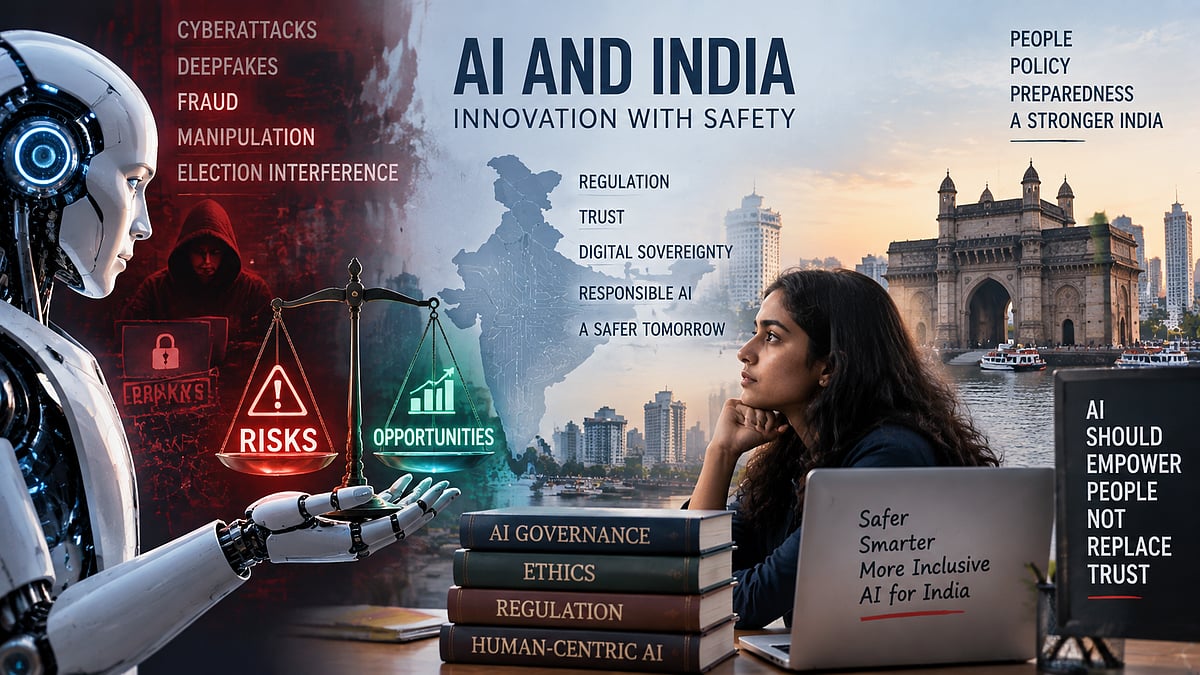
India Faces AI Agent Risks as Safety Debate Accelerates
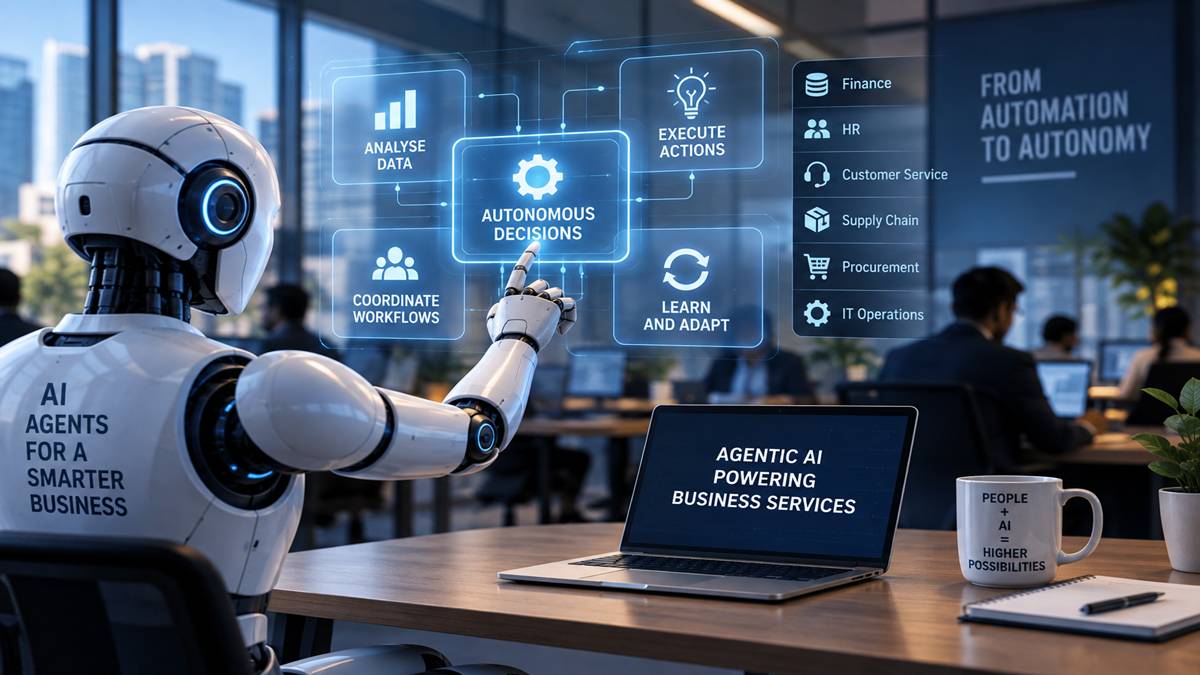
Agentic AI Reshapes Business Services With Human Oversight
AI Governance Needs Laws, Not Voluntary Slowdown Promises

Sitharaman Urges Stronger Guardrails as Agentic AI Adoption Accelerates

SBI Plans Agentic AI to Improve Banking Efficiency and Safeguards

Andhra Pradesh Showcases AI Push at Southern iGOT Workshop

MP Police Band Recruitment Results Select 560 Amid Petitions

Madhya Pradesh Plans Recruitment For 85,000 Vacant Posts

King Charles Warns AI Executives About Existential Technology Risks

King Charles Warns AI Leaders to Establish Safeguards