3 weeks ago
Government Defends Clinical Establishments Rules 2012 Before Supreme Court
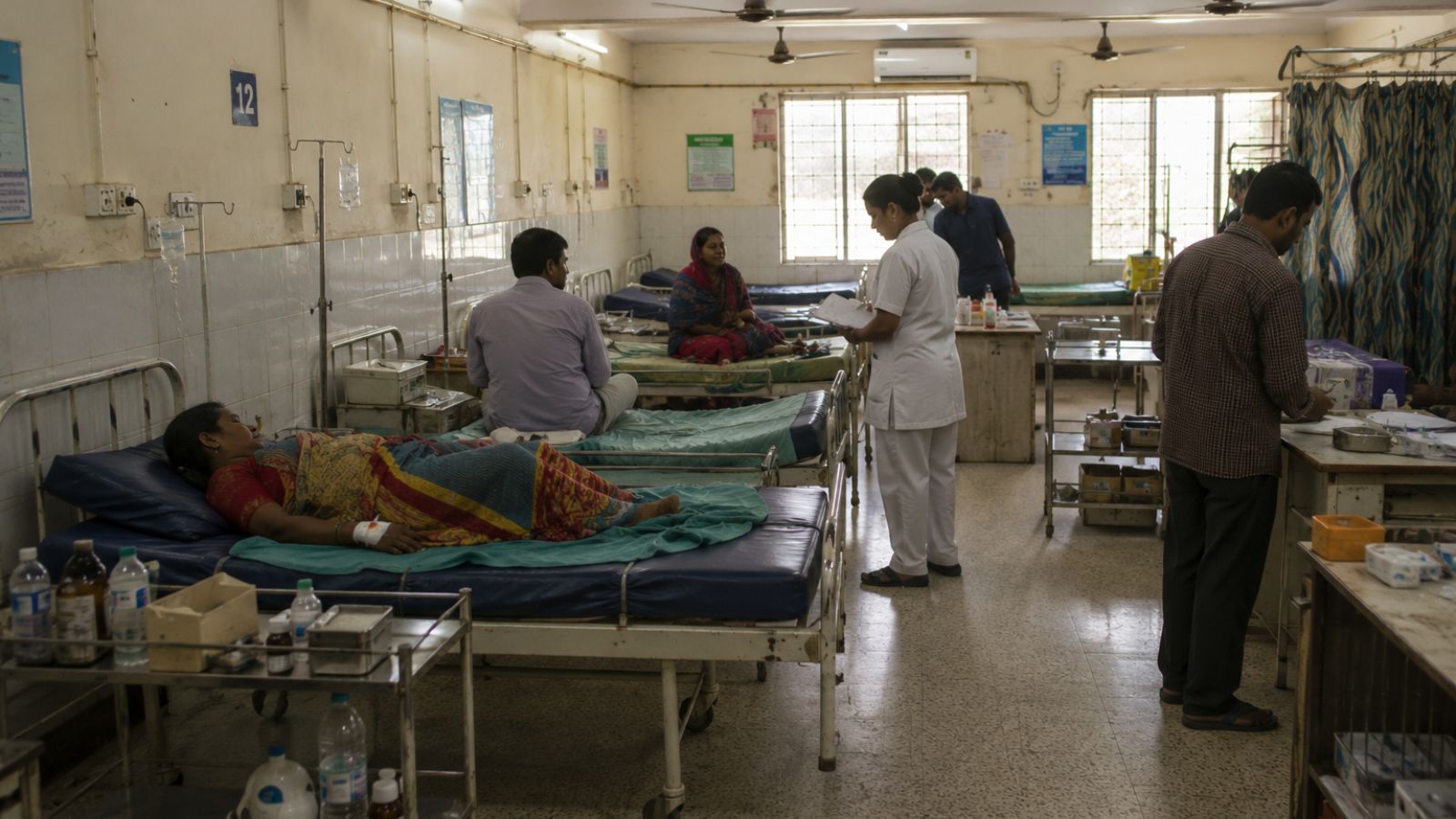
The Indian government has to explain a new rule to the country's highest court, the Supreme Court.
The rule tells hospitals and clinics how much they can charge patients for medical care.
The government made this rule so that healthcare prices are fair for everyone.
Prices should not be so high that ordinary people cannot afford to see a doctor.
Prices should also not be so low that hospitals cannot pay their staff and improve their services.
Some people think the rule is unfair and asked the Supreme Court to remove it.
The government says the rule helps keep people healthy, which is a duty written in the country's Constitution.
The government also says hospitals can still choose their own prices, as long as they stay within the allowed range.
The Supreme Court will decide whether the rule can stay.

The Union Health Ministry filed a counter-affidavit on August 4 defending the constitutional validity of the Clinical Establishments (Central Government) Rules, 2012 before the Supreme Court.
Rule 9(ii) of the rules requires clinical establishments to charge for procedures and services within rate ranges determined by the central government in consultation with state governments.
The government said the rules fulfil the mandate of Article 47 of the Constitution, keeping prices neither exorbitantly high for the common man nor so low that the industry has no incentive to grow.
The government rejected the petitions' claims that the rule violates Articles 14, 19(1)(g) and 21, arguing that medical establishments cannot be equated with ordinary trade or business.
Since health is a State subject, 19 States and Union Territories have adopted the Act, while 16 States and one Union Territory have their own acts.
- Who
- The Union Health Ministry of India, responding to a batch of petitions challenging Rule 9(ii) of the Clinical Establishments Rules, 2012 before the Supreme Court.
- What
- The government defended the rules, which require clinical establishments to charge within rate ranges set by the central government in consultation with state governments.
- Where
- The Supreme Court of India; the rules apply in states and union territories that adopt the Act.
- When
- The counter-affidavit was filed on August 4; the rules were framed in 2012.
- Why
- To improve public health and ensure affordable healthcare prices, in line with the constitutional mandate under Article 47.
Petitioners challenging Rule 9(ii)
Union Health Ministry
Constitutional validity of Rule 9(ii)
Petitioners challenging Rule 9(ii)
Petitioners argue the rule violates their fundamental rights under Articles 14, 19(1)(g) and 21 of the Constitution.
Union Health Ministry
The government calls the challenge 'ill-founded and baseless', saying the rule fulfils the state's positive obligation under Article 47 to improve public health.
Impact on clinical establishments
Petitioners challenging Rule 9(ii)
Petitioners contend that government-determined rate ranges interfere with the freedom to practise a profession or business.
Union Health Ministry
The government says clinical establishments cannot be placed on the same footing as ordinary businesses, price ranges are a reasonable restriction under Article 19(6), and establishments can adjust charges based on infrastructure, quality of service and patient demographics.
Key facts
- Challenged provision
- Rule 9(ii) of the Clinical Establishments (Central Government) Rules, 2012
- Governing law
- The Clinical Establishments (Registration and Regulation) Act, 2010
- Affidavit filed
- August 4, before the Supreme Court of India
- Constitutional basis
- Article 47 (Directive Principles of State Policy)
- Rights cited in petitions
- Articles 14, 19(1)(g) and 21 of the Constitution
- Adopting states/UTs
- 19 states and Union Territories
- States with own laws
- 16 states and 1 Union Territory (Delhi)
Quotes
Union Health Ministry spokesperson
Official from India’s Union Health Ministry
“The government said, “The legislative framework seeks to prescribe minimum standards of facilities and services while ensuring that patients are informed of the charges levied by clinical establishments.””
 indianexpress.com
“The ministry said ‘The Clinical Establishments (Central Government) Rules, 2012’ were framed to “achieve” the mandate of Article 47 of the Constitution.”
indianexpress.com
Sources
Related news
Maharashtra Healthcare Bill Expands Regulation, Leaves Charges Uncapped

Allahabad High Court Flags Huge Disparity in Private Hospital Fees

Maharashtra Clinical Establishments Bill Draws 2,000 Suggestions From Doctors
Parliamentary Panel Seeks Cap on Private Hospital Room Charges

Maharashtra Sets Hospital Service Standards Across Public Health System

Andhra Pradesh To Tighten Norms for Private AYUSH Hospitals

THANACON-2026 Held in Warangal; Praveen Takes Oath as THANA President

DMHO Inspects Private Hospitals for Compliance