

1 week ago
India’s KEPA Textbooks Combine Audio, Braille and Sign Language
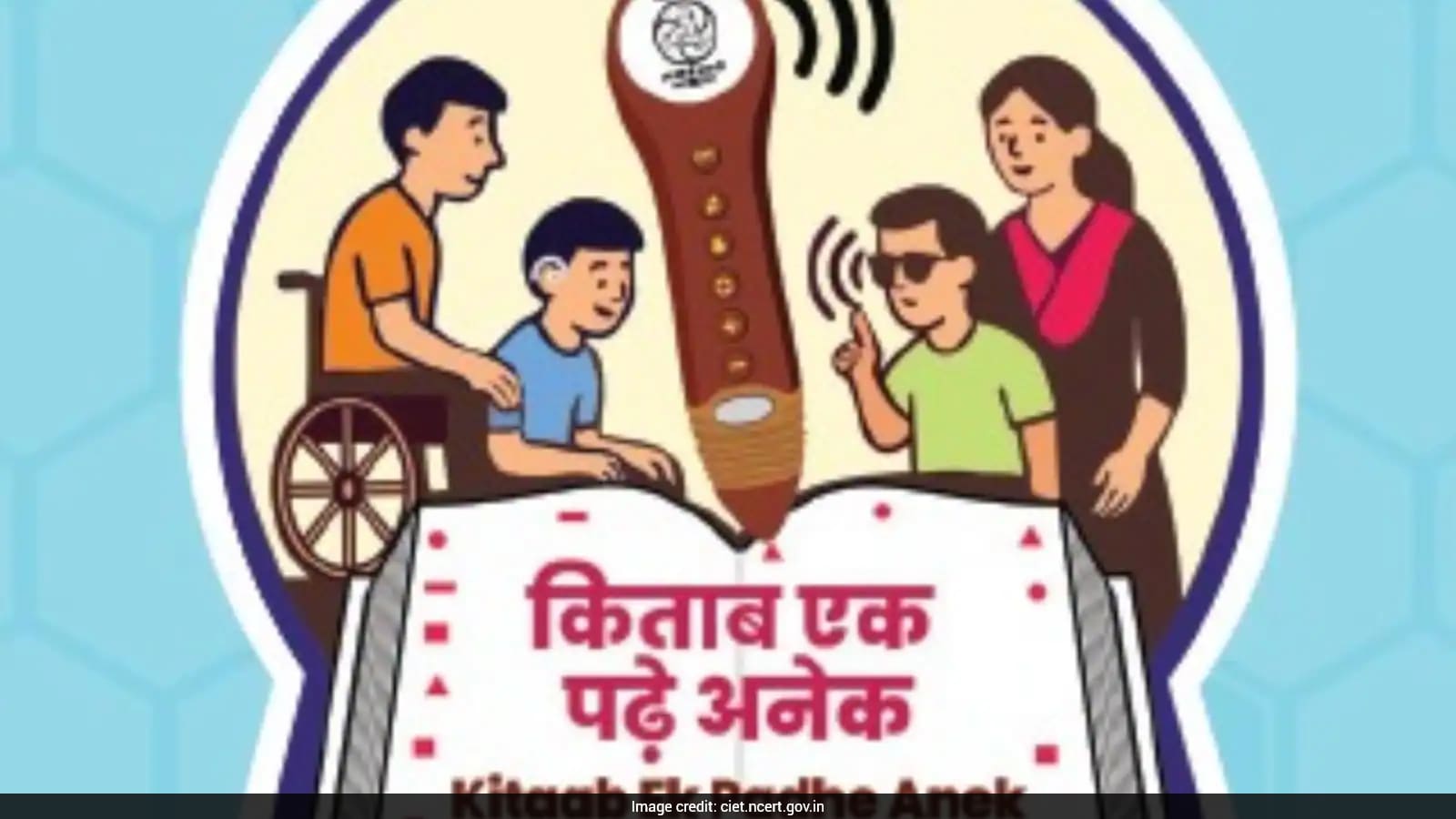
Kitab Ek, Padhe Anek is a programme that makes schoolbooks easier for more children to use.
The books include regular printed words, Braille, pictures, touch features and Indian Sign Language.
A special talking pen can touch parts of the book and read the words aloud.
It can also describe pictures and activities.
This can help children who cannot see, hear, read or pay attention in the same way as others.
Children can learn with the same book as their classmates.
They can explore lessons independently and at their own pace.
Teachers also receive ready-to-use accessible learning materials.

The Ministry of Education highlighted NCERT’s ‘Kitab Ek, Padhe Anek’ initiative for inclusive education.
The programme combines printed text with audio, tactile features, Braille, Indian Sign Language and visual cues.
Touch-sensitive points in the books work with compatible talking pens to read text aloud and describe images.
The resources are designed for children with visual, hearing, learning, physical or attention-related challenges.
The initiative also supports learners from socio-economically disadvantaged backgrounds and helps teachers use accessible textbooks.
- Who
- The Ministry of Education, NCERT and CIET developed or highlighted the Kitab Ek, Padhe Anek programme for Children with Special Needs and other learners.
- What
- It is an inclusive textbook initiative combining print, audio, tactile elements, Braille, Indian Sign Language and visual cues in one learning resource.
- Where
- The programme is presented for use in classrooms and through printed and digital learning resources.
- When
- The Ministry of Education highlighted the initiative, and the article says the ministry had discussed its support for learners earlier in January 2026.
- Why
- It aims to provide equitable access to learning and support inclusive classrooms for learners with diverse needs.
Key facts
- Programme
- Kitab Ek, Padhe Anek (KEPA)
- Developed by
- Central Institute of Educational Technology, National Council of Educational Research and Training
- Learning approach
- Based on Universal Design for Learning principles
- Accessibility features
- Audio, print, tactile elements, Braille, Indian Sign Language and visual cues
- Technology
- Touch-sensitive book areas work with compatible handheld devices and talking pens
- Target learners
- Children with Special Needs, learners with disabilities and learners from socio-economically disadvantaged backgrounds
- Policy alignment
- Aligned with the National Education Policy 2020
Quotes

Ministry of Education
India’s central government ministry responsible for education policy and programmes
“Aligned with NEP 2020, it uses audio, print, tactile, Braille, Indian Sign Language and visual cues together in one textbook,”
 NDTV
NDTV
“Kitab Ek, Padhe Anek (KEPA) provides a window of learning opportunities for Children with Special Needs.”
NDTV
Sources
Related news
Volunteers Handcraft Braille Storybooks for Devnar School Students

Uttar Pradesh DIKSHA Users Reach 27 Lakh, 12% National Total

704 children in 2 Bengal districts get their vision back

Uddeepakam-3 workbooks launched to boost tribal students' learning

IAS Officer Brings 42,000 Ratlam Children Benches and Smart Lessons
Third Uddipakam Workbook Series Boosts Tribal Students' Learning

NCERT Prepares Classes 10-12 Textbooks For Responsible AI Use

Ramesh Seeks Funds for 13 JNVs and Two AIIMS
Andhra Pradesh Government Schools Told to Prioritize Practical Skills

West Bengal, UNICEF Begin Workshop on Inclusive Education

India’s Exam Reform Must Begin in the Classroom
