1 week ago
India’s Rural Jobs Plans Bring Algorithms Into Village Decisions
India wants to use computer maps to help villages decide which public works to build.
The system could suggest projects such as water structures, roads and disaster-prevention works.
It would use information from satellites and government databases.
Village meetings called Gram Sabhas would still be expected to check and approve the suggestions.
Supporters say computers can find patterns and prevent duplicate or poorly planned projects.
Critics worry that some map information is old or cannot show how people use land.
Villagers may know important facts that the computer cannot see.
The plan will work best if technology helps villagers decide rather than replacing their decisions.

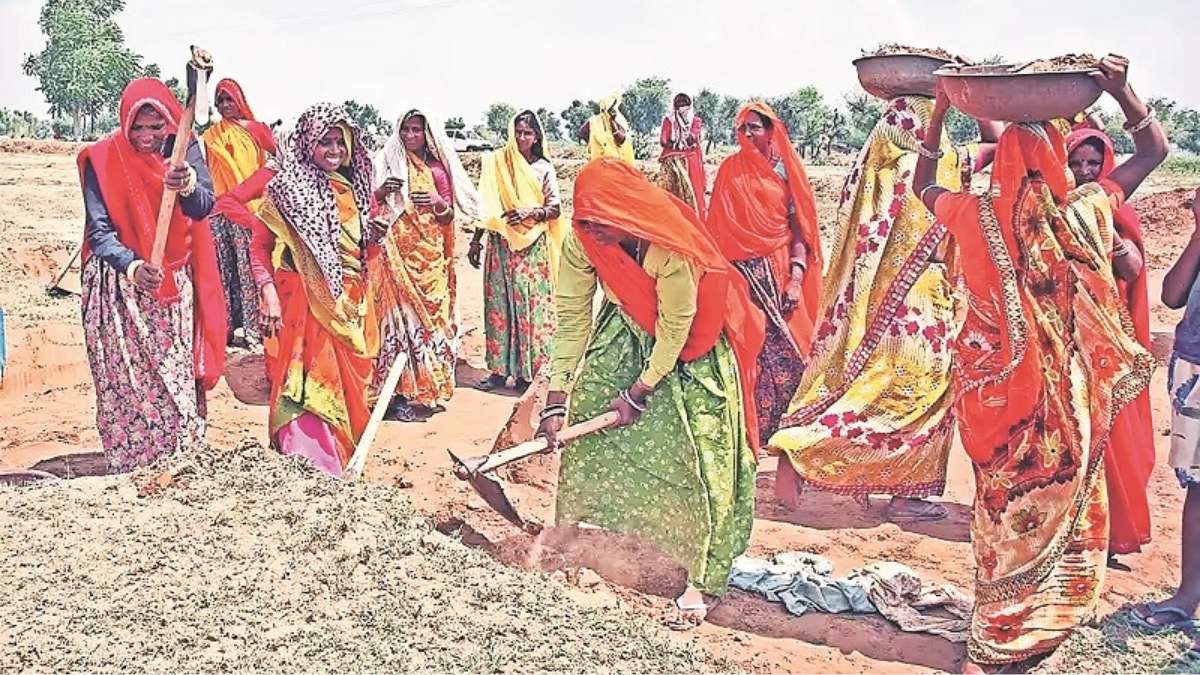
India’s Rural Development Ministry has proposed geospatial planning for village works under the VB-G RAM G Act, formerly MGNREGA.
The Yuktdhara portal would assess gaps and suggest works, locations, boundaries and dimensions using multiple government datasets.
Gram Sabhas are expected to verify, modify and prioritise algorithm-generated recommendations based on local conditions.
The framework lists 318 permissible works, including 107 water-security, 88 infrastructure, 86 livelihood and 37 disaster-mitigation options.
The proposal could improve groundwater planning and maintenance, but outdated data and weak local participation could limit its effectiveness.
- Who
- India’s Ministry of Rural Development, working with Germany’s GIZ development agency, is proposing the framework; Gram Sabhas would review the recommendations.
- What
- A draft framework would use geospatial data and the Yuktdhara portal to propose rural public works under the VB-G RAM G Act, formerly MGNREGA.
- Where
- The proposal covers India’s roughly 2.5 lakh Gram Panchayats.
- When
- The Draft Framework for the Viksit Gram Panchayat Plan was published in June 2026; Yuktdhara was launched in 2021.
- Why
- It aims to improve fragmented and incomplete planning, strengthen water and disaster planning, reduce duplication and make better use of rural jobs funds.
Data-Led Planning
Village-Led Decision-Making
Role of algorithms
Data-Led Planning
Algorithms can map groundwater systems, identify spatial gaps, detect duplicate assets and bring greater consistency to planning across thousands of villages.
Village-Led Decision-Making
Algorithmic recommendations could become the default, reducing Gram Sabhas to a ceremonial role unless they can freely reject, add or change proposed works.
Reliability of mapped land
Data-Led Planning
Satellite imagery and geospatial datasets can provide information that village meetings may not have, especially for resources such as aquifers that cross Panchayat boundaries.
Village-Led Decision-Making
Several planning layers are old, and labels such as “wasteland” may fail to show grazing areas, fallow land or community resources used by local people.
Planning priorities
Data-Led Planning
A detailed catalogue of works and dedicated maintenance options could move planning beyond incomplete wish lists and encourage repairs to existing assets.
Village-Led Decision-Making
Local residents may know that a proposed structure has failed before, that a hamlet has been overlooked or that another project matters more than the model indicates.
Key facts
- Planning portal
- Yuktdhara is a GIS-based portal for village-level planning and asset creation.
- Proposed works
- The framework identifies 318 permissible works across 72 categories.
- Water-related options
- Water security accounts for 107 of the listed work options.
- Maintenance
- Ninety-seven of the 318 permissible works involve repair and maintenance.
- Older audit finding
- A CAG audit found that about 31% of sampled Gram Panchayats in 11 states had not prepared an annual plan or had prepared one incompletely.
- Completed works
- Of 129.22 lakh works approved in annual plans during the audit period, 38.65 lakh, or about 30%, were completed.
- Groundwater spending
- The framework proposes minimum water-related spending of 65% in over-exploited and critical blocks, 40% in semi-critical blocks and 30% in safe blocks.
Sources
Related news

Haryana Cuts Infrastructure Site Assessments to One-Two Days

CAG Flags Missing Green India Mission Monitoring Records in Bengal
Bengal’s New 125-Day Rural Jobs Scheme Misses Daily Targets
VB-GRAM G Changes India’s Rural Job Guarantee Scheme

Karnataka Launches Digital Mapping System for Rural Water Assets

ECLGS 5.0 Guarantees Cover Rs 2.5 Lakh Crore

Telangana Urges Unified National Framework for Water Security
Chief Minister Reviews Gadag Drought, Hears Farmers’ Demands