1 week ago
Biochar Project Turns Invasive Kachchh Trees Into Carbon Credits
An invasive tree called Prosopis juliflora covers large parts of the Banni grasslands in Kachchh.
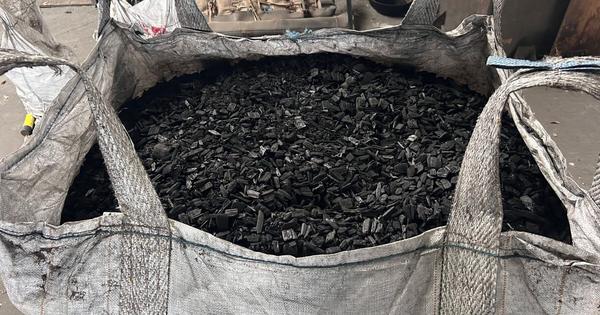
People are cutting the tree and heating its wood to make biochar, a charcoal-like material.
Biochar can store carbon in soil for a long time, so companies can buy credits linked to this work.
Google bought a large number of these credits, and other companies also signed agreements.
Supporters say the project can remove carbon and help clear unwanted trees.
Critics say the biochar may not always be put into soil properly.
They also worry that making it uses too much scarce water and that the invasive trees quickly grow back.
One soil expert found that crops grew worse in tested biochar plots.
Varaha says its projects have safeguards, community agreements and independent checks.

Google agreed to buy 100,000 tonnes of carbon dioxide removal credits from Varaha in January 2025.
Varaha’s Kachchh project converts invasive Prosopis juliflora into biochar using low-oxygen Kon-Tiki kilns.
The pilot processed about 800 tonnes of Prosopis and generated roughly 2,000 credits sold at about $120 each.
Researchers and local contractors raised concerns about water use, rapid Prosopis regrowth, soil results and the tracking of biochar application.
Varaha said it mixes biochar with manure, obtains community consent, discloses prices and undergoes annual independent validation.
- Who
- Varaha ClimateAg Private Limited, Google and other corporate buyers, Sahjeevan, local communities and contractors are involved.
- What
- A carbon-removal project is converting invasive Prosopis juliflora wood into biochar and selling associated carbon credits.
- Where
- The project is centered in the Banni grasslands of Kachchh, Gujarat, including villages such as Dedhiya and Sangnara.
- When
- The tree was introduced around the 1960s; a pilot began around 2022, Google announced its purchase in January 2025, and other buyers were added by January 2026.
- Why
- The project aims to remove carbon while clearing an invasive tree and supporting ecosystem restoration.
Critics and Local Observers
Varaha and Project Supporters
Carbon and soil benefits
Critics and Local Observers
Critics said biochar application was not being tracked with the same rigour as production, and an agriculture expert reported lower crop production in tested biochar plots.
Varaha and Project Supporters
Varaha said biochar does not leave production sites before being mixed with cow dung or manure and cannot be submitted for credits while unmixed.
Water and ecological effects
Critics and Local Observers
Local contractors and researchers said kiln operations require substantial water in an arid region, while biochar moisture may benefit Prosopis rather than native grasses.
Varaha and Project Supporters
Varaha said quench water is recycled through trenches beside kilns and described the project as combining carbon sequestration with ecosystem restoration.
Restoration and carbon-market oversight
Critics and Local Observers
Critics said Prosopis rapidly regrows, compensation may not support repeated removal, and project-paid auditors create a potential conflict of interest; Carbon Market Watch also criticized offsetting as a possible source of greenwashing.
Varaha and Project Supporters
Varaha said meaningful restoration requires three to five years of continuous work, that it obtains free, prior and informed consent, discloses credit-sale information and uses annually validated bodies with unannounced site visits.
Key facts
- Google purchase
- Google agreed to buy 100,000 tonnes of carbon dioxide removal credits from Varaha in January 2025.
- Other buyers
- Microsoft, Lufthansa, Swiss Re and Capgemini later signed offtake agreements, according to the article.
- Pilot output
- The Kachchh pilot processed about 800 tonnes of Prosopis and generated approximately 2,000 carbon credits.
- Reported credit price
- The pilot credits were sold on the European voluntary market at roughly $120 per credit.
- Invasive-tree spread
- Prosopis juliflora dominates around 50% of the Banni grassland area, according to botanist Khyati Thacker.
- Water requirement
- Varaha said about 500 litres are required per kiln cycle; a contractor reported using about 12,000 litres daily for up to 20 kilns.
- Community payment
- Sahjeevan’s executive director said community institutions were paid Rs 7.2 per kilogram of biochar.
Quotes
Kavita Mehta
Executive Director of Sahjeevan, an NGO working in Kachchh
“We produce biochar, but there is no agriculture here in this specific area to apply it to. If we transport it outside Banni, the logistics cost increases. That is why we dig a pit there and apply it directly into the soil.”
 scroll.in
“Are we transparently sharing with them at what price their carbon credit will be sold? All these are matters of transparency. With the community, it is necessary because it is their right.”
scroll.in
Varaha ClimateAg Private Limited
Climate technology company developing the biochar carbon-removal projects
“In none of our projects does biochar leave the production site before it is mixed with cow dung or manure. Furthermore, Varaha’s systems are designed so that unmixed biochar cannot be submitted to the registry for credits.”
scroll.in
Sources
Related news
Village-Scale Biochar Could Make Punjab’s Parali More Valuable

Drones and AI Help Monitor More Than a Million Trees
Meghalaya launches bamboo carbon project to restore land, boost incomes
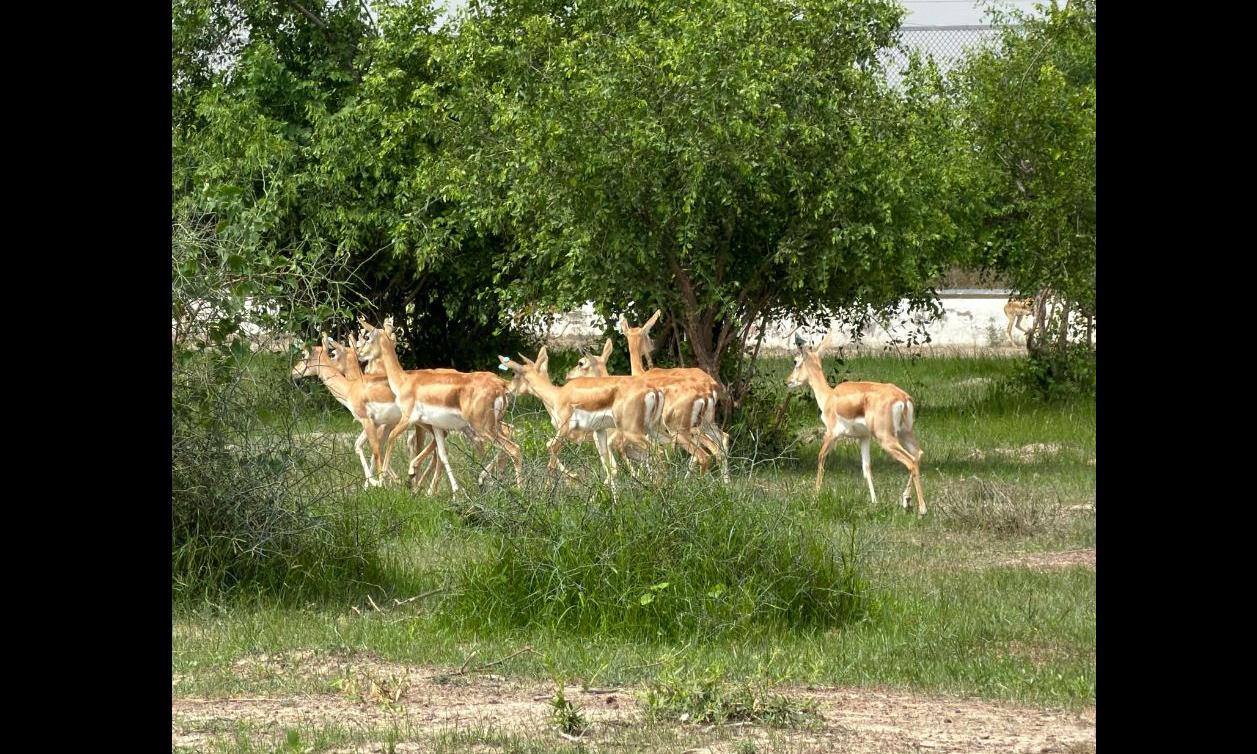
Gujarat releases 20 blackbucks in Banni Grasslands on Independence Day

Camel Herder's Award-Winning Fight to Protect Thar Grassland
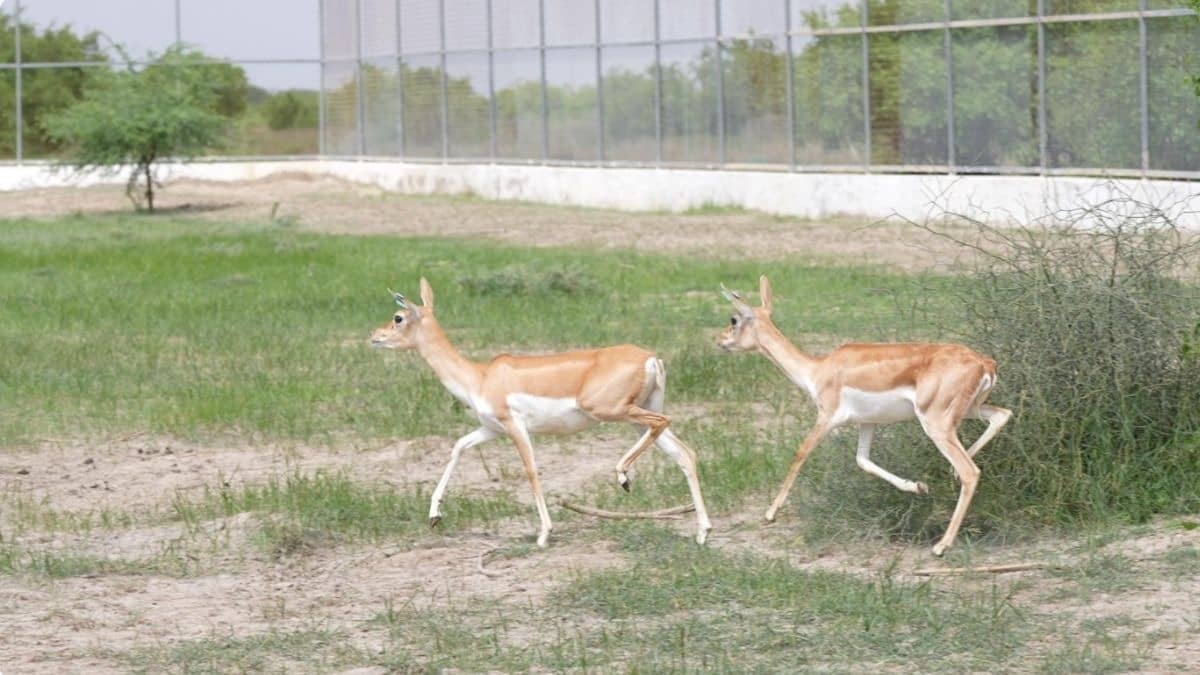
20 Blackbucks Rewilded in Banni Grassland to Restore Native Wildlife
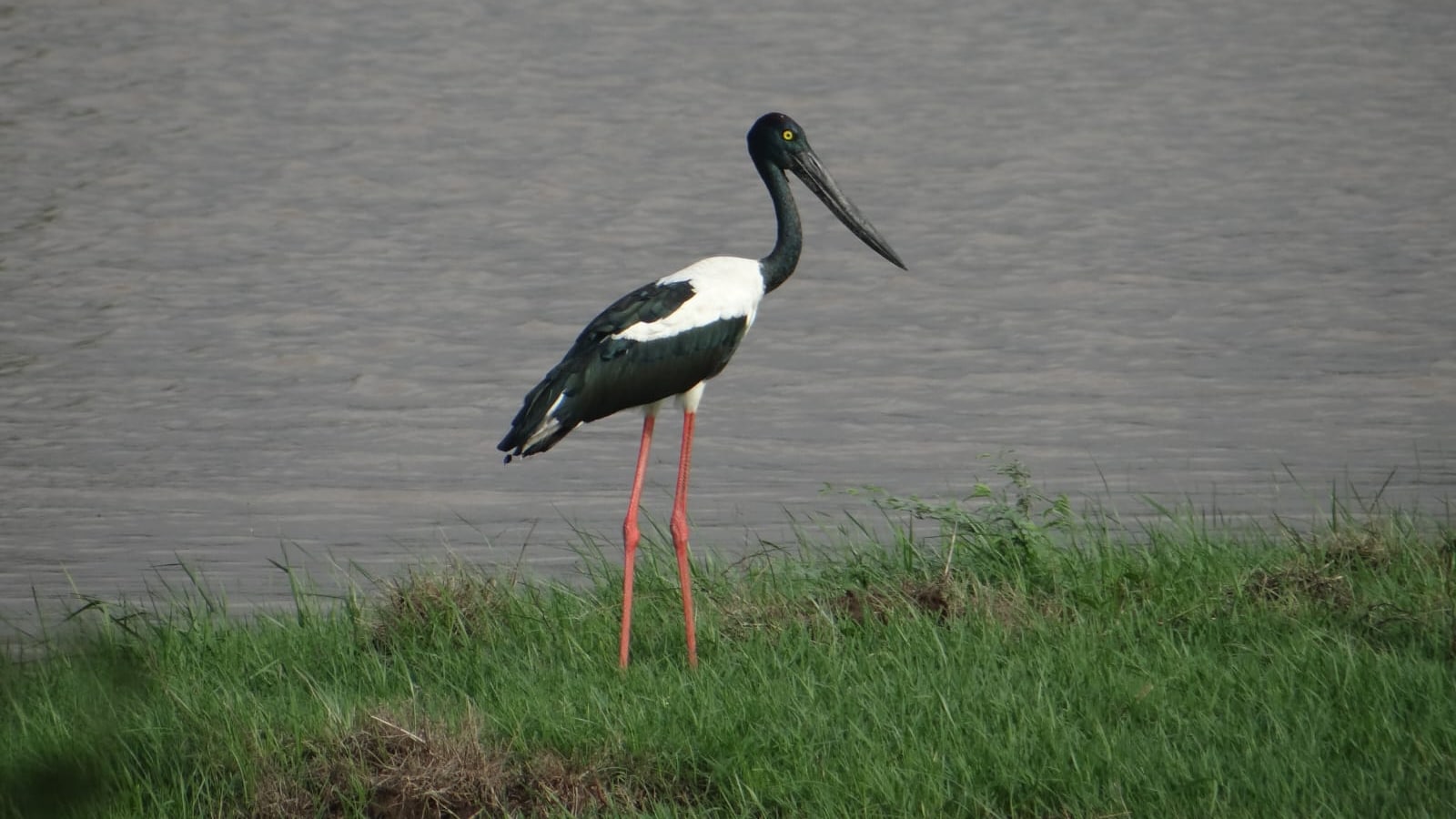
Khijadiya Sanctuary Confirmed as Key Black-Necked Stork Breeding Site