1 year ago
Study: Banni Grasslands in India are Effective Carbon Sinks
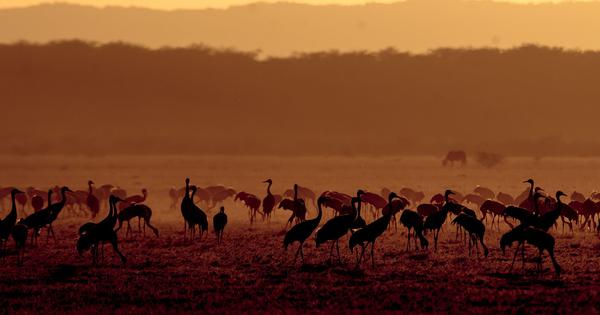
Imagine the Banni grasslands in India like a giant sponge for carbon.
Scientists found that these grasslands are great at storing carbon in their soil, much like a forest.
They store a lot of carbon, even more than some areas in the entire state!
Some parts of the grassland have been restored, and these spots are the best at soaking up carbon.
But there's a problem: a plant called Prosopis, that was brought in to help the soil, is now making it harder for the grasslands to store carbon.
This shows that restoring the grasslands is more effective for storing carbon than planting trees.

Study finds Banni grasslands in Gujarat, Asia's largest tropical grassland, are effective carbon sinks.
The grasslands store 27.69 million tonnes of carbon, which is significant for carbon storage.
Restored sites within the grasslands showed the highest soil organic carbon density, indicating effective carbon sequestration.
Invasive Prosopis juliflora, introduced to combat soil salinisation, has negatively impacted carbon storage in some areas.
The research highlights the importance of grassland restoration over tree planting in these specific ecosystems for effective carbon storage.
- Who
- Researchers and scientists.
- What
- Study reveals Banni grasslands are an effective carbon sink, storing millions of tons of carbon.
- Where
- Banni grasslands in Gujarat, India.
- When
- Study conducted over a period of nine years, with samples taken in 2014, 2017, and 2023.
- Why
- To understand the grasslands' capacity for carbon storage and the impact of land use on this capacity.
Focus on Tree Planting
Prioritize Grassland Restoration
Carbon Sequestration Strategies
Focus on Tree Planting
Emphasize tree planting as the primary method for increasing carbon storage in grasslands.
Prioritize Grassland Restoration
Focus on restoration of grasslands.
Key facts
- Location
- Banni grasslands, Gujarat, India
- Size
- 2,300 square kilometers
- Soil Organic Carbon Storage
- 27.69 million tonnes
- Highest Carbon Density
- 143 tonnes per hectare (restored sites)
- Land Use Type with Most SOC
- Saline brushlands (16.03 million tonnes)
- Invasive Plant
- Prosopis juliflora
Quotes
Chetan Misher
co-author of the study and a wildlife ecologist at the Wildlife Conservation Trust
“The Banni grasslands are a relatively new land formation, and the texture of the soil has to do with the deposition of sand from rivers across millennia.”
 scroll.in
“Ensuring the soil is undisturbed is a key way of ensuring the carbon remains stored in the soil.”
scroll.in
Manan Bhan
former Fellow in Residence at ATREE and co-author of the paper
“To begin with, focussing on removing sparsely vegetated Prosopis can help soil carbon recovery in the near to medium term.”
scroll.in