

1 hr ago
Ancient European Wildfires Burned for Up to 300,000 Years
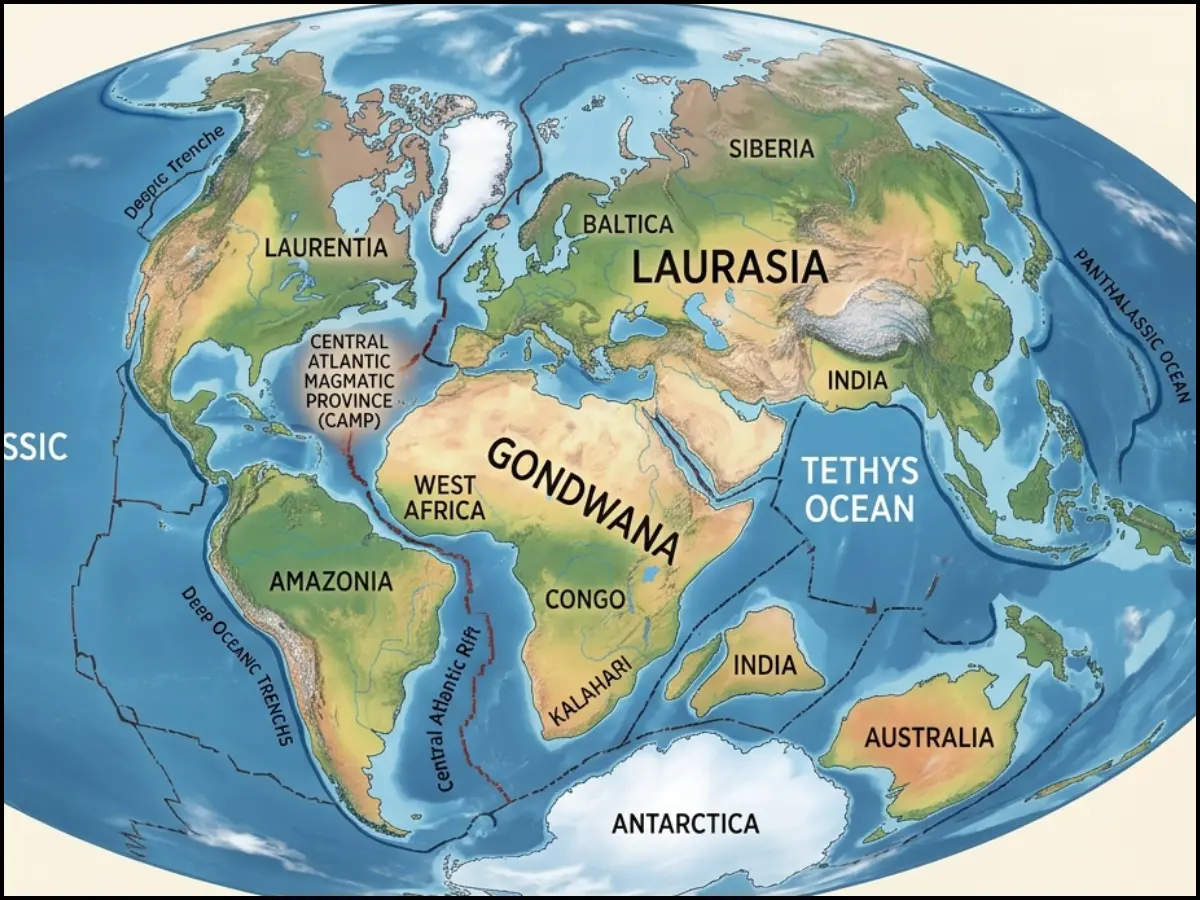
Nearly 201 million years ago, a giant landmass called Pangea began breaking apart.
Volcanoes erupted and released large amounts of carbon dioxide into the air.
Earth became much hotter, and many plants and animals died.
Forests disappeared in parts of Europe, and ferns spread across the land.
When the ferns dried out, they formed thick mats that could burn easily.
Fires repeatedly burned the landscape, while fern roots helped the plants grow back.
Scientists studied ancient rocks, charcoal, smoke chemicals, pollen, and spores to find evidence of the fires.
They think the fires may have continued for 40,000 to 300,000 years.
The researchers described this as a very hot and fire-filled world.

Massive wildfires swept across Europe after the end-Triassic mass extinction nearly 201 million years ago.
Volcanic eruptions linked to Pangea’s breakup released carbon dioxide and raised global temperatures by an estimated 5 to 10 degrees Celsius.
Ferns rapidly spread across Northwest Europe and likely provided fuel that helped fires repeatedly reignite.
Scientists analyzed sediment cores, fossil charcoal, wildfire-smoke compounds, pollen, and spores to reconstruct the fires.
The researchers estimate the wildfire activity lasted between 40,000 and 300,000 years, though fire intensity indicators have limitations.
- Who
- An international team of scientists led by geologists at Utrecht University, including senior author Bas van de Schootbrugge.
- What
- Researchers found evidence of repeated, massive wildfires in Europe lasting an estimated 40,000 to 300,000 years.
- Where
- Europe, particularly Northwest Europe; the researchers examined four sediment cores from the region.
- When
- After the end-Triassic mass extinction, nearly 201 million years ago.
- Why
- Volcanic activity during the breakup of Pangea warmed the climate, while widespread ferns supplied fuel for recurring fires.
Key facts
- Estimated fire duration
- Between 40,000 and 300,000 years
- Timing
- Nearly 201 million years ago, following the end-Triassic mass extinction
- Extinction scale
- Approximately 76 percent of terrestrial and marine species were wiped out
- Temperature increase
- An estimated 5 to 10 degrees Celsius worldwide
- Main volcanic region
- Central Atlantic Magmatic Province
- Evidence examined
- Four sediment cores, fossil charcoal, polycyclic aromatic hydrocarbons, pollen, and spores
- Specialized test
- The Palynomorph Darkness Index measured the darkness of fossil pollen and spores
Quotes
Dr Bas van de Schootbrugge
Senior author of the study and geologist
“Ferns responded to and delivered the fuel that fanned the flames, triggering repeated massive wildfires. A truly hellish world.”
 wionews.com
“When the ferns dry out, the thick mats act as the ideal fuel to trigger massive wildfires.”
wionews.com
Sources
Related news

Europe Faces Intensifying Wildfires While Climate Debate Continues

Serbia’s Burned Dunes Prompt Debate Over Future Forests
Pangea Ultima Could Make Most Land Uninhabitable for Mammals
Ancient Million-Atomic-Bomb Volcano Discovered Beneath England’s East Coast by Scientists

Europe’s Deadly Summer Heat Linked to Over 30,000 Deaths
Ancient Supervolcano Beneath England's East Coast Predates Dinosaurs

Lavrov Warns Europe of Short War If Russia Is Attacked

Robert Kiyosaki Warns Historic Market Crash Has Begun

Kia PV7 Electric Van Revealed Ahead Of 2027 Launch

Trump EV Policy Shift Threatens U.S. Auto Factory Jobs
