

1 day ago
IIT Hyderabad Hosts Cybersecurity and AI Banking Fraud Hackathon
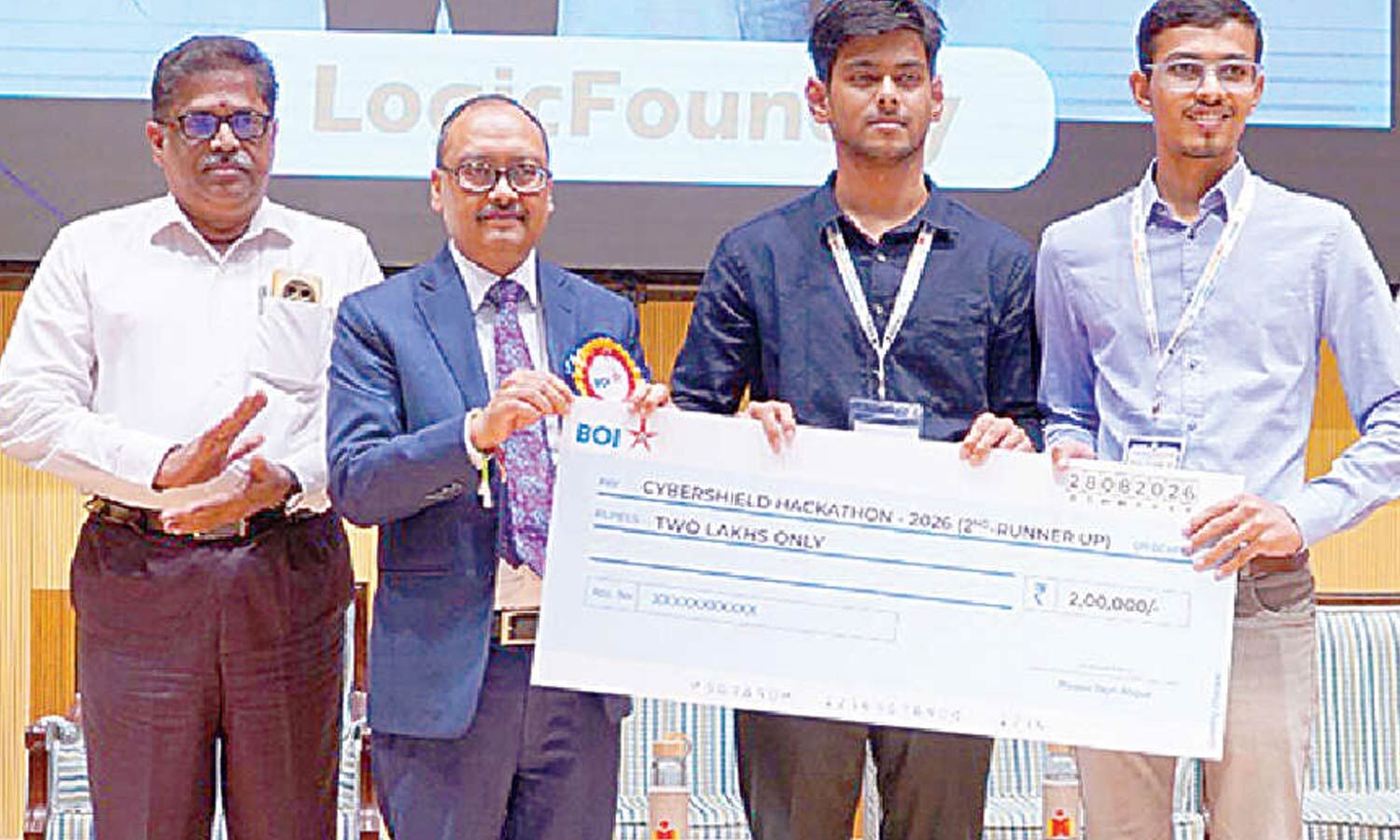
IIT Hyderabad held a competition about stopping digital banking fraud.
Bank of India organised it with the institute and other financial-sector partners.
Students and innovators created computer-based solutions for two challenges.
One challenge used Generative AI to examine harmful mobile apps and malware.
The other looked for suspicious transactions and accounts used to move stolen money.
Nearly 3,000 teams and individuals registered.
A smaller group presented working prototypes to judges.
Six solutions won prizes, sharing a total prize pool of Rs 20 lakh.
The event aimed to bring banks, universities and young innovators together to improve cybersecurity.

Bank of India and IIT Hyderabad organised the Cybersecurity, Fraud and Artificial Intelligence Hackathon 2026.
The event received 2,936 registrations, with 232 participants shortlisted for prototype presentations.
One challenge focused on Generative AI for analysing and risk-scoring fraudulent mobile applications and malware.
The second challenge sought AI-based detection of suspicious transactions and mule accounts.
Six winning entries were selected, with a total prize pool of Rs 20 lakh.
- Who
- Bank of India, IIT Hyderabad, students and innovators, with participation from financial-sector institutions.
- What
- The Cybersecurity, Fraud and Artificial Intelligence Hackathon 2026 developed technology-based solutions for digital banking fraud.
- Where
- Indian Institute of Technology Hyderabad in Hyderabad.
- When
- The hackathon was held recently; the articles do not provide a specific date.
- Why
- To strengthen collaboration between public sector banks, academic institutions and young innovators, and address cybersecurity and banking-fraud challenges.
Key facts
- Organisers
- Bank of India and IIT Hyderabad
- Registrations
- 2,936 team and individual registrations
- Shortlisted participants
- 72 entries, including 68 teams and four individuals, representing 232 participants
- Problem statements
- Generative AI analysis of fraudulent apps and malware; AI-based detection of suspicious transactions and mule accounts
- Finalists
- 18 finalists, with nine selected for each problem statement
- Winning entries
- Six entries, representing the top three solutions under each problem statement
- Prize pool
- Rs 20 lakh, with category prizes of Rs 5 lakh, Rs 3 lakh and Rs 2 lakh
Sources
Related news

RBI Governor says AI alone can help limit AI frauds

Delhi Police arrest key accused in alleged APK banking fraud

Centre Blocks 3,718 Apps, Saves Rs 11,158 Crore From Fraud

Mumbai Police Bust Mule Account Racket Linked To 38 Cases

Women Students Build Generative AI Solutions at Delhi-NCR Hackathon

Tamil Nadu police arrest 837 in cybercrime mule account crackdown

Jindal Steel, IIT Hyderabad Establish Advanced Steel Centre

Jindal Steel, IIT Hyderabad Establish Advanced Steel Centre

IIT Kharagpur to Host FSEAM 2026 Conference

India's First Bioengineering Centre for Lung Health Launched
