4 days ago
OpenAI Unveils Jalapeño Chip, Challenging Nvidia’s AI Dominance
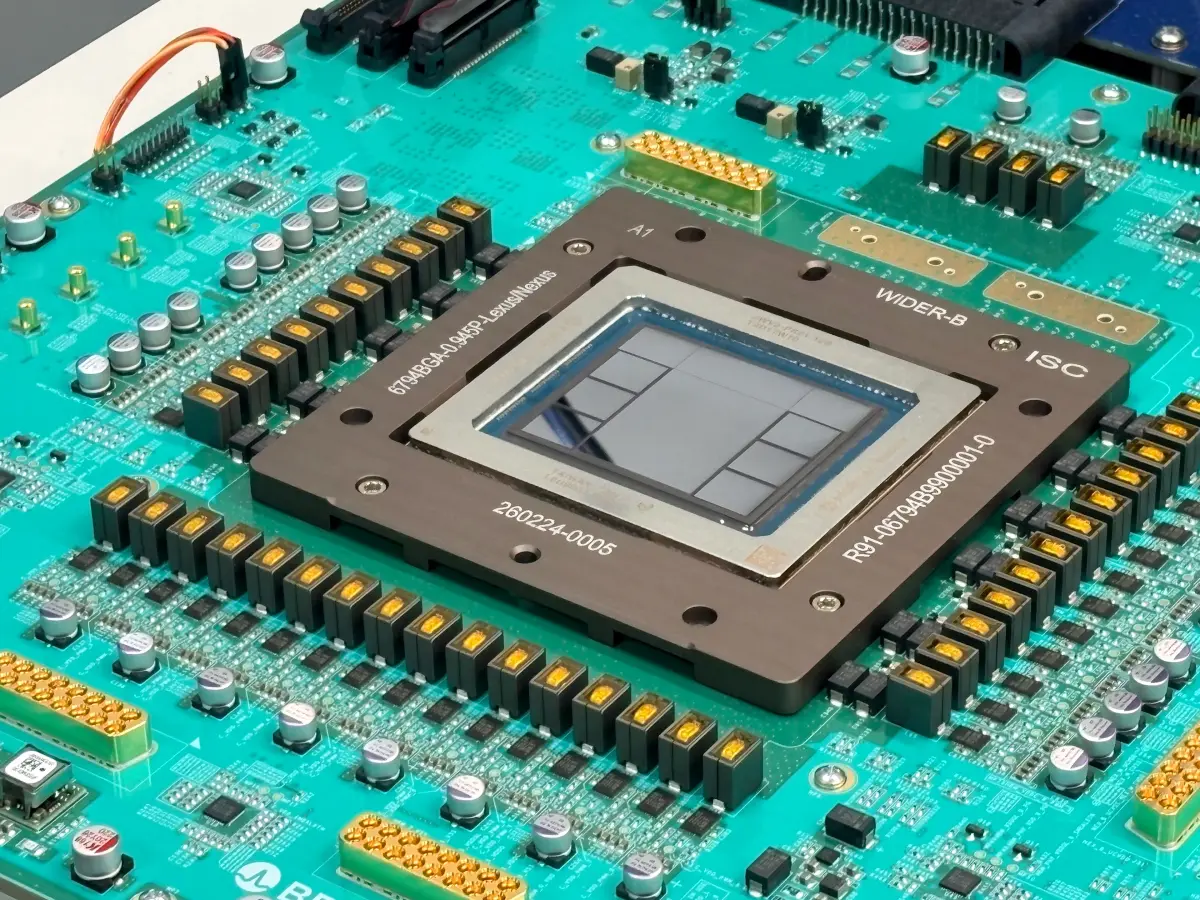
OpenAI made a new computer chip called Jalapeño.
The chip is designed to help AI answer questions and perform other tasks.
OpenAI says it used less electricity than some Nvidia-based systems in its tests.
The company also says Jalapeño made responses arrive faster.
These results came from tests chosen by OpenAI, so they do not prove the chip is better for every use.
OpenAI worked with Broadcom and Celestica to develop the chip and related equipment.
The company plans to start using Jalapeño in its own computers by the end of 2026.
OpenAI will still use Nvidia chips and other accelerators for many AI jobs.

OpenAI revealed performance results for Jalapeño, its custom chip for running AI models.
The inference chip reportedly delivered 1.5 to 1.9 times more AI work per watt than comparison systems.
OpenAI reported 1.7 to 3.6 times lower end-to-end latency in its tests.
Jalapeño was developed with Broadcom and Celestica for integrated chip, memory, networking and software optimization.
OpenAI plans to deploy Jalapeño by the end of 2026 while continuing to use Nvidia and other accelerators.
- Who
- OpenAI, led by CEO Sam Altman, developed Jalapeño with Broadcom and Celestica.
- What
- OpenAI revealed initial performance results for Jalapeño, a custom AI inference chip.
- Where
- When
- The performance results were revealed in the announcement; deployment is planned by the end of 2026.
- Why
- OpenAI designed the chip to handle growing AI computing demand, reduce electricity costs and improve performance for inference workloads.
OpenAI’s Performance Case
Benchmark Limitations
Efficiency and speed
OpenAI’s Performance Case
OpenAI says Jalapeño produced more AI work per watt and reduced latency compared with the Nvidia-based systems tested.
Benchmark Limitations
The results are based on OpenAI-reported tests using selected workloads and do not establish that Jalapeño performs better in every situation.
Threat to Nvidia
OpenAI’s Performance Case
The custom chip gives OpenAI another hardware option and could reduce reliance on commercial accelerators for some inference work.
Benchmark Limitations
OpenAI says it will continue deploying Nvidia and other accelerators widely for both training and inference, so it is not abandoning Nvidia.
Key facts
- Chip
- Jalapeño, an inference chip designed by OpenAI
- Reported efficiency
- 1.5 to 1.9 times more AI work per watt than comparison systems
- Reported latency
- 1.7 to 3.6 times lower end-to-end latency in OpenAI’s tests
- Peak reported performance
- Up to 4.1 times higher performance for highly interactive AI workloads
- Power ratings
- Jalapeño was rated at 700 watts; comparison Nvidia systems were rated at 1,200 or 1,400 watts
- Benchmark
- InferenceX, tested across GPT-OSS 120B, DeepSeek R1 and Kimi K2.5 1T
- Planned deployment
- OpenAI expects to begin using Jalapeño in its infrastructure by the end of 2026
Quotes

Sam Altman
CEO of OpenAI
“we made a chip and it is fast.”
 wionews.com
Sources
Related news

OpenAI Reports Jalapeño Chip Gains in Speed and Efficiency

OpenAI's Jalapeño chip outperforms Nvidia Blackwell in inference tests

OpenAI Says Jalapeno Chips Beat Nvidia in Key Tests
Nvidia gives away free AI models to drive chip sales
Nvidia Puts Groq 3 LPX Racks Into Full Production

Why Custom AI Chips Have Not Dethroned Nvidia Yet

Wall Street Rebounds as Investors Reassess Risky Stocks

Investor Says AI Data Centres Benefit Working-Class Americans

West Asia Tensions Send Stocks Lower, Oil and Yields Higher

Wall Street Week Ahead: Jobs, AI Earnings and Tesla Cybercab

Apple Expands Texas Supply Chain to Protect Shareholder Returns