2 weeks ago
Nvidia gives away free AI models to drive chip sales
Nvidia makes the special computer chips that almost everyone needs to run AI.
The company just started giving away some of its own AI models for free.
One of these models is called Nemotron 3.5 Lightning.
It is very fast, which makes it good for all the small jobs an AI helper has to do over and over.
Giving things away for free might seem strange for a company.
But Nvidia does not make money by selling its models.
Instead, it makes money by selling the chips the models need to run on.
The faster and cheaper a model is, the more people use it.
And the more models people use, the more chips Nvidia sells.
That is why giving away free AI models is good for selling Nvidia chips.

Nvidia released Nemotron 3.5 Lightning, an open mixture-of-experts model with 30 billion total parameters, of which about 3 billion activate per token.
The model was pre-trained on more than 20 trillion tokens, supports context windows up to one million tokens, and Nvidia claims up to four times the output speed of comparable open models.
Nvidia also open-sourced NeMo Switchyard, a model router that directs requests to whichever model suits them.
Nvidia's strategy is to generate demand for the GPUs it sells: it committed $5 billion to Safe Superintelligence and is helping assemble more than $500 billion in AI infrastructure financing using compute as collateral.
The release lands amid collapsing AI capability costs: Moonshot AI open-sourced Kimi K3, DeepSeek's V4 Flash came within two points of Claude Opus 4.7 on coding at roughly one percent of the price, Meta released Muse Glimmer, and OpenAI made ChatGPT unlimited and free for its billion weekly users.
- Who
- Nvidia, the company that sells the chips most AI models run on.
- What
- Released Nemotron 3.5 Lightning, a free open mixture-of-experts AI model aimed at high-volume agent tasks, and open-sourced the NeMo Switchyard model router.
- Where
- Not stated in the articles.
- When
- Exact date not stated in the article; the release is described as recent, alongside Nvidia moves announced this week.
- Why
- To grow demand for Nvidia's GPUs: free, fast models run in high volume and consume more of the hardware Nvidia sells.
Open-source and free-model camp
Paid model-access vendors
Value of free open AI models
Open-source and free-model camp
Nvidia and Meta see free, open models as positive: they generate demand for hardware, broaden access to AI, and keep costs low for developers.
Paid model-access vendors
OpenAI and Anthropic, which sell model access, see capable free models as a competitive threat that undercuts the prices they charge.
Control of advanced AI
Open-source and free-model camp
Mark Zuckerberg's manifesto argues superintelligence should be distributed rather than held by a few companies.
Paid model-access vendors
OpenAI and Anthropic keep frontier capability behind paid access, a business model that depends on model access not being free.
Key facts
- Company
- Nvidia
- Released model
- Nemotron 3.5 Lightning - open mixture-of-experts with hybrid Mamba-2, MoE and attention layers
- Model parameters
- 30 billion total; about 3 billion active per token
- Pre-training and context
- Over 20 trillion tokens; context windows up to one million tokens
- Performance claims
- Up to four times the output speed of comparable open models; roughly 30% lower task completion time
- Also open-sourced
- NeMo Switchyard model router
- Safe Superintelligence deal
- $5 billion commitment, structured as hardware purchases
- AI infrastructure financing
- More than $500 billion with Apollo, BlackRock, Blackstone, Brookfield, Goldman Sachs and KKR, using compute as collateral
Sources
Related news

Nvidia developing trillion-parameter Nemotron 4 open-source AI models

Nvidia Expands AI Model Push With $6 Billion Poolside Deal
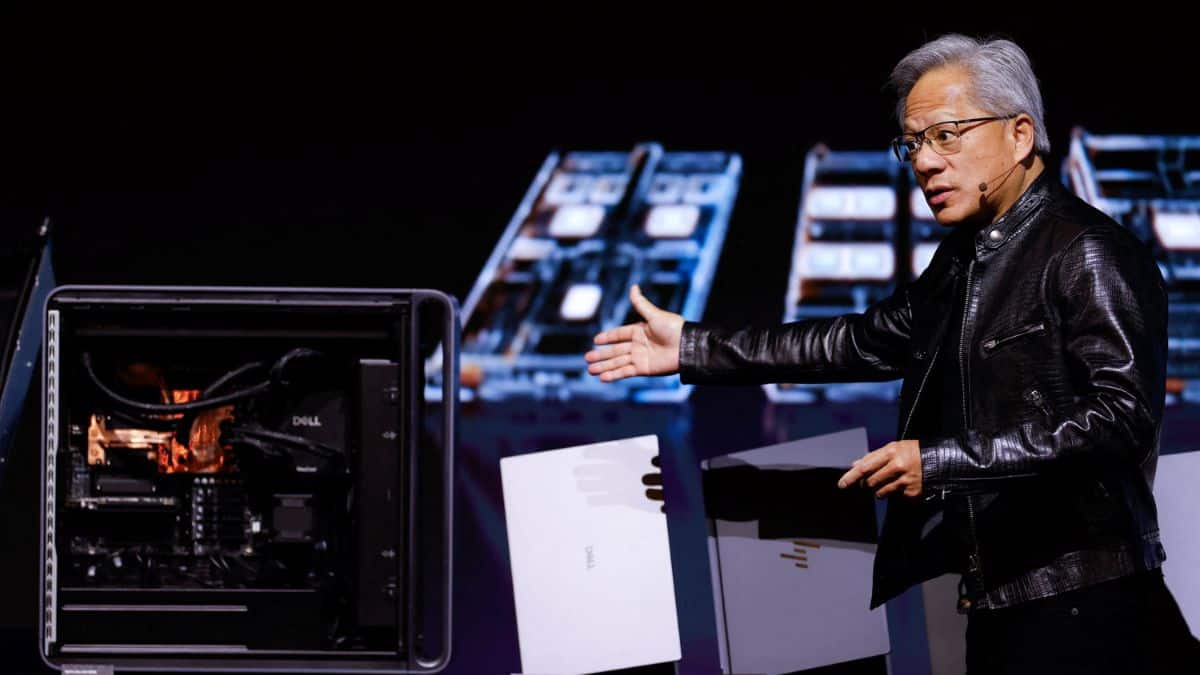
Nvidia Puts Groq 3 LPX Racks Into Full Production
NVIDIA Reportedly Agrees to Buy Hugging Face for $12.9 Billion

OpenAI Says Jalapeno Chips Beat Nvidia in Key Tests

Social Media Companies Intensify Efforts to Identify Child Users

Yorkville America Expands Beyond Trump-Linked ETFs With AI Strategy
Meta’s $18-Billion Child Safety Settlement Faces Praise and Criticism
School Awards Honour Courage, Commitment and Educational Excellence

AI Expansion Puts Jamnagar and Thane Under Water Stress