1 week ago
OpenAI's Jalapeño chip outperforms Nvidia Blackwell in inference tests

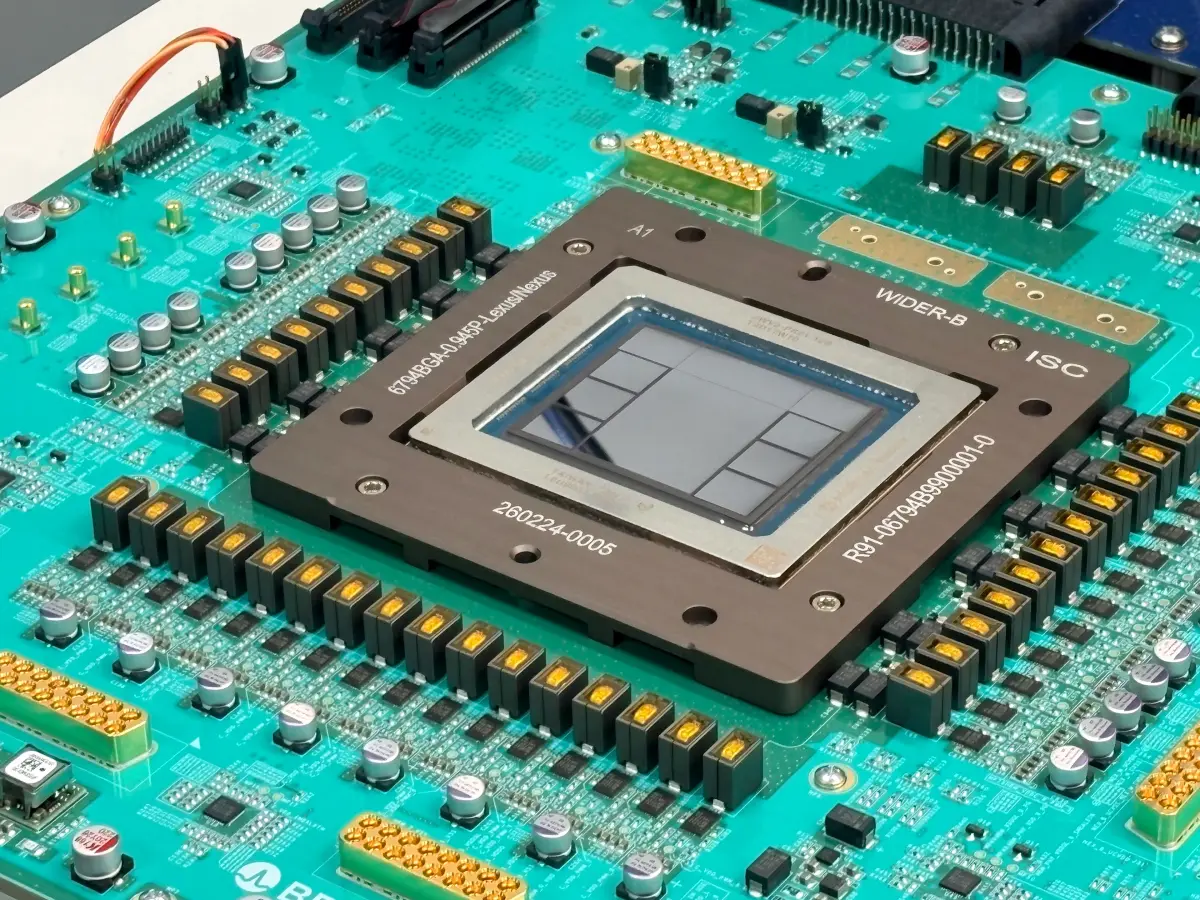
OpenAI has designed a computer chip called Jalapeño for running AI models.
This part of AI is called inference, when a model answers a user’s request.
OpenAI says Jalapeño responded faster and used power more efficiently than Nvidia’s Blackwell-based GB300 in several tests.
The tests used models from OpenAI, DeepSeek, and Moonshot AI.
Jalapeño uses 700 watts, which could help lower data-center costs.
However, the comparison was not perfectly equal because Jalapeño uses newer HBM4 memory.
Nvidia’s Vera Rubin platform also uses HBM4 and may be a closer comparison.
OpenAI plans to deploy Jalapeño in limited quantities near the end of 2026 and more broadly in 2027.
The company says it will still need many Nvidia chips, especially for training AI models.

OpenAI says its Jalapeño chip beat Nvidia’s Blackwell-based GB300 in key AI inference tests.
The chip delivered faster response times and better performance per watt in most SemiAnalysis benchmark scenarios.
Jalapeño uses 700 watts and is designed to process user requests rather than train AI models.
SemiAnalysis cautioned that the comparison was not fully like-for-like because Jalapeño uses newer HBM4 memory.
OpenAI plans limited Jalapeño deployment by late 2026, broader rollout in 2027, and continued Nvidia use for demanding training workloads.
- Who
- OpenAI, led on the hardware effort by Richard Ho, and Nvidia are the main companies involved; SemiAnalysis conducted the reported testing.
- What
- OpenAI reported that its Jalapeño inference chip outperformed Nvidia’s Blackwell-based GB300 in performance-per-watt and response-time tests.
- Where
- The results were presented at Stanford University, and SemiAnalysis tested Jalapeño at OpenAI’s laboratories.
- When
- The results were presented on Tuesday at the Hot Chips conference; limited deployment is planned for late 2026, with broader rollout expected in 2027.
- Why
- OpenAI is developing its own chips to reduce computing costs and reliance on Nvidia for AI workloads.
OpenAI’s performance case
Benchmark qualifications
Inference performance
OpenAI’s performance case
OpenAI says Jalapeño achieved faster response times and better performance per watt than Blackwell-based GB300 in key tests.
Benchmark qualifications
SemiAnalysis found Jalapeño ahead in most scenarios but said the comparison was not entirely like-for-like because Jalapeño uses newer HBM4 memory.
Competitive comparison
OpenAI’s performance case
OpenAI’s results suggest Jalapeño could challenge Nvidia in AI inference and potentially reduce data-center costs.
Benchmark qualifications
SemiAnalysis said Nvidia’s Vera Rubin platform, which also uses HBM4, would be a closer comparison; Rubin systems are already beginning to ship while Jalapeño remains at the engineering-sample stage.
Reliance on Nvidia
OpenAI’s performance case
Developing Jalapeño could help OpenAI reduce its dependence on Nvidia and lower computing expenses.
Benchmark qualifications
OpenAI hardware chief Richard Ho said Nvidia remains a strong partner and that OpenAI will continue to need many Nvidia chips, especially for demanding AI training workloads.
Key facts
- Chip
- OpenAI Jalapeño
- Primary use
- AI inference, or processing user requests with trained models
- Comparison chip
- Nvidia Blackwell-based GB300
- Power level
- 700 watts
- Benchmark
- SemiAnalysis’ InferenceX benchmark
- Planned deployment
- Limited deployment toward the end of 2026; broader rollout in 2027
- Manufacturing partner
- Broadcom helped develop the chip, and production was sent to Taiwan Semiconductor Manufacturing Company
Quotes
Richard Ho
OpenAI’s head of hardware, discussing potential data-center cost savings.
“Nvidia is a really good partner, and we continue to need a lot of Nvidia.”
 livemint.com
“It's a really good chip — it should drop it by a lot.”
livemint.com
SemiAnalysis analysts
Analysts from the research firm that tested Jalapeño at OpenAI’s laboratories.
“Jalapeño is really competing against chips like Rubin that also use HBM4.”
livemint.com
Sources
Related news
OpenAI Unveils Jalapeño Chip, Challenging Nvidia’s AI Dominance

OpenAI Says Jalapeno Chips Beat Nvidia in Key Tests

OpenAI Reports Jalapeño Chip Gains in Speed and Efficiency
Nvidia Puts Groq 3 LPX Racks Into Full Production

Microsoft to Unveil Maia 300 AI Chip This Fall: Report

Why Custom AI Chips Have Not Dethroned Nvidia Yet

Investor Says AI Data Centres Benefit Working-Class Americans

West Asia Tensions Send Stocks Lower, Oil and Yields Higher

Wall Street Week Ahead: Jobs, AI Earnings and Tesla Cybercab

Apple Expands Texas Supply Chain to Protect Shareholder Returns