2 weeks ago
Bangladesh Revives 1947 History While Ignoring Partition's Human Cost
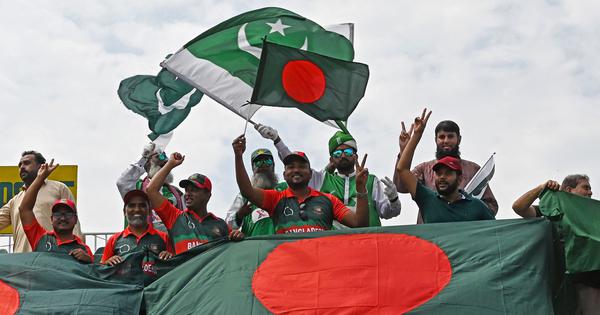
Bangladesh is a country in South Asia.
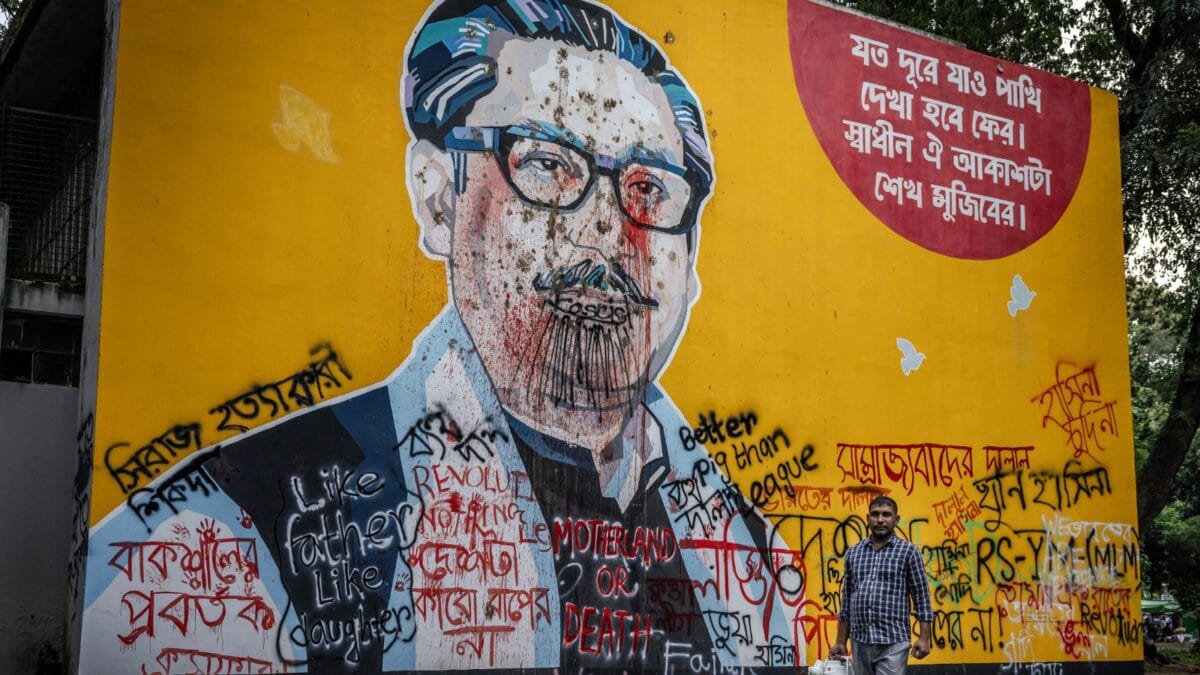
For a very long time, it remembered August 15 mainly because its first president was killed on that day in 1975.
But it mostly ignored what happened in 1947, when British rule ended and the land was divided into India and Pakistan.
Bangladesh was created later, in 1971, so that date mattered most to its people.
Recently, after big protests pushed out the old leader, Sheikh Hasina, Bangladesh started talking about 1947 again.
Some people use 1947 to feel closer to Pakistani identity and further from India.
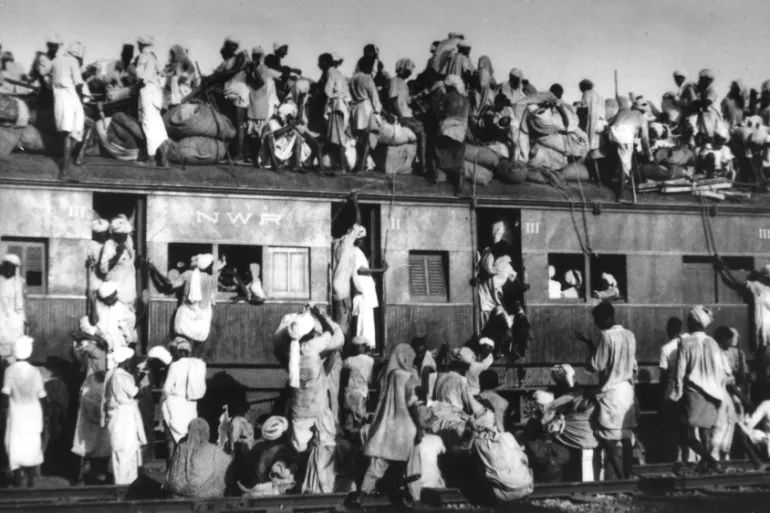
Others say this forgets the millions of people who had to leave their homes during the division.
A historian called it a 'long partition' that happened over many years.
The article says we should remember the ordinary people and families who suffered, not just use history for politics.

Bangladesh has treated August 15 mainly as the anniversary of Sheikh Mujibur Rahman's 1975 assassination, not as the end of British rule in 1947.
Two years after the July uprising that toppled Sheikh Hasina, Bangladesh is reviving the 1947 Partition as a way to reassert Bengali Muslim identity and create distance from India.
Since Hasina's fall, Dhaka has thawed ties with Islamabad, resuming direct flights to Karachi after a 14-year gap and restarting foreign office talks for the first time since 2010.
Historian Joya Chatterji describes Bengal's 'long partition' as beginning with the 1946 Great Calcutta Killing and continuing in waves in 1950, 1964 and 1971, with 4-6 million people moving from East Bengal into India.
The article warns that 1947 is again becoming political raw material while rights groups have documented hundreds of incidents of violence against Hindus and other minorities in Bangladesh since August 2024.
- Who
- Bangladesh and its leaders, including the ousted government of Sheikh Hasina, Muhammad Yunus's interim government, Tarique Rahman's Bangladesh Nationalist Party government, and historian Joya Chatterji.
- What
- Bangladesh is rediscovering the 1947 Partition of Bengal, largely as a political tool for religious identity and distancing from India, while the human cost of Partition remains neglected.
- Where
- Bangladesh, India and Pakistan, focusing on Bengal and Punjab, with developments involving Dhaka, Karachi and Islamabad.
- When
- Two years after the July uprising and around the August 15 commemorations; the article references events since August 2024 and films released in June and this week.
- Why
- To reassert Bengali Muslim political identity and create distance from India following the 2024 July uprising.
Human-Centred Reckoning
Political Instrumentalisation
Why 1947 is being revived
Human-Centred Reckoning
1947 should be remembered as a human tragedy of displacement affecting millions of ordinary people and their descendants across decades.
Political Instrumentalisation
Reviving 1947 helps reassert Bengali Muslim political identity and carries legitimacy for distancing Bangladesh from India.
Violence against minorities since 2024
Human-Centred Reckoning
Rights groups have documented hundreds of incidents against Hindus and other minorities since August 2024, including dozens of deaths and temple damage, raising concern for the community Partition displaced.
Political Instrumentalisation
Officials attribute the incidents to political, personal and other reasons rather than communal violence.
Key facts
- Author
- Jannatul Naym Pieal, Dhaka-based writer, researcher and journalist
- August 15 commemoration
- Anniversary of Sheikh Mujibur Rahman's 1975 assassination, observed as a day of state mourning
- Partition displacement estimates
- 4-6 million people crossed from East Bengal into India; about 1.5 million moved in the opposite direction
- Great Calcutta Killing
- August 1946 rioting that left an estimated 4,000-10,000 people dead
- Dhaka-Karachi flights
- Resumed after a 14-year gap under Muhammad Yunus's interim government
- Pakistan foreign office talks
- Restarted for the first time since 2010
- Minority violence since August 2024
- Hundreds of incidents documented by rights groups, including dozens of deaths and damage to temples
- Related films
- Main Vaapas Aaunga (June) and Batwara 1947 (released this week), both centred on Punjab's Partition
Sources
Related news
Bangabandhu Means Bangladesh: Why August 15 Cannot Be Erased
Remembering Partition's forgotten impact on Assam and Northeast

Hasina accuses conspirators of turning Bangladesh into Pakistan again

Why West Bengal marks Bharat Bhukti Dibas on August 18

Bangladesh Recall Shanto, Mahmud for Asian Games T20 Squad

Sharma and Malik share halfway lead at Telangana Golconda Masters
India Replaces Sri Lanka as 2027 Women’s Champions Trophy Host
Centre Assures JDU Bihar’s Interests In Farakka Treaty Decision
India’s Record Wheat Harvest Opens $1.5 Billion Export Window