2 hrs ago
2026 Midterms Offer Different Signals From Markets, Models And Polls
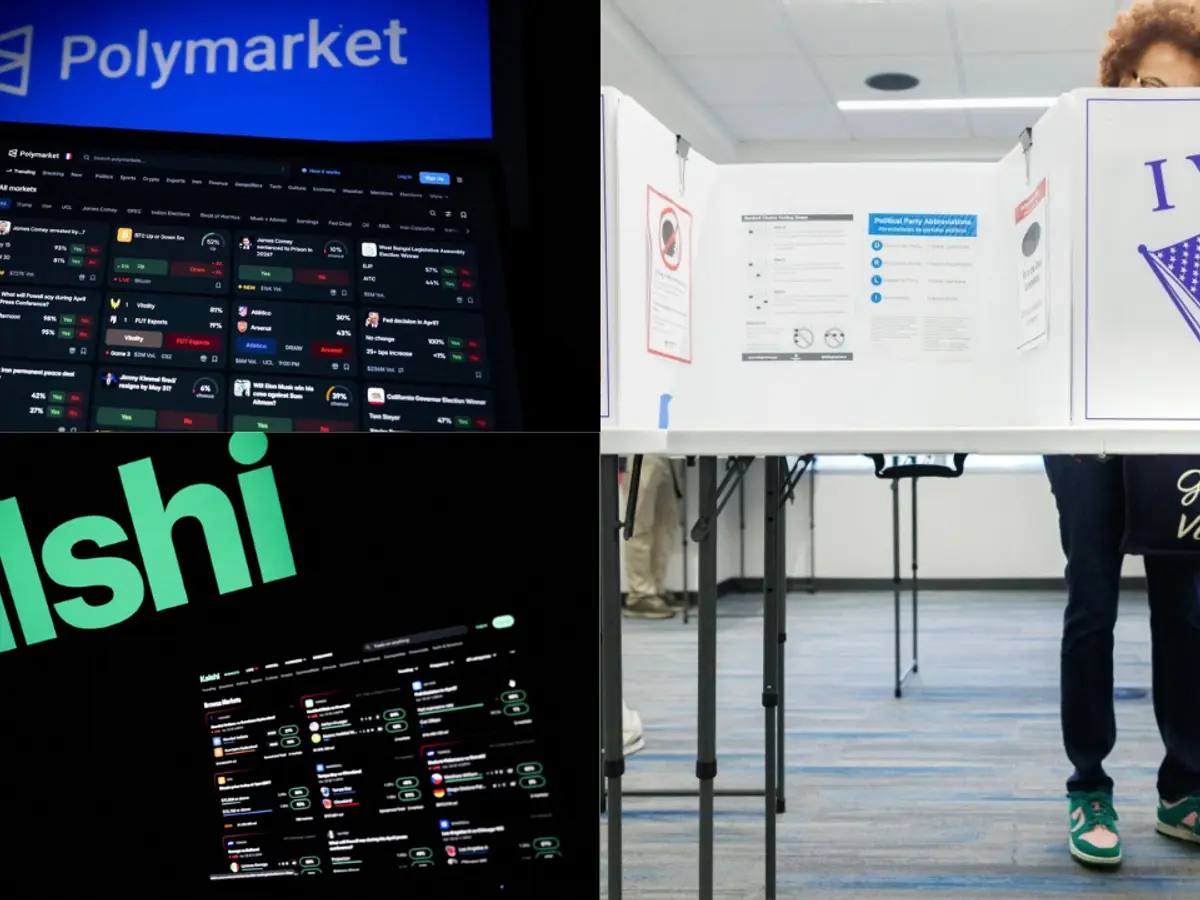
Different election tools are trying to understand the same 2026 US midterm elections.
Polls ask voters which candidates they currently support.
Prediction markets ask traders to price what they think will happen later.
Silver Bulletin’s model combines polls and other information to simulate many possible elections.
Cook and Sabato’s Crystal Ball rate how competitive individual races appear.
Because these tools use different information, they can show different results.
A Toss Up rating does not necessarily mean a race has exactly a 50 percent chance for each party.
The best tool depends on whether someone wants to know voter sentiment, trader expectations, model results or race competitiveness.

Prediction markets such as Kalshi and Polymarket price traders’ expectations of future election outcomes.
Silver Bulletin’s FLIPR model combines polling, fundamentals and expert ratings across 40,000 simulations.
FLIPR’s September 28 update showed Democrats 9.2 points ahead in its likely-voter-adjusted generic ballot average.
The Cook Political Report rated seven Senate contests as Toss Ups as of September 29.
Polling, markets, statistical models and expert ratings answer different questions and should not be treated as interchangeable forecasts.
- Who
- Voters, prediction-market traders, Silver Bulletin modelers, and election analysts at The Cook Political Report and Sabato’s Crystal Ball.
- What
- Different election-tracking systems are producing different assessments of the 2026 US midterm elections.
- Where
- The United States, including congressional races across multiple states.
- When
- The article discusses the upcoming 2026 elections, citing updates from September 21, September 28 and September 29.
- Why
- The systems use different inputs and methods: polls measure current voter sentiment, markets price future outcomes, models simulate elections, and experts rate race competitiveness.
Key facts
- Election
- 2026 US midterm elections
- Market platforms
- Kalshi and Polymarket
- FLIPR inputs
- Polling, political fundamentals and expert race ratings
- FLIPR simulations
- Typically 40,000 simulations
- Generic ballot
- Democrats held a 9.2-point likely-voter-adjusted advantage in Silver Bulletin’s September 28 update
- Cook Senate Toss Ups
- Alaska, Iowa, Maine, Michigan, New Hampshire, Ohio and Texas
- Key distinction
- A Cook Toss Up rating is not equivalent to a mathematical 50-50 probability
Sources
Related news

Prediction Markets Favor Democrats in 2026 Midterm Congress Control

Democrats Favored to Win House in Midterm Elections
What the 2026 US Midterm Elections Could Decide

Forecast Favors Democrats to Retake House in Midterm Elections

Indian-American voters emerge as pivotal in 2026 Senate races

Indian-American Voters Lean Democratic Ahead of US Midterms

Trump's Nobel Prospects Fall as Mark Carney Emerges Favorite

Kalshi Permanently Bans George Santos Over Market Manipulation