12 hrs ago
What the 2026 US Midterm Elections Could Decide

Midterm elections happen halfway through a US president’s four-year term.
The president is not elected again during these elections, but many other important offices are.
Voters will choose all 435 members of the House and 35 senators in 2026.
They will also choose governors and state lawmakers in many states.
These elections can show whether voters support or oppose the president’s work.
If Republicans keep both chambers of Congress, Donald Trump could have an easier time advancing his agenda.
If Democrats win either chamber, they could block some proposals and investigate the administration.
The results may also help decide which politicians become important candidates for president in 2028.

The November 3, 2026, elections will determine control of the US House, Senate, 36 governorships, and thousands of state offices.
All 435 House seats and 35 Senate seats—including 33 regular contests and two special elections—are on the ballot.
Republicans enter the cycle with a narrow House majority, while both parties face competitive Senate races in several states.
The elections will serve as a referendum on Donald Trump’s administration and issues including the economy, immigration, healthcare, foreign policy, and technology.
Control of either congressional chamber could determine legislation, federal investigations, judicial confirmations, executive appointments, and the direction of the 2028 presidential race.
- Who
- US voters, congressional candidates, gubernatorial candidates, and state-level candidates from both major parties.
- What
- The 2026 midterm elections will decide congressional control, 36 governorships, thousands of state offices, and some ballot initiatives.
- Where
- Across the United States, including all 50 states and three US territories for gubernatorial contests.
- When
- November 3, 2026, midway through Donald Trump’s second presidential term.
- Why
- The elections will determine which party controls legislation, oversight, budgets, judicial confirmations, executive appointments, and much of the political direction through 2028.
Democratic control or gains
Republican control or retention
Control of Congress
Democratic control or gains
Democrats need only a small net gain to take the House and could capture either chamber, creating divided government and limiting the administration’s legislative agenda.
Republican control or retention
Republican retention of both chambers would preserve a clearer path for Donald Trump’s budget, tax, and other legislative priorities.
Oversight and investigations
Democratic control or gains
A Democratic House majority would control committees, subpoenas, oversight hearings, and competing budget proposals concerning executive-branch actions.
Republican control or retention
Republican control would allow the party to set the House legislative docket and reduce the likelihood of Democratic-led investigations dominating the chamber.
Judges and appointments
Democratic control or gains
A Democratic Senate majority could block or delay federal judicial nominees and scrutinize executive-branch appointments.
Republican control or retention
A Republican Senate majority would maintain control of the judicial confirmation process and approvals of cabinet secretaries and ambassadors.
Key facts
- Election date
- November 3, 2026
- House contests
- All 435 voting seats
- Senate contests
- 35 seats: 33 regular Class 2 seats and two special elections
- Governorships
- 36 states, plus three US territories
- Current House balance
- Republicans hold a narrow 218-214 majority, according to the article
- Turnout pattern
- Midterm turnout historically ranges from about 40% to 50% of eligible voters, compared with roughly 60% to 66% in presidential elections
- Main battlegrounds
- House and Senate contests are expected to be especially competitive in states including Georgia, Michigan, Maine, North Carolina, Minnesota, New Hampshire, Kentucky, and Iowa
Sources
Related news

US Midterms Could Reshape Trump's Agenda Amid Economic Discontent
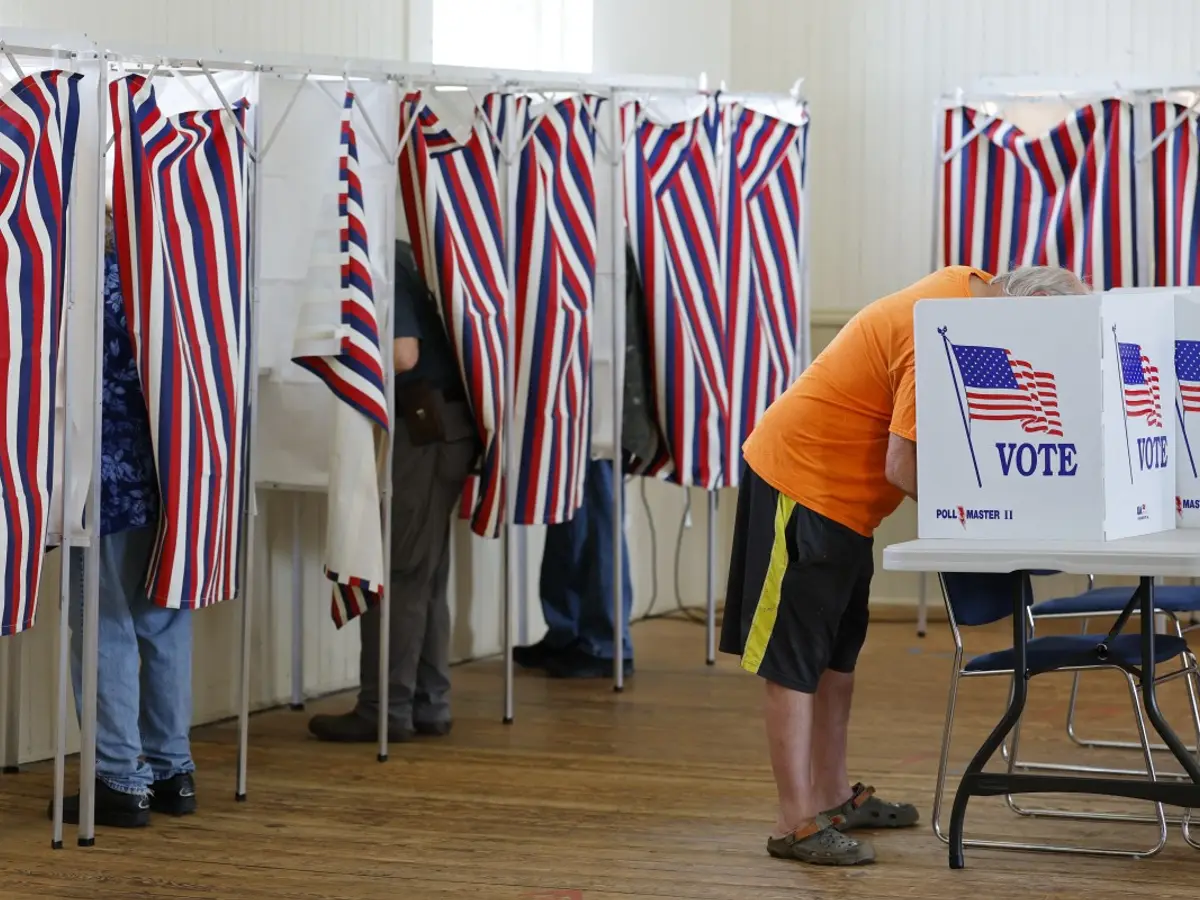
What to Know About the 2026 US Midterm Elections

Prediction Markets Favor Democrats in 2026 Midterm Congress Control
2026 Midterms Will Test Trump’s America First Strategy

Indian-American voters emerge as pivotal in 2026 Senate races

Texas Air National Guard F-16 Crashes During Michigan Training

Tucker Carlson Defends Michigan Democrat Against Republican Attacks
Democrats Need Four Senate Flips to Reclaim Majority
Auditors Say Musk's DOGE Overstated $110 Billion in Savings