1 week ago
Indian Railways Moves 360 TEUs in First Double-Stack Long-Haul Train
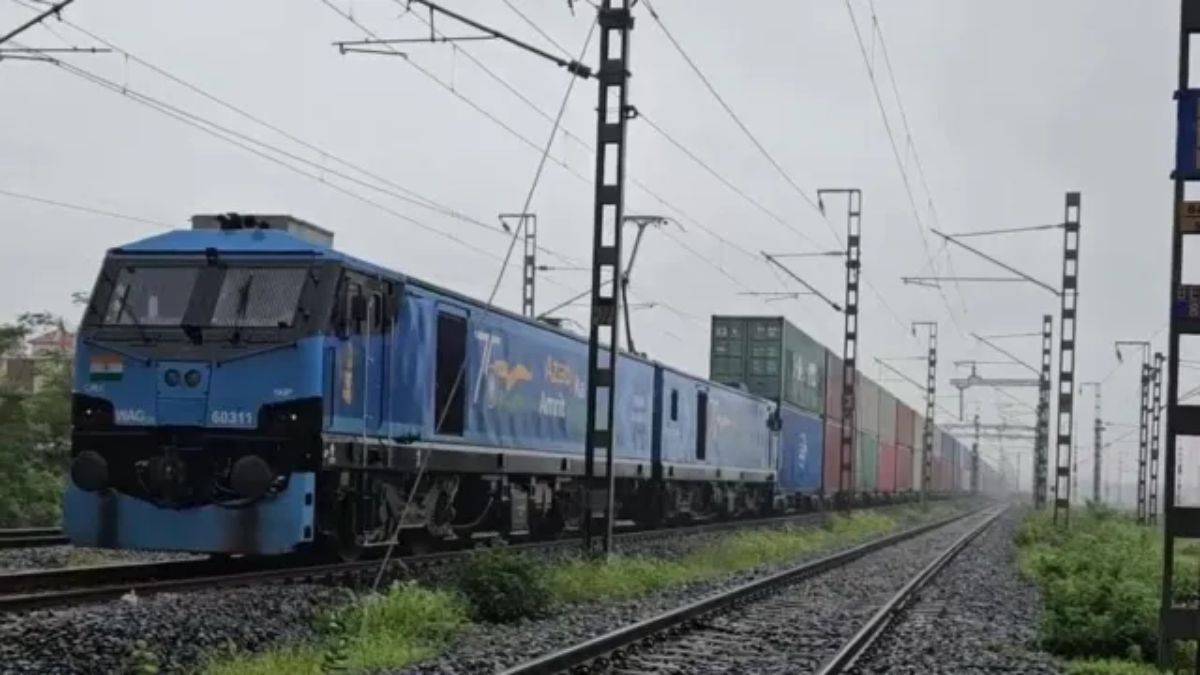
Indian Railways ran a very long train carrying containers in two layers.
It traveled from JNPT near Mumbai to Varnama in the Vadodara Division.
The train carried 360 containers measured in TEUs.
This means more goods moved in one trip instead of several smaller train trips.
Fewer trips may help reduce waiting and congestion at ports and terminals.
It may also help containers reach their destinations faster.
The train was pulled by electric locomotives.
Using trains for this freight could reduce the need for diesel trucks and lower pollution.

Indian Railways operated its first double-stack long-haul container train from JNPT near Mumbai to Varnama in Vadodara Division.
The train departed Jawaharlal Nehru Port Trust at 7 p.m. on August 21, 2026, traveling approximately 422 kilometers.
Two double-stack rakes transported a combined 360 TEUs of containers in one train movement.
The operation is intended to improve container evacuation, reduce terminal congestion and make better use of railway capacity.
Electrically hauled trains could reduce reliance on diesel road transport, road congestion, fuel use and freight emissions.
- Who
- Indian Railways operated the train, carrying containers for movement from Jawaharlal Nehru Port Trust to the Container Corporation of India terminal.
- What
- A first double-stack long-haul container train transported 360 TEUs using two double-stack rakes.
- Where
- It traveled approximately 422 kilometers from JNPT near Mumbai to the Container Corporation of India GCT terminal at Varnama in Vadodara Division.
- When
- The train departed at 7 p.m. on August 21, 2026.
- Why
- The operation aims to move more containers in fewer train movements, helping reduce congestion and transit time while supporting lower-emission freight transport.
Key facts
- Cargo capacity
- 360 TEUs
- Train formation
- Two double-stack container rakes
- Route
- JNPT to Varnama, Vadodara Division
- Distance
- Approximately 422 kilometers
- Departure
- 7 p.m. on August 21, 2026
- Leading rake
- 45+1 containers and 1,817 tonnes
- Trailing rake
- 45+1 containers and 2,105 tonnes
Sources
Related news

Indian Railways Operates First Double-Stack Long-Haul Container Train

JNPA Starts Double-Stack DFC Operations To Speed Cargo Evacuation

Concor’s Double-Stack Freight Milestone Supports Broker’s ₹540 Target Price
North Eastern Railway Runs Longest-Ever Awadh Mahashakti Freight Train
JNPA Explores Rail Nodes To Speed Container Movement

DFCCIL launches rapid parcel train linking NCR to Gujarat

Banks and Railways Top 70,584 Corruption Complaints in 2025
Indian Railways Expands Local Artisan Sales Through 2,300 Outlets
BEML Secures ₹180.60 Crore Order for Vande Bharat Sleeper Trainsets
Railways Approves Rs 800 Crore Safety and Freight Projects
Indian Railways Sanctions Rs 125-Crore Bhavnagar Para Project