2 days ago
Pastoralists Safeguard India’s Rangelands Despite Persistent Policy Marginalisation
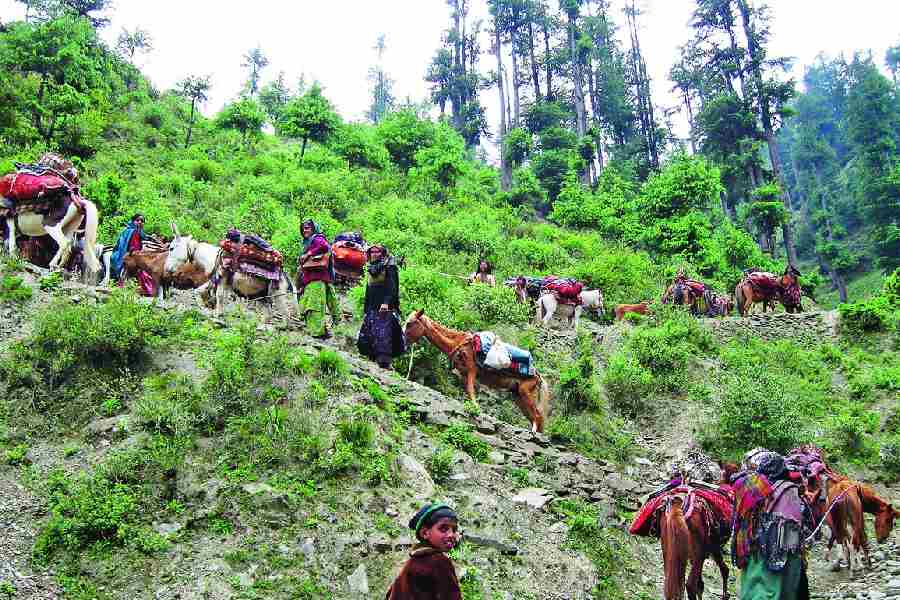
Rangelands are open areas where animals and wildlife find grass and other plants to eat.
Pastoralists move with their animals during different seasons to find suitable weather and food.
In the Himalayas, many herders travel uphill in summer and downhill in winter.
Their animals can help spread seeds and add nutrients to the soil.
The herders also remove some dry plants that can fuel forest fires.
For a long time, governments and some people blamed them for damaging the mountains through overgrazing.
The article says this explanation has been disproved and that pastoralists provide important environmental and cultural benefits.
However, many herders still lack healthcare, schooling, veterinary services and a voice in land decisions.
New government measures may provide more support, but their future remains uncertain as grazing lands shrink.

The United Nations has declared 2026 the International Year for Rangelands and Pastoralists.
More than six lakh Himalayan herders migrate seasonally with livestock between plains and highlands.
Pastoralists help reduce wildfire risks, improve soil fertility, disperse seeds and conserve biodiversity.
Historical forest laws restricted grazing and resource collection, while the 2006 Forest Rights Act recognised forest dwellers’ rights.
Despite new education and livestock-support initiatives, pastoralists remain excluded from many services, land decisions and rehabilitation programmes.
- Who
- Pastoralist communities, including Gujjars, Bakkerwals and Gaddis, along with governments and policymakers.
- What
- The article examines pastoralists’ environmental contributions and their continued marginalisation in India.
- Where
- The discussion focuses on India, especially Jammu and Kashmir, Uttarakhand, North Sikkim and Himalayan rangelands.
- When
- The United Nations has designated 2026 for the International Year for Rangelands and Pastoralists; India’s 2025 livestock census also recognised herders and pastoralists.
- Why
- Pastoralists face historical legal restrictions, shrinking grazing lands, limited public services and exclusion from land-use and rehabilitation decisions.
Pastoralist Contributions
Conventional Policy Concerns
Environmental impact
Pastoralist Contributions
Pastoralists and their livestock help reduce wildfire risks, improve soil fertility, disperse seeds and support biodiversity.
Conventional Policy Concerns
Pastoralists have historically been blamed for overgrazing, soil erosion and declining livestock, although the article says the Himalayan degradation theory has been disproved.
Land and conservation policy
Pastoralist Contributions
Pastoralists argue, in effect, that their livelihoods and knowledge should be recognised in land-resource decisions and conservation planning.
Conventional Policy Concerns
Historical forest legislation treated forests as protected state assets, while conservation and security measures restricted access to grazing areas.
Development and rehabilitation
Pastoralist Contributions
Pastoralist communities need access to education, healthcare, veterinary services and inclusion in rehabilitation linked to infrastructure or protected areas.
Conventional Policy Concerns
Public services and rehabilitation programmes have largely been designed around settled populations, often excluding mobile herders.
Key facts
- International year
- The United Nations has declared 2026 the International Year for Rangelands and Pastoralists.
- Seasonal migration
- Herders move from plains to higher reaches in summer and return downhill in winter.
- Population movement
- More than six lakh herdsmen undertake the biannual Himalayan trek.
- Environmental benefits
- Pastoralism is associated with wildfire prevention, soil fertility, seed dispersal, carbon sequestration and biodiversity conservation.
- Historical restrictions
- Forest laws from 1865 and 1878 restricted grazing, shifting cultivation and forest-resource collection.
- Rights recognition
- The Forest Rights Act, 2006 recognised forest dwellers’ rights over land and resources.
- Recent policy measures
- The Centre has urged states with sizeable transhumant populations to assist pastoralists through livestock and animal-husbandry schemes.
Sources
Related news
Is permanent settlement the only path for pastoral development?

India urges community-led rangeland restoration at UNCCD CoP17

Camel Herder's Award-Winning Fight to Protect Thar Grassland

Rewilding Banni Grassland Can Empower the Maldhari Community

India’s Sacred Groves Preserve Nature Through Ancient Community Rules
India Launches First Grasslands Guide, Highlights Open Ecosystems

Rival NC-BJP Protests Roil J&K as Police Halt Marches

Omar Abdullah Alleges Unequal Treatment of Srinagar Political Protests

BJP, National Conference Hold Rival Protests Across Srinagar Streets

ISI Reduces Local Recruitment in J&K

BJP Protests NC Govt Over Unemployment, Price Hike in J&K