2 days ago
Mumbai Auto-Taxi Fares Rise, Minimum Rates Begin September 1

Auto-rickshaw and black-and-yellow taxi rides in the Mumbai region will cost more from September 1.
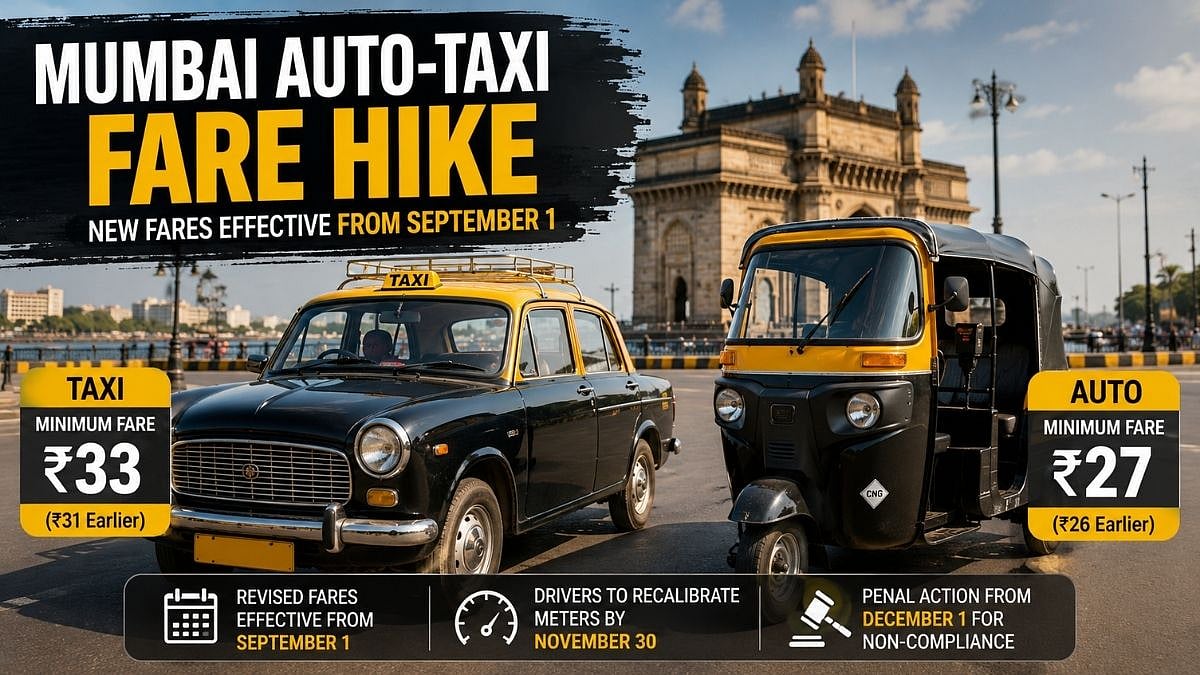
The minimum auto fare will be Rs 27 for the first 1.5 kilometres.
The minimum taxi fare will be Rs 33 for the same distance.
After that, autos will charge Rs 18.22 per kilometre and taxis Rs 21.90 per kilometre, rounded to the nearest rupee.
Rides between midnight and 5 am will cost 25 per cent more.
Drivers can use the new fare tables before their meters are recalibrated.
They have until November 30 to update their meters.
Drivers say higher fuel, maintenance and household costs justify the increase, while commuters say even small increases make family budgets harder to manage.

Minimum fares from September 1 will rise to Rs 27 for autorickshaws and Rs 33 for black-and-yellow taxis in the Mumbai Metropolitan Region.
Subsequent fares will be Rs 18.22 per kilometre for autorickshaws and Rs 21.90 for taxis, rounded to the nearest rupee.
The increase is Rs 1 for autorickshaws and Rs 2 for taxis, following the previous revision on February 1, 2025.
Passengers travelling between midnight and 5 am will pay an additional 25 per cent under the revised tariff.
Drivers have until November 30 to recalibrate their meters, with penalties possible from December 1 for non-compliance.
- Who
- Autorickshaw and black-and-yellow taxi passengers and drivers in the Mumbai Metropolitan Region are affected; the Mumbai Metropolitan Region Transport Authority approved the revision and the Maharashtra Transport Department issued revised tariff cards.
- What
- Minimum and per-kilometre fares for autorickshaws and taxis are increasing.
- Where
- Across the Mumbai Metropolitan Region.
- When
- The revised fares take effect on September 1, 2026; drivers have until November 30 to recalibrate their meters.
- Why
- The fare revision was approved after operating costs, including fuel, maintenance, repairs, insurance and permits, increased; commuters oppose the added pressure on household budgets.
Commuters’ concerns
Drivers’ justification
Affordability
Commuters’ concerns
Commuters say food, milk, transport and other household expenses have risen while salaries have not increased at the same pace, making repeated fare hikes burdensome.
Drivers’ justification
Drivers and their representatives say the increase is modest and provides needed relief as their operating and household costs rise.
Operating costs
Commuters’ concerns
Passengers question how ordinary families will manage monthly budgets when essential expenses and daily transport costs continue to increase.
Drivers’ justification
Drivers cite higher CNG and diesel prices, maintenance, repairs, tyres, spare parts, insurance and permits as reasons the old fares are no longer sufficient.
Meter transition
Commuters’ concerns
Passengers and drivers may face uncertainty while relying on revised fare charts because meters will not all be updated immediately.
Drivers’ justification
Officials have allowed drivers three months to recalibrate meters, but the process may be difficult because the region has only about 15 to 20 authorised centres for testing and recalibration.
Key facts
- Effective date
- September 1, 2026
- Minimum auto fare
- Rs 27 for the first 1.5 km, up from Rs 26
- Minimum taxi fare
- Rs 33 for the first 1.5 km, up from Rs 31
- Subsequent auto fare
- Rs 18.22 per kilometre, rounded to the nearest rupee; previously Rs 17.14
- Subsequent taxi fare
- Rs 21.90 per kilometre, rounded to the nearest rupee; previously Rs 20.66
- Night surcharge
- Additional 25 per cent between midnight and 5 am
- Meter deadline
- November 30; a proposed daily fine of Rs 50, capped at Rs 5,000, may apply from December 1
- Meter recalibration
- Drivers may charge revised fares using recalibrated meters or RTO-approved fare tables until meters are updated
Quotes
Thampi Kurien
President of the Auto-Rickshaw Union
“People often look only at the fare paid by passengers, but they do not see the expenses a driver has to manage every day. Fuel, servicing, tyres, spare parts, insurance and other vehicle-related costs have all increased.”
 freepressjournal.in
“The revised fares are a welcome decision for the taxi and autorickshaw industry. Fuel prices have increased two to three times in recent months, while the cost of maintaining vehicles has also gone up sharply.”
freepressjournal.in
Sources
Related news

Mumbai Metropolitan Region Raises Auto-Rickshaw and Taxi Fares

Mumbai Taxi and Auto Fares Rise From September 1

Mumbai Taxi, Rickshaw Meter Recalibration Deadline Set For November 30
Mumbai Auto-Taxi Fare Hike Draws Commuter, Union Concerns
Thane RTO Warns Commuters Before September Fare Hike
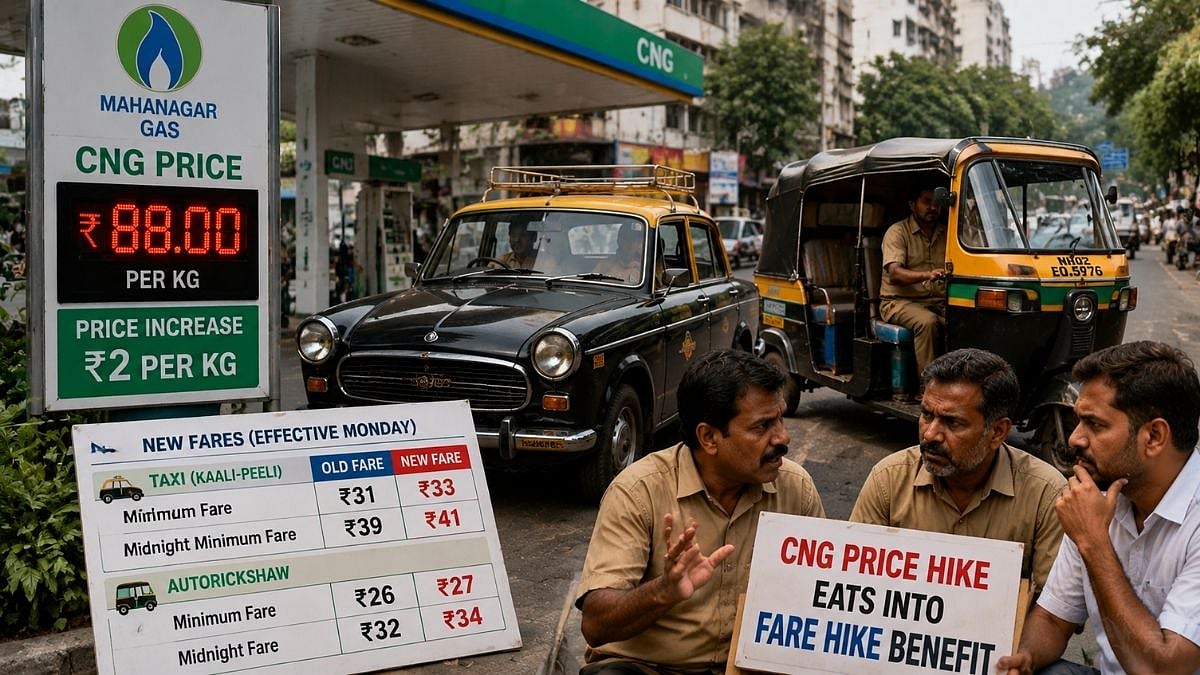
Mumbai CNG Rise Coincides With Higher Auto, Taxi Fares
Maharashtra Land Bank Aims to Speed Infrastructure Projects

India Replaces Sri Lanka as 2027 Women’s Champions Trophy Host
BCCI Review To Assess Rohit Sharma’s World Cup Future
Tukaram Mundhe Warns Indians About Food Safety Risks
India to Host Inaugural Women’s Champions Trophy in 2027