1 week ago
Report Says China Tightens Control, Marginalizes Tibetans in Leadership
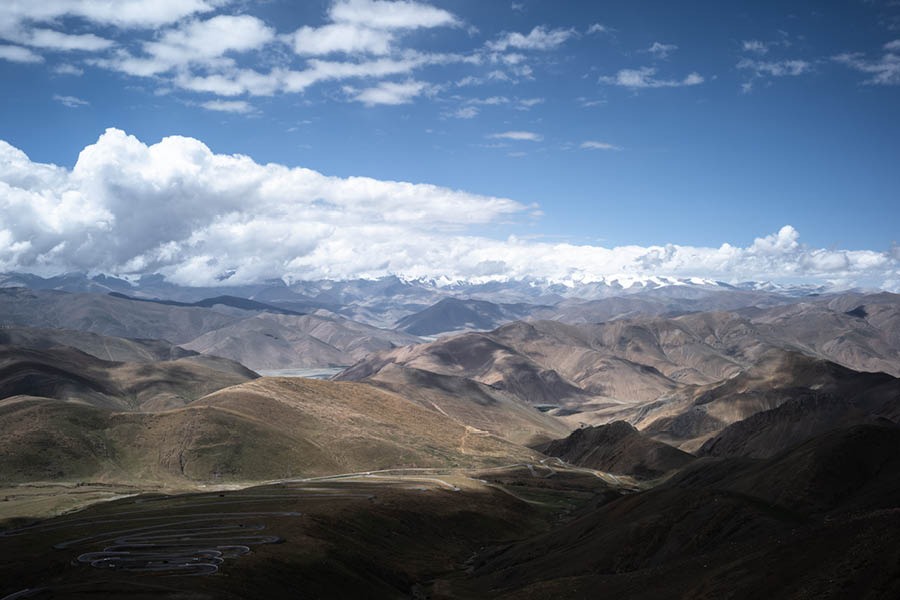
A new report says China is giving Tibetans fewer important government jobs in Tibet.
It says most senior leaders in Tibet are not Tibetan.
The report counted 240 senior positions and said Tibetans held 62 of them.
It also said no Tibetan leads the Communist Party in the five provincial-level administrations covering Tibetan areas.
The report argues that new laws and party rules are encouraging political loyalty and assimilation.
The group that published the report wants other countries to support Tibetans more strongly.
It asked the United States Congress to approve a bill supporting the Tibetan government-in-exile.
It also asked the European Union to appoint a special representative for Tibet.
The Central Tibetan Administration operates from India and provides services to Tibetan communities.

A Washington-based advocacy group says China is tightening political control over Tibet and reducing Tibetan participation in senior decision-making.
The International Campaign for Tibet reported that Tibetans held 62 of 240 senior positions in 2026, compared with 178 held by non-Tibetans.
No Tibetan reportedly serves as party secretary in any of the five provincial-level administrations covering Tibetan areas.
The group urged the United States Congress to pass the Assuring the Future of Tibet Act and restore support for Tibetan communities and the Central Tibetan Administration.
The report also called for the European Union to appoint a Special Representative for Tibet and strengthen engagement with the Tibetan government-in-exile.
- Who
- The International Campaign for Tibet, the Central Tibetan Administration, China, and Tibetan communities are central to the report.
- What
- The report alleges that China is tightening political control over Tibet and sidelining Tibetans from senior leadership positions.
- Where
- The report concerns Tibet and Tibetan communities in India and Nepal; the Central Tibetan Administration is based in Dharamshala, India.
- When
- The annual report was unveiled on Tuesday and presents leadership figures for 2026.
- Why
- The International Campaign for Tibet says greater international support is needed because Tibetan representation in decision-making is declining.
International Campaign for Tibet’s assessment
China’s reported governance framework
Tibetan representation
International Campaign for Tibet’s assessment
The International Campaign for Tibet says Tibetans are being marginalized in senior leadership and that meaningful representation is lacking.
China’s reported governance framework
The report describes China’s system as a centralized party-state structure in which the top Chinese Communist Party official has ultimate authority over the Tibetan governor.
Governance priorities
International Campaign for Tibet’s assessment
The group says new laws and party directives prioritize assimilation, political loyalty, and centralized authority over Tibetan participation.
China’s reported governance framework
The report identifies the Promoting Ethnic Unity and Progress Law and Xi Jinping Thought on Party Building as the legal and ideological foundations of the governance model.
International response
International Campaign for Tibet’s assessment
The International Campaign for Tibet urges stronger engagement with the Central Tibetan Administration, US funding, passage of the Assuring the Future of Tibet Act, and an EU Special Representative for Tibet.
China’s reported governance framework
No direct response from Chinese authorities is provided in the article.
Key facts
- Reporting organization
- International Campaign for Tibet, a Washington-based advocacy group
- Senior positions counted
- 240 positions across party, government, security, and judicial institutions
- Tibetan representation
- 62 positions, or 25.8%, were held by Tibetans in 2026
- Non-Tibetan representation
- 178 positions, or 74.2%, were held by non-Tibetans
- Party secretary positions
- No Tibetan reportedly held the post in the five provincial-level administrations covering Tibetan areas
- Proposed US legislation
- The bipartisan Assuring the Future of Tibet Act is awaiting approval in the United States Congress
- Tibetan government-in-exile
- The Central Tibetan Administration is based in Dharamshala, India, and administers education, healthcare, and cultural-preservation services
Quotes
Bhuchung Tsering
Head of Research and Monitoring at the International Campaign for Tibet
“The US Congress should pass the bipartisan ‘Assuring the Future of Tibet Act (AFTA),’ which provides greater legitimacy to the CTA by recognising the institution as the democratically elected representative of the Tibetan people”
 telegraphindia.com
“As China further marginalises Tibetan participation in decision-making inside Tibet, the international community should strengthen engagement with the CTA as a democratic partner and representative of the Tibetan people”
telegraphindia.com
Sources
Related news

China's Tibet Policy Called Empire-Building; Amnesty Condemns Activist Arrest

Karmapa's fate on Himalayan chessboard as India, China compete

Tibetan Diaspora Urged to Keep Tibet Relevant Globally

Tibetan man claims China harassing diaspora over ethnic unity law

Tibetans in Delhi Urge UN Action Over China’s Tibet Policies
Satellite Radar May Strengthen Nepal's Flood Warning Systems

Nepal Plans New Landslide Warning System Along China Border

Nepal Thanks India as Glacial Disaster Rescue Efforts Continue
Nepal Warns of Heavy Rain After Deadly Floods
Nepal Flood Exposes Delayed Alerts and Cross-Border Warning Gaps