1 day ago
Why Teaching Gandhi Requires More Than Memes and Verdicts
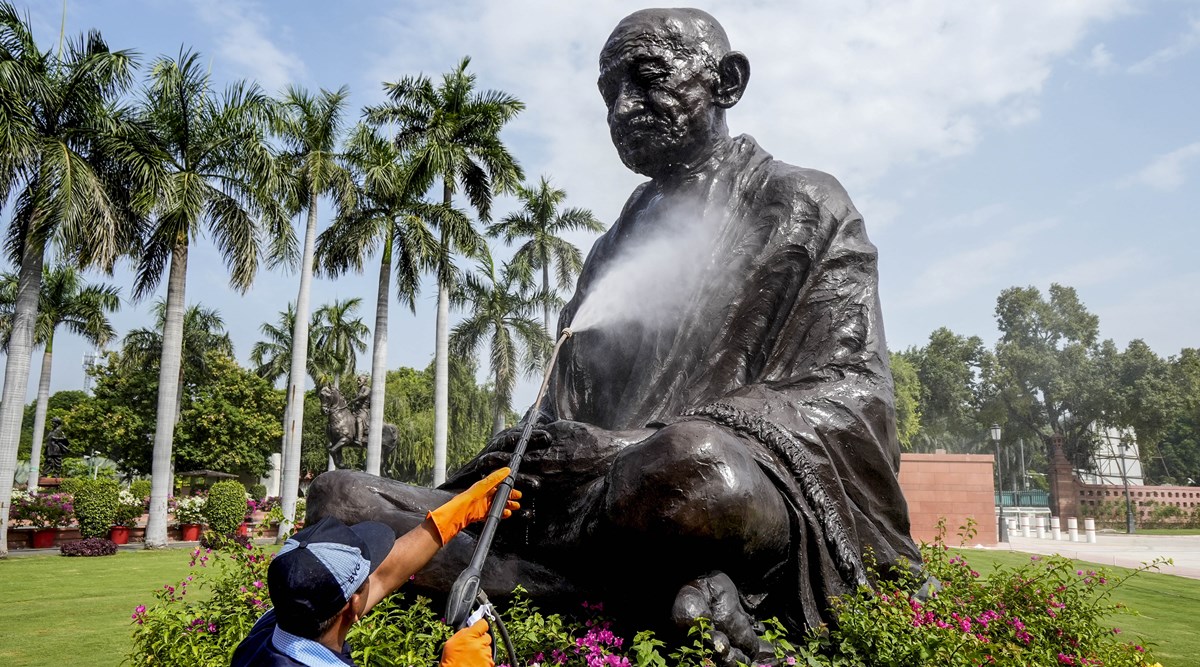
Students at Indraprastha College once learned about Gandhi by taking part in political activities connected to his ideas.
They marched, picketed shops, spun thread and joined the freedom movement.
Today, many students first meet Gandhi through school lessons, internet videos, memes and short quotations.
These sources can make people feel certain about him before they study the full story.
The author says students should first understand the ideas and circumstances before deciding whether Gandhi was right or wrong.
One example is Gandhi’s experiments with brahmacharya and his relationship with young women.
Online descriptions may focus only on age, gender and physical closeness.
Looking at the wider context does not answer every ethical question, but it can lead to a more thoughtful discussion.

Indraprastha College students once encountered Gandhi through activism, including marches, picketing, spinning and anti-British protests.
Today, many students encounter Gandhi through school lessons, inherited arguments, decontextualized quotations, memes, reels and videos.
The author says the main teaching challenge is not criticism, but premature certainty that prevents historical and conceptual understanding.
Earlier student engagement connected Gandhi’s ideas to practical participation, while contemporary learning often separates his thought from practice.
A classroom discussion of Gandhi’s brahmacharya experiments showed how restoring context can complicate judgments without resolving every ethical question.
- Who
- Students and teachers at Indraprastha College, including the author, in discussions of Gandhi.
- What
- The article examines the difficulty of teaching Gandhi to students who often arrive with opinions shaped by activism, school lessons and digital media.
- Where
- Indraprastha College in Delhi, including its historical student movements and contemporary political thought classes.
- When
- It compares student experiences in the 1930s and 1940s with classroom experiences nearly nine decades later.
- Why
- The author argues that students often encounter Gandhi’s person without enough of his thought, practice or historical context, encouraging premature judgments.
Contextual and Practice-Based Reading
Verdict-First and Visibility-Based Reading
How Gandhi should be studied
Contextual and Practice-Based Reading
Students should delay final judgments and examine Gandhi’s ideas, practices and historical circumstances, including the concepts surrounding brahmacharya.
Verdict-First and Visibility-Based Reading
Students may focus on visible incidents, photographs and striking descriptions that appear to provide enough evidence for an immediate judgment.
Role of criticism
Contextual and Practice-Based Reading
Criticism is valid, but it should follow efforts to understand the conceptual and historical context; context can make ethical questions more nuanced.
Verdict-First and Visibility-Based Reading
Concerns about Gandhi’s conduct, especially his experiments with brahmacharya, can be raised directly from the visible facts, even when the broader context is not emphasized.
Meaning of student engagement
Contextual and Practice-Based Reading
The earlier model connected learning with action, such as spinning, picketing and joining processions, and asked what Gandhi’s ideas required of students.
Verdict-First and Visibility-Based Reading
The contemporary model often positions students as spectators judging Gandhi, with his person becoming more prominent than the demands of his thought and practice.
Key facts
- Institution
- Indraprastha College, described as Delhi’s oldest women’s college
- Earlier activism
- Students marched, picketed liquor and foreign-cloth shops, joined processions and supported anti-British activity
- Historical record
- The 1944 college magazine Pradeep recorded a Charkha Association
- Contemporary challenge
- Students may arrive with opinions shaped by inherited polemics, quotations, photographs, memes, reels, forwards and videos
- Central distinction
- Earlier engagement connected Gandhi with practical participation; contemporary engagement often focuses on judging Gandhi as a person
- Classroom example
- Discussion of Gandhi’s brahmacharya experiments, including his relationship with Manu, showed the effect of adding conceptual and historical context
- Ethical conclusion
- Context did not settle every ethical question, but it made some questions more nuanced and encouraged self-reflection
Quotes
An unnamed student
A student described by the author as approaching a thinker without a settled judgment.
“I know little about a thinker”
 indianexpress.com
Sources
Related news
Gandhi’s Lesson: Democracy Needs Dissent and Dialogue

Rahul Gandhi Says Education System Fears Questioning Students

Bhakti, Prayer, and the Teacher’s Role in Opening Eyes

Indian Student Movements Echo Past Struggles for Democracy

Pratik Gandhi Says Gandhi Must Be Seen As Human
Gandhi's Cartoon Legacy Challenges India's Modern Official Crackdowns

84 Years After Quit India, Nation We Must Still Build

Delhi Studies Elevated Road for Aruna Asaf Ali Marg
INA Defendants Freed After Historic Trial

Dispute Over Nehru Papers Between BJP and Congress