7 hrs ago
CAFE 3 Rules Could Bring More EVs and Hybrids
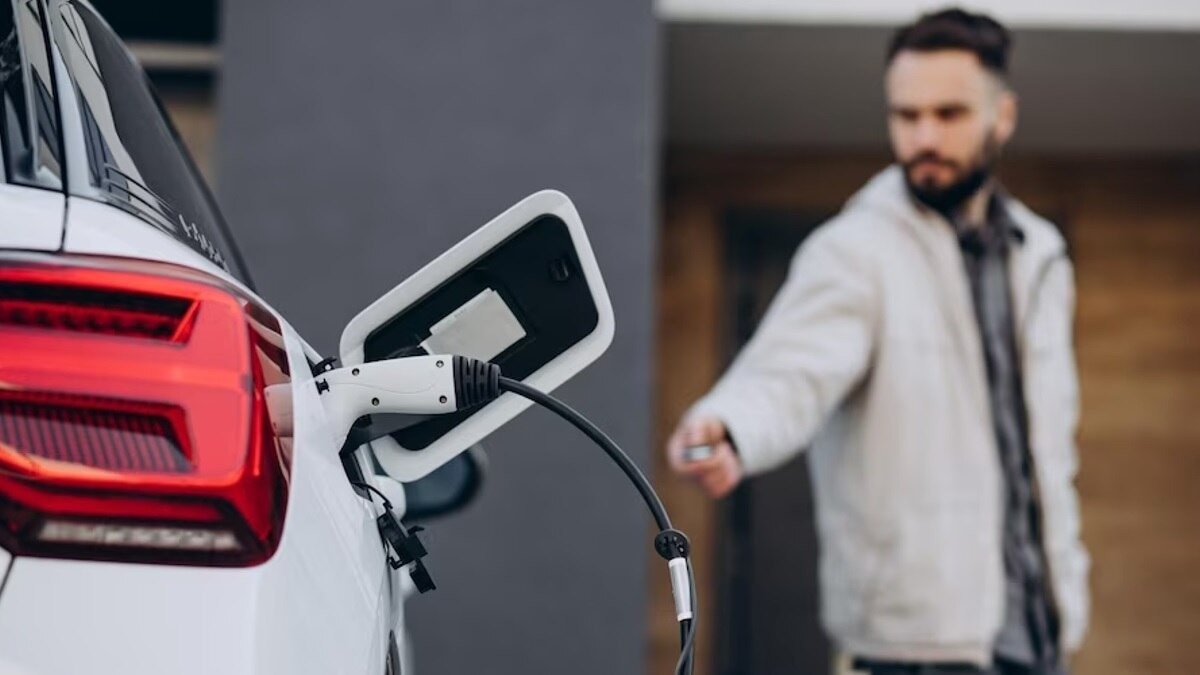
India has introduced new rules called CAFE 3 for car makers.
The rules encourage companies to sell more electric cars and different kinds of hybrids.
Electric and range-extended vehicles receive extra credit because they help companies meet pollution targets.
Some plug-in and strong hybrids also receive extra credit, especially when they use cleaner fuels.
The fuel-efficiency targets will become stricter between 2027 and 2032.
Companies that perform better than required can earn credits and trade them with companies that fall short.
The rules also reward technologies such as regenerative braking and tyre-pressure monitoring.
The government says the system is meant to support the environment, cleaner mobility and energy security.

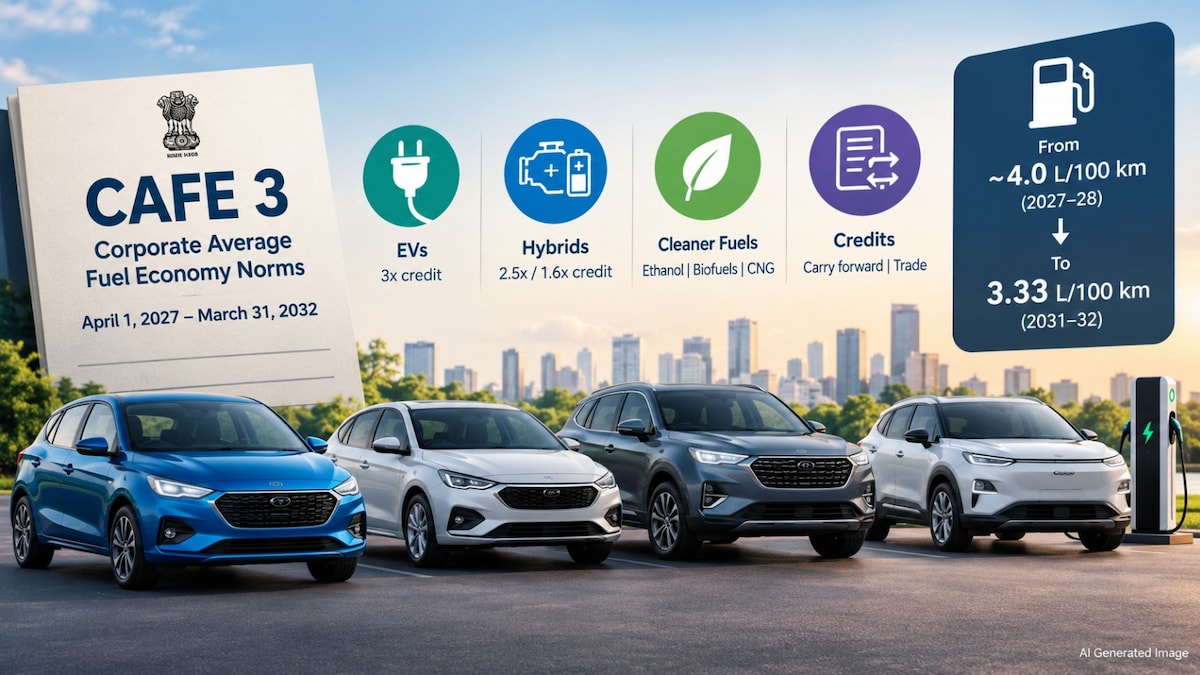
CAFE 3 gives battery-electric and range-extended electric vehicles a 3x super-credit factor.
Plug-in hybrids and strong hybrids using flex-fuel ethanol receive 2.5x credits, while strong hybrids receive 1.6x.
Fuel-consumption benchmarks tighten by about 16.7%, from 3.996 litres per 100 km in FY2027-28 to 3.3273 in FY2031-32.
Automakers can trade credits, buy credits from the Bureau of Energy Efficiency, or carry credits and debits within compliance blocks.
From April 2027, manufacturers must report each model’s CO₂ performance under both MIDC and WLTP testing systems.
- Who
- The Indian government and passenger-vehicle manufacturers, including Mahindra & Mahindra.
- What
- India has notified CAFE 3 fuel-consumption and CO₂-compliance rules for passenger vehicles.
- Where
- India.
- When
- The rules apply through two compliance blocks from FY2027-28 to FY2031-32; additional MIDC and WLTP reporting begins in April 2027.
- Why
- To tighten fuel-efficiency and CO₂ performance while encouraging electrification, cleaner fuels and other efficiency technologies.
Key facts
- EV super-credit
- Battery-electric and range-extended electric vehicles receive a 3x volume factor.
- Hybrid super-credits
- Plug-in hybrids and strong hybrids using flex-fuel ethanol receive 2.5x; strong hybrids receive 1.6x.
- Fuel benchmark
- The permitted benchmark tightens from 3.996 litres per 100 km in FY2027-28 to 3.3273 litres per 100 km in FY2031-32.
- Reference weight
- The reference weight rises from 1,082 kg to 1,229 kg, an increase of about 13.6%.
- Credit purchases
- Credit prices from the Bureau of Energy Efficiency rise from ₹2,500 per g CO₂/km in FY2028 to ₹4,500 in FY2032.
- Compliance blocks
- The first block covers FY2027-28 to FY2029-30, and the second covers FY2030-31 to FY2031-32.
- Technology credits
- Eligible efficiency technologies can each reduce the compliance calculation by 1 g CO₂/km, subject to a 9 g CO₂/km cap.
Quotes
R. Velusamy
President of Automotive Business at Mahindra & Mahindra
“We welcome the government’s notification of the new CAFE-III norms. Following extensive dialogue between the government and industry, the framework strikes a pragmatic balance between what is necessary for the environment and what is achievable for the industry, while strengthening India’s energy security. The targets are appropriately ambitious and provide a clear trajectory through 2031-32,”
 businesstoday.in
“We also welcome the inclusion of a compliance block, technology credits, cleaner-fuel benefits and super credits for EVs and other advanced technologies. At Mahindra, we are confident in our ability to meet these norms, backed by our sustained investments in technology, electrification and cleaner mobility,”
businesstoday.in
Sources
Related news
India's CAFE 3 Rules Reshape Carmakers' Efficiency Strategies and Costs
CAFE-III Wins Industry Backing Amid Debate Over EV Ambition

New CAFE-III Norms Give EVs Threefold Compliance Benefit
India Notifies New CAFE-3 Rules, Retaining EV Incentives
Suzuki Develops Compact Range Extender EVs for Global Markets

India's Car Buyers Shift From Petrol Toward Cleaner Fuel Options

AC Demand Expected to Rebound in FY27 on Stronger Summer
UK Recognises India’s Carbon Scheme, Easing CBAM Burden for Exporters
Andhra Pradesh Signs MoU for Large-Scale Electric Cooking