

1 hr ago
India Seeks Patient Capital to Build Chip Companies
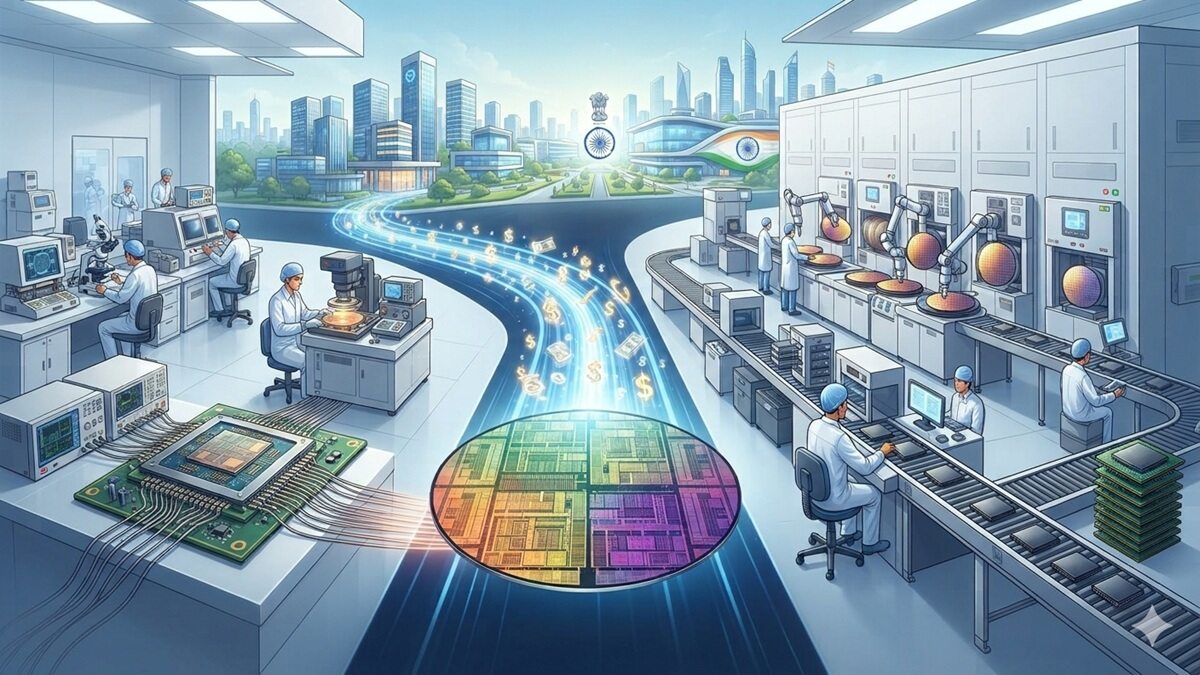
Making a computer chip takes a long time and costs a lot of money.
A company must pay for design, testing and factory production before it can sell anything.
If the design has a problem, making a new version can cost a lot and take several months.
This is different from software, which can usually be changed more quickly.
Srini Chinamilli of Tessolve says chip startups need investors who will stay involved for years.
Government funding could help companies during their riskiest early stages.
Venture funds, large Indian businesses and global chip companies could provide support as the startups grow.
Shared tools and factories could also lower costs and help successful companies compete globally.

India’s semiconductor ambitions require chip-product companies, not only fabrication plants and large investments.
Tessolve CEO Srini Chinamilli says investors must support startups through design, tape-out, validation and commercial scale.
Chip startups face major early costs for engineering, intellectual property, EDA tools, fabrication, testing and packaging.
The Semicon 2.0 framework offers milestone-linked seed funding, equity co-investment and shared design and validation resources.
Chinamilli advocates a funding mix involving government, specialist investors, industrial groups and global semiconductor companies.
- Who
- Indian chip-product startups, investors and government programs, with views highlighted by Tessolve CEO Srini Chinamilli.
- What
- India is seeking funding and infrastructure to help semiconductor startups develop and commercialize their own chip products.
- Where
- India, with potential support from global semiconductor companies, equipment makers and foundries.
- When
- The discussion comes as India expands domestic chip-design support; the supplied material identifies the data as of 2026.
- Why
- Chip development requires substantial spending long before revenue and can face costly delays from design or manufacturing problems.
Key facts
- Central funding need
- Patient capital that remains available from initial design and tape-out through validation, productisation and commercial scale.
- Early expenses
- Engineering, intellectual property licences, electronic design automation tools, verification and prototype manufacturing.
- Additional development stages
- Packaging, testing, debugging, silicon validation and reliability assessment.
- Government framework
- Semicon 2.0 provides milestone-linked seed funding, equity co-investment and shared access to design and validation resources.
- Proposed funding sources
- Government support, specialist venture and private-equity investors, large domestic industrial groups and global semiconductor companies.
- Infrastructure needs
- Startups need access to prototyping, fabrication, packaging, testing, validation and productisation capabilities.
- Investment process
- Funding decisions should maintain technical and commercial scrutiny while moving quickly enough to match engineering costs and cash needs.
Quotes
Srini Chinamilli
Co-founder and CEO of Tessolve, a Hero Electronix venture
“The biggest difference with semiconductors is that the capital requirement comes very early, often long before there is any revenue. If a software product needs another iteration, you can usually make that change relatively quickly. In semiconductors, another iteration can mean another fabrication cycle, with a significant cost and several months added to the programme.”
 financialexpress.com
“What India needs is a patient capital ecosystem that stays with companies through the full journey, from the first design and tape-out, through silicon validation and productisation, all the way to commercial scale.”
financialexpress.com
Sources
Related news
India Draws $1.4 Billion Toward Global Chip Hub Ambition
India’s Semiconductor Push Targets Global Product Champions Through R&D
India’s Semicon 2.0 Expands Chip Ecosystem With $12 Billion
Modi Launches $13.5 Billion Second Phase of Chip Mission
SEMICON India 2026 Showcases India’s Push for Resilient Chip Ecosystem

India Expands Global Semiconductor Goals With Semicon 2.0

India’s Semiconductor Sector Draws $1.4 Billion as Funding Surges
